The Italian Job - crew, film crew
The entire team, the film crew of the film "The Italian Job"
The Italian Job (1969)
Timing:
1:39 (99 min)

6.989/10
708
708

7.186/10
2480
2480

7.2/10
49340
49340
Film crew
Director
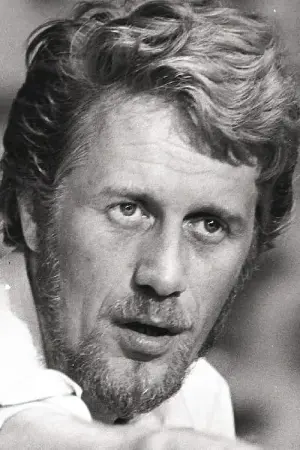
Producer
Michael Deeley
Producer
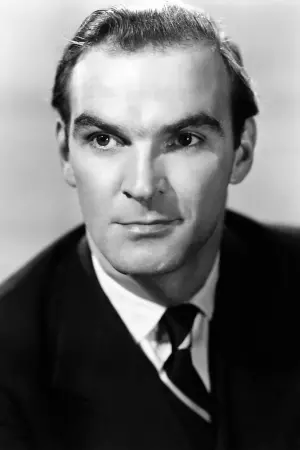
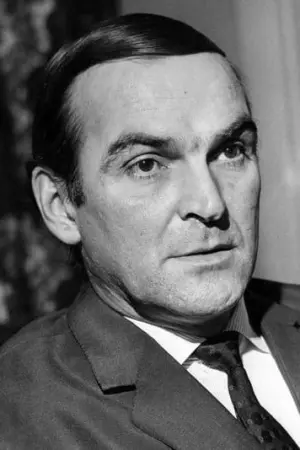
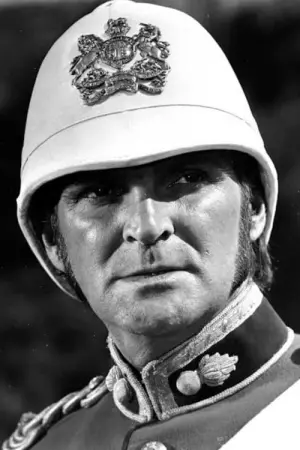
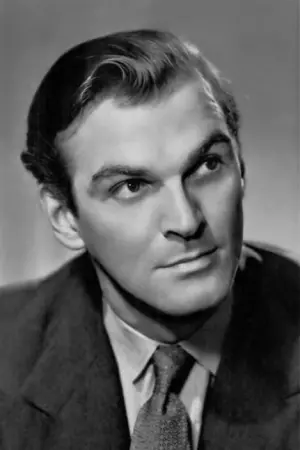
Writer
Casting
Paul Lee Lander
Casting
Editor
John Trumper
Editor
Art Direction
Michael Knight
Art Direction
Costume Design
Bermans
Costume Design
Production Design
Disley Jones
Production Design
Stunt Coordinator
Makeup Artist
Freddie Williamson
Makeup Artist
Original Music Composer
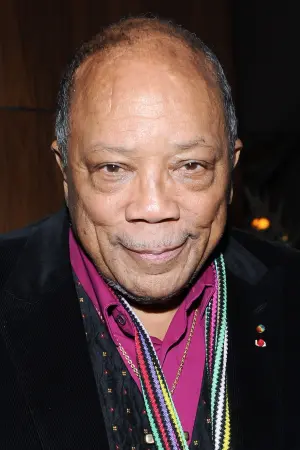
Associate Producer
Robert Porter
Associate Producer
Director of Photography
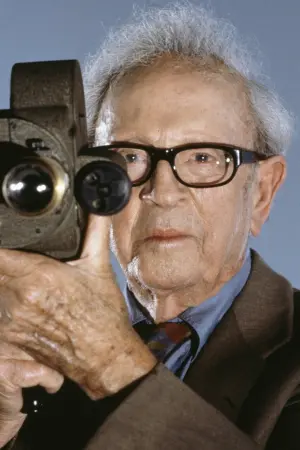
Camera Operator
Chic Waterson
Camera Operator
Hairstylist
Gordon Bond
Hairstylist
Sound Mixer
John Aldred
Sound Mixer
Production Manager
Derek Kavanagh
Production Manager
Location Manager
Al Burgess
Location Manager
Assistant Director
Scott Wodehouse
Assistant Director
Second Unit Director of Photography
Norman Warwick
Second Unit Director of Photography
Production Secretary
Barbara Allen
Production Secretary
Wardrobe Supervisor
Dulcie Midwinter
Wardrobe Supervisor
Construction Manager
Terry Apsey
Construction Manager
Sound Editor
Stephen Warwick
Sound Editor
Clapper Loader
David Wynn-Jones
Clapper Loader
Wardrobe Master
Roy Ponting
Wardrobe Master
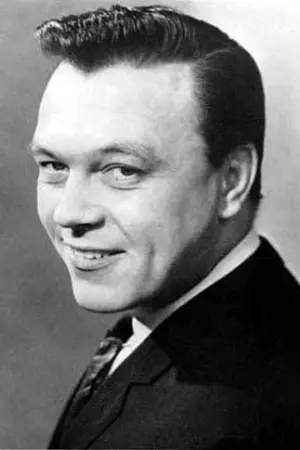
Theme Song Performance
Continuity
Helen Whitson
Continuity
What's left behind the scenes
- A video game of the same name was released in 2002, based on the film.
- The owners of 'Mini' cars, British Motor Corp., refused to loan vehicles for filming. The head of Fiat Motors offered to loan cars to the film crew and even suggested replacing the 'Mini' with a 'Fiat 500', but director Peter Collinson (1936-1980) refused, reasoning that since the film was very 'British in spirit', 'Mini' cars were specifically needed. Regardless, Fiat management still loaned cars for filming and gave permission to film on the territory of the assembly plant. When the Italian authorities hesitated and refused to close roads, the mafia intervened. Entire districts of Turin were closed for filming, so the traffic jams and congestion shown in the film are real, and the reactions of motorists were also genuine.
- When Charlie Croker, played by Michael Caine, is released from prison, his girlfriend is waiting for him in a car, and Charlie briefly mentions that it's the Pakistani ambassador’s car. During the making of the film, the Pakistani ambassador's car was indeed used.
- The scene with Michael Caine and John Clive (1938-2012) was improvised from beginning to end.
- Michael Caine's biography states that Benny Hill (1924-1992), who participated in the filming, was a rather reserved person and did not spend his free time with other members of the film crew. Even when all the actors and crew members stayed in the same hotel, he generally stayed in his own room.
- According to Michael Caine, the box office receipts in the USA were unsatisfactory due to a flawed advertising campaign. The posters in the USA featured a nearly nude girl with a map drawn on her back, kneeling before a mafia boss with a machine gun. During a promotional tour of the USA, Caine saw this poster somewhere, and it angered him so much that he gave up and immediately returned home to England.
- The track on the roof of the building did exist on the roof of the Fiat factory, built in 1923. The dimensions of the track were 512 meters by 79 meters. In the five-story building, with an area of 4,878 square kilometers, 6,000 workers once toiled.
- Noël Coward was feeling so unwell that the scene in which he triumphantly walks through the prison had to be filmed in parts, as he had difficulty standing for long periods.
- The sewer scene was filmed near Coventry, where underground tunnels between Birmingham and Stoke Oldemoor were being constructed at the time. The camera was mounted on a “Mini Moke” which drove ahead of the “Cooper” cars, and was driven by one of the stunt coordinator Remy Julien's (1930-1921) assistants. Julien very much wanted one of the “Cooper” cars to perform a full 360-degree roll around its axis (tunnel floor – wall – ceiling – and back to the floor) at speed. Three attempts were made, but each time the car fell onto its roof due to poor grip. The car sustained so much damage that the stunt was abandoned after the third attempt. According to sound engineer John Oldred (1921-2020), Julien once managed to complete a full roll in the car during rehearsals, but the cameras were not running at that moment. This was the only stunt Julien failed to pull off throughout the entire film.
- A jump from the roof of one building to the roof of another was filmed from the roof of the Fiat factory. Some members of the film crew refused to be present, stating that it would all end badly, and the factory workers repeatedly made the sign of the cross at the stuntman sitting behind the wheel of the car.
- The road that was filmed at the end of the movie led to a restaurant. On the first day of filming, it was Saturday, the weather was wonderful, and the shoot went off without a hitch. However, the next day, a huge queue of cars lined up at the beginning of the road, as the restaurant traditionally experienced a surge in visitors on Sundays. Some drivers, unhappy with the delay on their way to the restaurant, managed to break through the police barricade, and filming had to be stopped. For the next two weeks, it rained non-stop, and the snow line on the mountain dropped by approximately 76 meters. By the time filming was finally completed, the film crew had to sweep snow off the road.
- Noël Coward was paid £25,000 for 10 days of filming in Dublin, Ireland, where filming took place to avoid strict British taxation.
- The initial script was set in London, and it was intended to be a television film, but it was decided that the project was too ambitious for television. Therefore, the script was acquired for use in cinema, and the location was changed to Turin, which at the time had the most sophisticated computer-controlled traffic management system in all of Europe (initially, the location was to be moved to Milan, but it soon became clear that obtaining permission to film from the city authorities was simply impossible).
- During the filming of the bus hanging on the edge of the cliff, the downwash from the helicopter affected the bus, and it began to tilt. It was only prevented from falling because the entire film crew literally clung to the front bumper and stopped the bus from tipping over.
Did you like the film?
 Auditions in India
 Casting calls in USA
 Castingi w Polsce
 Кастинги в Україні
