Mulan - crew, film crew
The entire team, the film crew of the film "Mulan"
Mulan (1998)
Timing:
1:28 (88 min)

7.902/10
10411
10411

8.136/10
334723
334723

7.7/10
344000
344000
Film crew
Director


Barry Cook
Director
Producer
Pam Coats
Producer
Editor
Michael Kelly
Editor
Art Direction
Ric Sluiter
Art Direction
Production Design
Hans Bacher
Production Design
Sound Re-Recording Mixer
Mel Metcalfe
Sound Re-Recording Mixer
Terry Porter
Sound Re-Recording Mixer
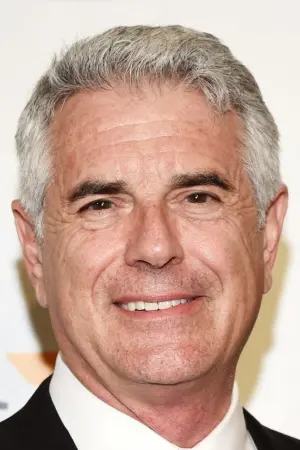
Dean A. Zupancic
Sound Re-Recording Mixer
Original Music Composer
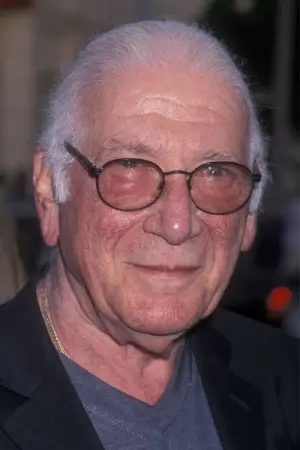
Associate Producer
Kendra Haaland
Associate Producer
Robert S. Garber
Associate Producer
Orchestrator
Alexander Courage
Orchestrator
Visual Effects Supervisor
David 'Joey' Mildenberger
Visual Effects Supervisor
Dave Tidgwell
Visual Effects Supervisor
Character Designer
Peter DeSève
Character Designer
Lead Animator
Brian Ferguson
Lead Animator
Shawn Keller
Lead Animator
Animation Supervisor
Rob Bekuhrs
Animation Supervisor
Animation
Dave Kupczyk
Animation
Caroline Cruikshank
Animation
Craig R. Maras
Animation
James Baker
Animation
Screenplay
Rita Hsiao
Screenplay
Philip LaZebnik
Screenplay


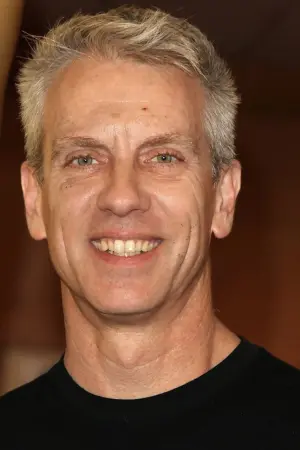
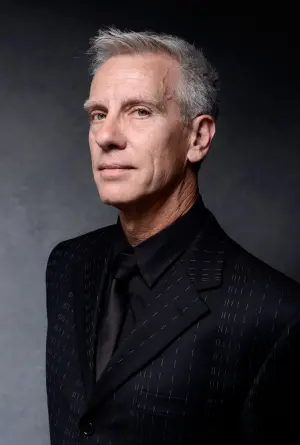

Raymond Singer
Screenplay
Eugenia Bostwick-Singer
Screenplay
Sound Designer
Lon Bender
Sound Designer
Story




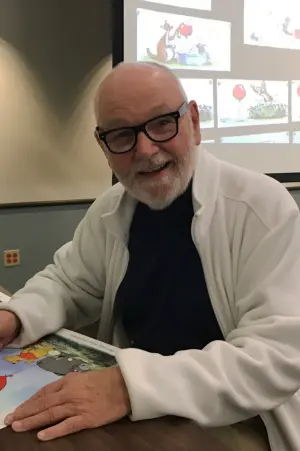

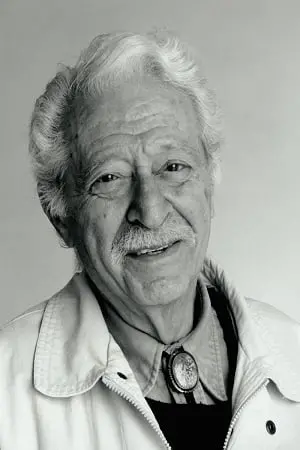
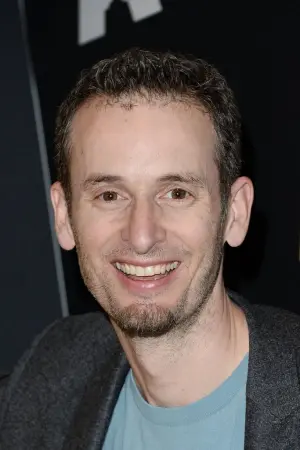
Barry Johnson
Story

Thom Enriquez
Story
Ed Gombert
Story
Julius Aguimatang
Story
Floyd Norman
Story
Songs
Matthew Wilder
Songs
Actor's Assistant


José Luis Gil
Actor's Assistant

Rui Paulo
Actor's Assistant
Translator
Ángel Fernández Sebastián
Translator
Rita Salgueiro
Translator
Story Artist

Jorgen Klubien
Story Artist
Supervising Animator

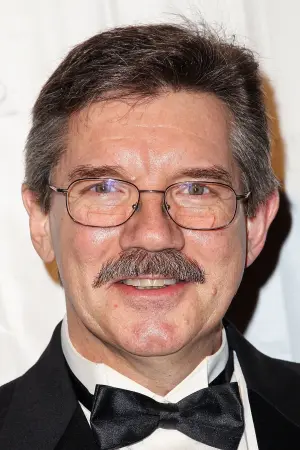

Story Supervisor
Lyricist
David Zippel
Lyricist
What's left behind the scenes
- In the poem, the heroine is simply called “Mulan.” “Mulan” means “magnolia.” (“Mu” means tree, and “Lan” means “orchid.”) The surname Hua is often added to Mulan, meaning “flower.” In Cantonese transliteration, the name Hua Mu-Lan sounds like Fa Mulan or Fa Muhk Laahn.
- The name Mushu translates as miracle, magic.
- British censors did not release the film for distribution until 2 seconds showing a headbutt were cut. And the British DVD released in the spring of 2000 was accidentally released with the cut footage. As this violated British censorship laws, it was removed from sale a week later.
- For wearing a yellow skirt, Mulan could have been easily executed; at that time in China, only members of the imperial family were allowed to wear yellow.
- Disney was sued for using the name Ping in the cartoon, but the issue was settled in 1997.
- Mulan was the first film created at the Walt Disney Studios in Florida.
- Disney sought to promote the cartoon in the Chinese market, hoping it would repeat the success of The Lion King, which was one of the highest-grossing Western films of the time in China. However, the company’s relationship with the Chinese government deteriorated after the release of Kundun, a Disney-funded biography of the Dalai Lama, which the Chinese government considered politically provocative. China threatened to limit business negotiations with Disney, and since the country only allows a limited number of Western films to be shown each year, the chances of Mulan being accepted were low. Finally, after a year-long delay, the Chinese government gave permission for the film to be released in limited release, but only after the Chinese New Year, to ensure that local films would dominate the more profitable holiday market.
- There was an opening scene that explained why the Great Wall of China was built, rendered in the style of paper cutouts. But it was later cut at the director’s decision, as he believed the audience wouldn't understand it.
- The song 'Keep 'Em Guessing', performed by Mushu (Eddie Murphy), in which he taught Mulan how to act like a man, did not make it into the final version of the cartoon.
- The film is based on a medieval Chinese poem about Hua Mulan, a woman who joined the army.
- A total of 32 people worked on the screenplay for the animated film.
- Mulan originally began as a short film called “China doll” about an oppressed and unhappy Chinese girl taken to the West by a British prince. Then, Disney consultant and children's book author Robert D. San Souci suggested making a film based on the Chinese poem “The Ballad of Hua Mulan,” and Disney combined the two separate projects.
- The creation of Mulan began in 1994, after the film crew sent a select group of art directors to China for three weeks to take photographs and sketches of local attractions for inspiration, and to immerse themselves in the local culture.
- When Mulan disguised herself as a man, her name was part of a Chinese pun. She took the name “Fa Ping” (花平, Hua Ping), which sounds like 花瓶 (huāpíng), literally “flower pot” or “a delight to the eye.” In the Chinese dub of the cartoon, the pun is harder to trace due to the widespread use of subtitles, which makes the narrative more accessible and understandable to speakers of different Chinese dialects. In the subtitles, Mulan's name is simply denoted as 平.
- The name Chi Fu (欺负, qīfù) means "to intimidate".
- The scene where Mulan finds a child's doll in the burned village is a reference to Hayao Miyazaki's anime "Nausicaä of the Valley of the Wind", in which an explorer/warrior finds the same doll in an abandoned village.
- In the computer-generated scene where the Huns chase after Mulan, each Hun was drawn to be distinct from the others using modern technology. The same technique was previously used in The Lion King.
- During the scene where the Chinese bow to Mulan, the crowd is a panoramic shot of real people bowing. It was edited into the animated foreground of the scene.
- "Disney" sought to promote the cartoon in the Chinese market, hoping it could repeat the success of "The Lion King," which was one of the highest-grossing Western films of the time in China. However, the company's relations with the Chinese government soured after the release of "Kundun," a Disney-funded biography of the Dalai Lama, which the Chinese government considers politically provocative. China threatened to limit business negotiations with "Disney," and since the country accepts a limited number of Western films for release each year, the chances of "Mulan" being accepted were low. Finally, after a year-long delay, the Chinese government gave permission for the film to be released on a limited basis, but only after the Chinese New Year, to ensure that local films would dominate the more profitable holiday market.
- Mulan originally began as a short film called "China doll" about an oppressed and unhappy Chinese girl taken to the West by a British prince. Then, Disney consultant and children's book author Robert D. San Souci suggested making a film based on the Chinese poem "The Ballad of Hua Mulan," and Disney combined the two separate projects.
- When Mulan disguised herself as a man, her name was part of a Chinese pun. She took the name “Fa Ping” (花 平, Hua Ping), which sounds like 花瓶 (huāpíng), literally “flower pot” or “a delight to the eyes.” In the Chinese dub of the cartoon, the pun is harder to trace due to the common use of subtitles, which makes the narrative more accessible and understandable to speakers of different Chinese dialects. In the subtitles, Mulan's name is simply denoted as 平.
- The name Chi-Fu (欺负, qīfù) means “to bully.”
- The scene where Mulan finds a child's doll in the burned village is a reference to Hayao Miyazaki's anime “Nausicaä of the Valley of the Wind,” in which an explorer/warrior finds the same doll in an abandoned village.
Did you like the film?
 Auditions in India
 Casting calls in USA
 Castingi w Polsce
 Кастинги в Україні
