The Invisible Man - crew, film crew
The entire team, the film crew of the film "The Invisible Man"
The Invisible Man (1933)
Timing:
1:11 (71 min)

7.488/10
802
802

7.377/10
4920
4920

7.6/10
44000
44000
Film crew
Director


Producer

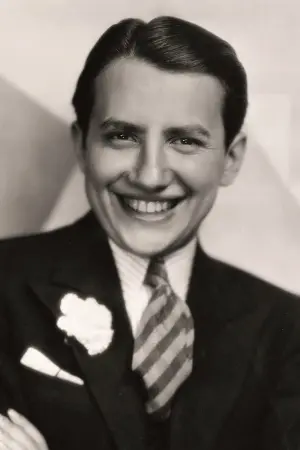


Carl Laemmle Jr.
Producer
Writer
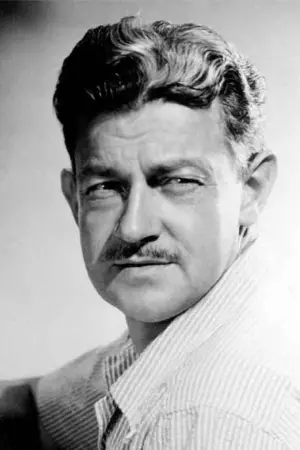
Editor
Ted J. Kent
Editor
Art Direction
Charles D. Hall
Art Direction
Makeup Artist
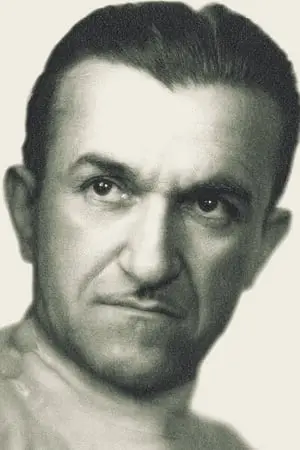
Original Music Composer
Orchestrator
William Schiller
Orchestrator
Director of Photography
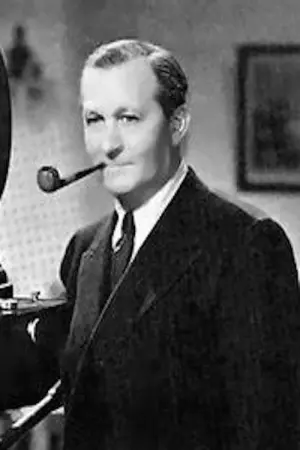
John J. Mescall
Director of Photography
Camera Operator
Visual Effects Supervisor


Still Photographer

Roman Freulich
Still Photographer
Screenplay
R.C. Sherriff
Screenplay
Novel
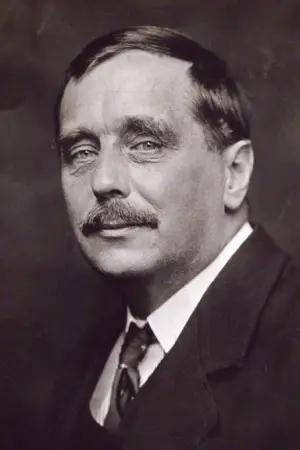
Props
Wally Kirkpatrick
Props
Grip
Fred Stoll
Grip
Peter Abriss
Grip
Special Effects
John P. Fulton
Special Effects
Music Supervisor
Gilbert Kurland
Music Supervisor
Assistant Director
Joseph A. McDonough
Assistant Director
Music
Conductor
Visual Effects
Cleo E. Baker
Visual Effects
Roswell A. Hoffmann
Visual Effects
Bill Heckler
Visual Effects
Sound Recordist
William Hedgcock
Sound Recordist
John Kemp
Sound Recordist
Sound Supervisor
Gilbert Kurland
Sound Supervisor
Assistant Camera
Jack Eagan
Assistant Camera
Visual Effects Camera
John J. Mescall
Visual Effects Camera
Roswell A. Hoffmann
Visual Effects Camera
Editorial Manager
Maurice Pivar
Editorial Manager
Presenter


Carl Laemmle
Presenter
What's left behind the scenes
- The film is based on the eponymous novella by H.G. Wells.
- Boris Karloff could have gotten the role of the Invisible Man.
- In 2008, the film was added to the U.S. National Film Registry.
- To achieve the effect of Claude Rains' invisibility, when his character removes the bandages, director James Whale instructed him to dress in a black velvet suit, and he was filmed against a similar background.
- Initially, “Universal Pictures” intended to cast Boris Karloff in the role of the Invisible Man. Rumor has it that the actor himself refused the role because he wouldn't be visible in it. In reality, however, it was due to his quarrel with director James Whale, who decided he needed someone else for the role. In the next room, Claude Rains was auditioning; Whale listened to him and decided he was suitable for the part. Producer Carl Laemmle Jr. doubted this, as Rains was practically unknown to audiences and had never acted in a sound film. In fact, his filmography at that time consisted of only one silent film (“Build Your Own House” from 1920 by Fred Goodwin). Laemmle Jr. suggested Whale take Colin Clive for the role. He approached Clive, but pleaded with him to refuse. The actor obliged, and during the filming of “The Invisible Man” went on vacation.
- When R.S. Sheriff arrived in Hollywood to work on the screenplay, he asked the “Universal Pictures” staff to give him a copy of Wells’ novel, but they didn’t have one. They only had 14 different screenplay versions, including one where the action took place in Tsarist Russia, and another where everything happened on Mars. Sheriff found the novel in a secondhand bookstore, read it, and decided that the novel could be adapted as is, without any additional processing. As a result, he wrote a screenplay that – unlike the films “Dracula” (Tod Browning and Karl Freund, 1931) and “Frankenstein” (James Whale, 1931) – was quite close to the literary source, which was good, because Wells, when selling the rights to the adaptation, specifically indicated his right to review the plot of the future adaptation and approve it.
- Gloria Stuart disliked working with Claude Rains. She stated that he took up all the space in front of the camera during joint scenes, forcing her to step aside. Wayle even had to have a conversation with Rains about this.
- When R.S. Sherriff arrived in Hollywood to work on the screenplay, he asked staff at "Universal Pictures" for a copy of the Wells novel, but they didn’t have one. They only had 14 different script versions, including one set in Tsarist Russia and another taking place on Mars. Sherriff found the novel in a second-hand bookstore, read it, and decided it could be filmed as is, without further adaptation. As a result, he wrote a screenplay that – unlike the films "Dracula" (Tod Browning and Karl Freund, 1931) and "Frankenstein" (James Whale, 1931) – was quite close to the literary source, which was good because Wells had specifically stipulated his right to review and approve the plot of any future adaptation when selling the film rights.
Did you like the film?
 Auditions in India
 Casting calls in USA
 Castingi w Polsce
 Кастинги в Україні
