The Adventures of Robin Hood - crew, film crew
The entire team, the film crew of the film "The Adventures of Robin Hood"
The Adventures of Robin Hood (1938)
Timing:
1:42 (102 min)

7.453/10
716
716

7.009/10
2675
2675

7.9/10
58000
58000
Film crew
Director
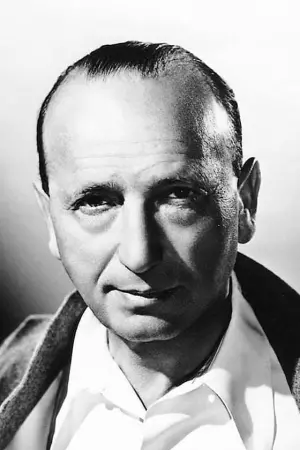
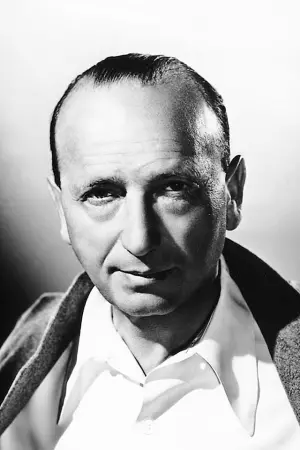
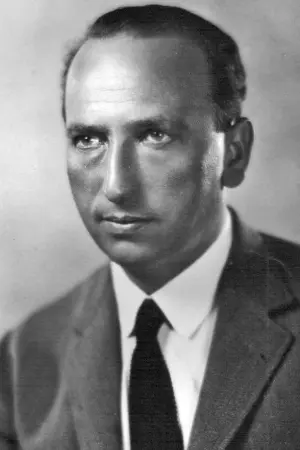
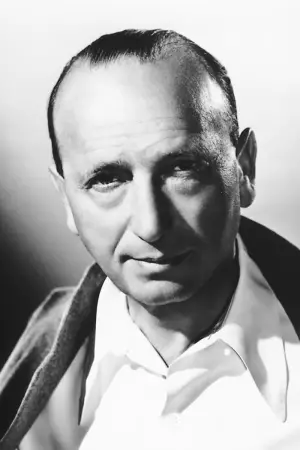

Producer
Casting
Rufus Le Maire
Casting
Editor
Art Direction
Carl Jules Weyl
Art Direction
Costume Design
Milo Anderson
Costume Design
Makeup Artist
Original Music Composer
Orchestrator
Director of Photography
Still Photographer
Homer Van Pelt
Still Photographer
Elmer Fryer
Still Photographer
Screenplay

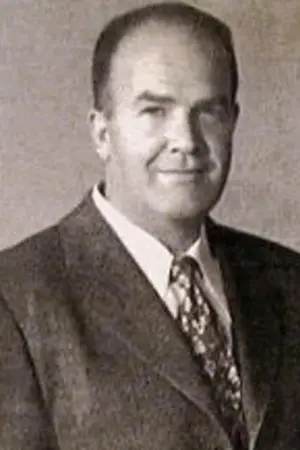
Seton I. Miller
Screenplay
Second Unit Director of Photography
Sound
C.A. Riggs
Sound
Wardrobe Supervisor
Rydo Loshak
Wardrobe Supervisor
Music Director
What's left behind the scenes
- Following the success of the film "A Midsummer Night's Dream", Warner Bros. planned to cast James Cagney as Robin Hood, but due to contract issues, Errol Flynn was nominated instead.
- Director William Keighley was replaced by Michael Curtiz mid-filming due to budget overruns and falling behind schedule.
- During the filming of one of the fight scenes, Errol Flynn (1909-1959) received a glancing blow from a sword and noticed that the sword lacked a protective tip. The actor who struck the blow apologized, and when Flynn asked why the sword was without a tip, he replied that director Michael Curtiz (1888-1962) had ordered it that way. According to the actor, Curtiz stated that it would be “more exciting.” It is said that after this, Flynn approached Curtiz, who was standing near the camera, grabbed him by the throat, squeezed, and asked if that was, in his opinion, “exciting” enough.
- The archery competition was filmed in Pasadena, California, the same location later used for the plantation scenes in Victor Fleming (1889-1949)'s "Gone with the Wind" (1939) and scenes from many other films.
- All 11 Technicolor cameras in existence at the time (1938) were used during filming, and at the end of each shooting day, the cameras were returned to Technicolor.
- Howard Hill (1899-1975) is credited as “Captain of the Archers” in the credits, and he also played the role of “Elvin of Wales” in the archery competition. The shot in which one arrow split another was actually performed by Hill, who also performed all the shots at people during filming. In addition, Hill worked extensively with the sound department to record the distinctive sound of an arrow in flight (using special arrows for this purpose).
- The audience reaction at the preview screenings was so enthusiastic that the film was released without any changes to the plot.
- During the filming of Robin Hood's escape from Basil Rathbone's (1892-1967) castle, extras were knocked down and trampled, and a puncture wound to his right leg from a spearhead had to be stitched up.
- The sound of Robin Hood's flying arrows is Ben Burtt's favorite sound from Skywalker Sounds (a division of Lucasfilm that creates sound effects, sound editing, sound design, mixing, and sound recording). Burtt used this sound in almost all of the films in the 'Star Wars' franchise.
- The film was shot in California, and English plants were added and the grass was tinted to give the landscape a more “English” appearance.
- The tree where Robin Hood forms his band was named "Hooker's Oak" in honor of the British botanist Joseph Dalton Hooker (1817-1911); it was considered to be the largest living tree in the world at the time this film was shot in 1937. It was broken by a lightning strike in 1979, at which time it was discovered that it was actually two trees grown together, each 125 years old. The stone in front of the tree, on which Errol Flynn stood, was a prop.
- Stuntmen wore armor under their clothes, and professional archer Howard Hill shot at them. Each time a stuntman was hit by an arrow, he received $150.
- After the success of the film “A Midsummer Night’s Dream,” Warner Bros. planned to cast James Cagney as Robin Hood, but due to contract issues, Errol Flynn was put forward as a candidate.
- The tree where Robin Hood forms his band was named “Hooker’s Oak” after the British botanist Joseph Dalton Hooker (1817-1911); it is believed that in 1937, when this film was being shot, it was the largest living tree in the world. It was broken by a lightning strike in 1979, at which time it was discovered that it was actually two trees grown together, 125 years old. The stone in front of the tree on which Errol Flynn stood was a prop.
Did you like the film?
 Auditions in India
 Casting calls in USA
 Castingi w Polsce
 Кастинги в Україні
