Heaven's Gate - crew, film crew
The entire team, the film crew of the film "Heaven's Gate"
Heaven's Gate (1980)
Timing:
3:37 (217 min)

6.781/10
343
343

6.429/10
2122
2122

6.7/10
19000
19000
Film crew
Director
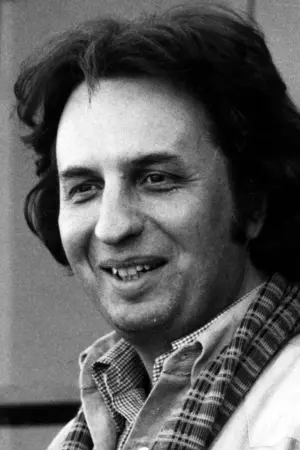
Producer
Joann Carelli
Producer
Executive Producer
Charles Okun
Executive Producer
Denis O'Dell
Executive Producer
Editor

Lisa Fruchtman
Editor
Gerald B. Greenberg
Editor
Tom Rolf
Editor
William Reynolds
Editor
Art Direction
Maurice Fowler
Art Direction
Spencer Deverell
Art Direction
Costume Design
J. Allen Highfill
Costume Design
Stunts
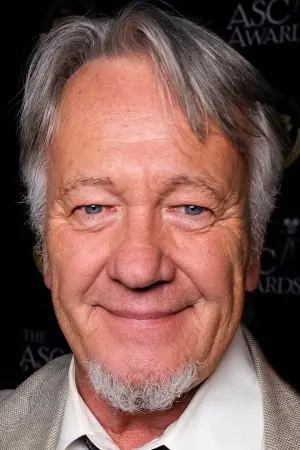
Loyd Catlett
Stunts
Alan Gibbs
Stunts
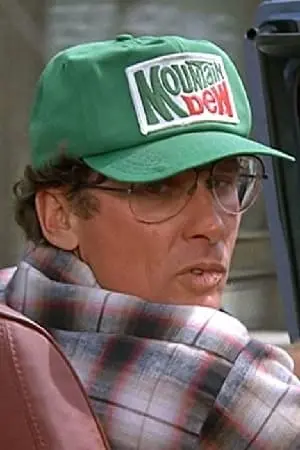
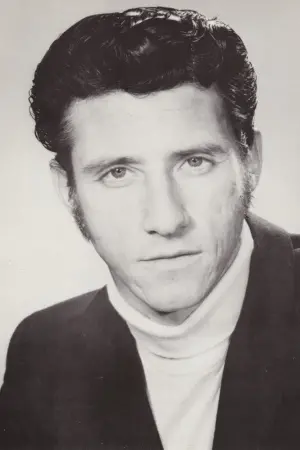
Chuck Waters
Stunts
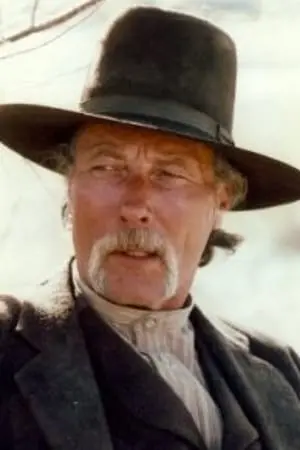
David S. Cass Sr.
Stunts

Bill Hart
Stunts
George Orrison
Stunts
Joe Finnegan
Stunts
Tom Elliott
Stunts


Hank Calia
Stunts
Billy Hank Hooker
Stunts
Larry Randles
Stunts
Leroy Johnson
Stunts
Production Design
Stunt Coordinator
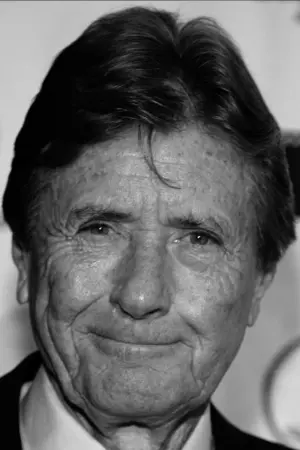
Set Decoration
Josie MacAvin
Set Decoration
James L. Berkey
Set Decoration
Makeup Artist
Ken Chase
Makeup Artist
Tom Hoerber
Makeup Artist
Christine Allsopp
Makeup Artist
Connie Reeve
Makeup Artist
Jerry O'Dell
Makeup Artist
Original Music Composer
David Mansfield
Original Music Composer
Second Assistant Director
Terry Needham
Second Assistant Director
Michael Stevenson
Second Assistant Director
Richard Graves
Second Assistant Director
Dennis Capps
Second Assistant Director
Director of Photography
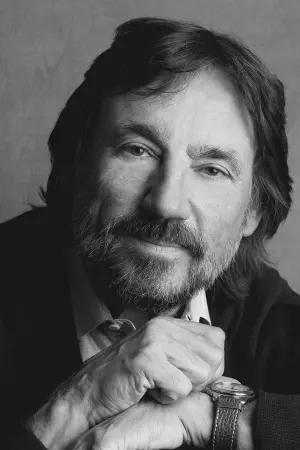
Camera Operator
Jan Kiesser
Camera Operator
Supervising Sound Editor
James J. Klinger
Supervising Sound Editor
Hairstylist
Mary Keats
Hairstylist
Verne Caruso
Hairstylist
Sound Mixer
C. Darin Knight
Sound Mixer
Screenplay
Special Effects
Ken Pepiot
Special Effects
Stan Parks
Special Effects
James Camomile
Special Effects
Kevin Quibell
Special Effects
Samuel E. Price
Special Effects
Paul Stewart
Special Effects
Music Supervisor
Joann Carelli
Music Supervisor
Special Effects Makeup Artist
Thomas R. Burman
Special Effects Makeup Artist
Assistant Director
Brian W. Cook
Assistant Director
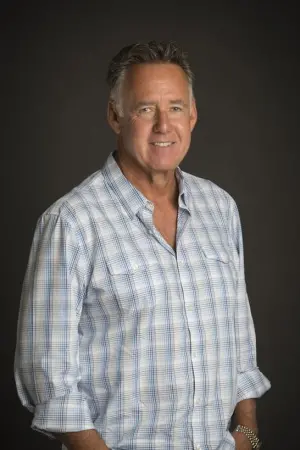
Michael Grillo
Assistant Director
Casting Director
Cis Corman
Casting Director

Jane Hallaren
Casting Director
Tony Gaznick
Casting Director
Sound
Malcolm Davies
Sound
Choreographer

Eleanor Fazan
Choreographer
Sound Editor
Winston Ryder
Sound Editor
Curt Schulkey
Sound Editor
Tom C. McCarthy
Sound Editor
Richard Adams
Sound Editor
Assistant Camera
Michael Gershman
Assistant Camera
Eric Engler
Assistant Camera
Ken Nishino
Assistant Camera
Executive In Charge Of Post Production
William Reynolds
Executive In Charge Of Post Production
What's left behind the scenes
- The film's plot is based on real events from the 1890s that took place in Wyoming.
- A break in filming with John Hurt (1940-2017) during the production of this film was so long that he had time to star in David Lynch's drama "The Elephant Man" (1980), and then return to the set of "Heaven's Gate".
- The film gained notoriety for its cruel treatment of animals during filming (including cockfighting and the beheading of chickens). Horses were tortured to such an extent that at least four died. Such a scandal erupted that the Screen Actors Guild and the Alliance of Motion Picture and Television Producers commissioned the American Humane Association to establish permanent monitoring of animal treatment during filming.
- Someone at United Artists noticed that renting the land where filming took place was very expensive. An investigation revealed that the owner of the land was screenwriter and director Michael Cimino (1939-2016).
- Willem Dafoe appears briefly in the film (this was his debut in a feature film). According to Dafoe, the role was actually much larger, but one day on set he burst out laughing at a joke told to him by one of the extras, and Michael Cimino was so angered that after eight months of filming, he fired Dafoe and didn't even include his name in the credits.
- The film was a disaster, both in terms of audience opinion and for director Michael Cimino. After many films that brought him neither fame nor success, Cimino finally made the highly successful drama "The Deer Hunter" (1978), which was a box office hit and won 5 Academy Awards. After that, United Artists removed all restrictions from Cimino. Work on "Heaven's Gate" quickly went over budget after filming began, mainly because Cimino was a perfectionist. Stories circulated about how he repeatedly and for no apparent reason demolished sets and fired someone from the crew almost every week (or, conversely, hired them). Many of these stories were, of course, exaggerations, but the project's cost soared to an astronomical $40 million for the time (equivalent to $120 million today). When Cimino presented the finished film to the studio, it turned out to be over 5 hours long. After some arguing, he agreed to cut the film to less than 3 hours. The film was a failure both at the box office and with critics, and essentially ended Cimino's career as a director. He nearly bankrupted United Artists, which was soon acquired by MGM. That year, MGM released the highly successful twelfth film in the Bond series, "For Your Eyes Only" (1981) by John Glen. Cimino did not work for 5 years and never fully recovered from that resounding failure. When Kevin Reynolds was filming "Waterworld" (1995), the filming faced so many difficulties, and the lead actor Kevin Costner was so criticized for his work on the project, that the film eventually became known as "Kevin-gate".
- One of the most glaring examples of Michael Cimino's cavalier attitude towards the film's budget was the construction of an irrigation system under the battlefield so that the grass would appear bright green before turning red with the blood of the upcoming battle.
- The film's release was scheduled for December 1979, and Michael Cimino's contract included a clause protecting him from liability for budget overruns.
- Jeff Bridges took the log cabin from the film and now uses it as a vacation home for his family in Montana.
- Many scenes of the film were shot during the so-called magic hour (the term for the short period of about five minutes between sunset and darkness, when unique bluish hues can be captured). Due to the brevity of the magic hour, a maximum of three takes could be filmed, after which the lighting changed.
- Every morning, as preparation for filming, the actors and actresses, at the insistence of director Michael Cimino, had to practice horseback riding, shooting, driving a van, dancing, roller skating, and work with a language specialist. In addition, Kris Kristofferson learned whip handling, and Isabelle Huppert, who knew almost no English, studied English.
- The film contains a scene where Chris Kristofferson's character wakes up with a hangover and cracks a whip in front of the group of people who woke him up. This scene takes less than a second of screen time, but it took 52 takes to film and lasted all day.
- Michael Cimino was such a perfectionist that by the fifth day of filming, they were already four days behind schedule.
- At one point during filming, Michael Cimino disliked the location of the buildings on the set, even though all the decorations had been constructed strictly according to his own wishes. Cimino ordered the buildings on both sides of the street to be demolished and rebuilt (at a cost of $1.2 million), despite objections from the crew, who reasonably argued that it would be simpler and cheaper to demolish the buildings on one side of the street and rebuild them further away.
- Had the film not flopped at the box office, Michael Cimino would have filmed 'Conquering Horse' based on the novel of the same name (1959) by Western author Frederick Manfred (1912-1994). The script would have told the story of the Sioux Indians, and all the characters would have spoken Sioux (with English subtitles on screen). This film was never made.
- Michael Cimino and cinematographer Vilmos Zsigmond (1930-2016) used smoke machines and 18 million kilograms of so-called 'Fuller's earth' (any clay material capable of discoloring oil or other liquids without using harsh chemical treatment) to give the film a 'dusty' atmosphere typical of 19th-century photographs.
- John Hurt had such a long break in filming that he managed to star in David Lynch’s drama “The Elephant Man” and then return.
- The film gained notoriety for its cruel treatment of animals during production (including cockfights and the decapitation of chickens). Horses were tortured to such an extent that at least four perished. Such a scandal erupted that the Screen Actors Guild and the Alliance of Motion Picture and Television Producers commissioned the American Humane Association to establish permanent monitoring of animal welfare during filming.
- Someone at United Artists noticed that the rental of the land where filming took place was very expensive. An investigation revealed that the landowner was screenwriter and director Michael Cimino.
- Willem Dafoe briefly appears in a shot (this was his debut in a feature film). According to Dafoe, the role was originally much larger, but one day on set he burst out laughing at a joke, which so angered Michael Cimino that after eight months of filming, he fired Dafoe without crediting him in the titles.
- When Cimino presented the finished film, it had a runtime of over 5 hours.
- An irrigation system was built under the battlefield to make the grass appear bright green before it would be stained red by the blood of the upcoming battle.
- Michael Cimino's contract included a clause protecting him from responsibility for budget overruns.
- Jeff Bridges took the log cabin from the film, which is located in Montana.
- Many scenes from the film were shot during the magic hour (twilight). Due to the brevity of the magic hour, a maximum of three takes could be filmed, after which the lighting conditions changed.
- Every morning, at the insistence of director Michael Cimino, the actors and actresses had to practice horseback riding, shooting, driving a van, dancing, roller skating, and work with a language specialist. In addition, Kris Kristofferson learned whip handling, and Isabelle Huppert, who knew almost no English, studied English.
- The scene in which Chris Kristofferson's character wakes up hungover and cracks a whip in front of the group of people who woke him up lasts less than a second, but it took 52 takes to film and lasted all day.
- At one point during filming, Michael Cimino disliked the arrangement of the buildings on the set, even though all the decorations had been constructed strictly according to his own wishes. Cimino ordered the buildings on both sides of the street to be demolished and rebuilt (at a cost of $1.2 million), despite objections from the crew, who argued that it would be simpler and cheaper to demolish the buildings on one side of the street and rebuild them further away.
- Had the film not flopped at the box office, Michael Cimino would have filmed Conquering Horse, based on the novel of the same name (1959) by western author Frederick Manfred.
Did you like the film?
 Auditions in India
 Casting calls in USA
 Castingi w Polsce
 Кастинги в Україні
