Star Wars - crew, film crew
The entire team, the film crew of the film "Star Wars"
Star Wars (1977)
Timing:
2:1 (121 min)

8.202/10
22151
22151

8.107/10
346592
346592

8.6/10
1600000
1600000
Film crew
Director
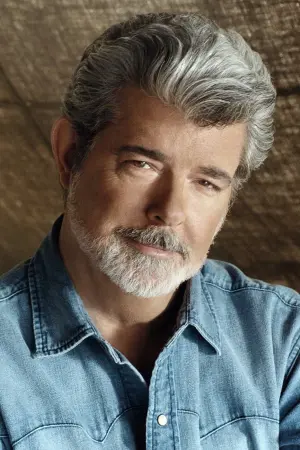
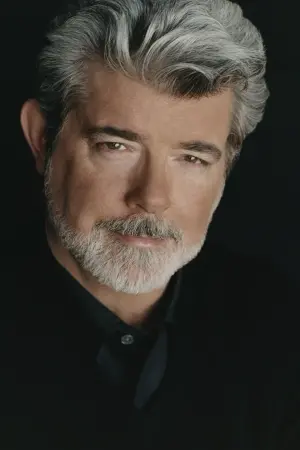
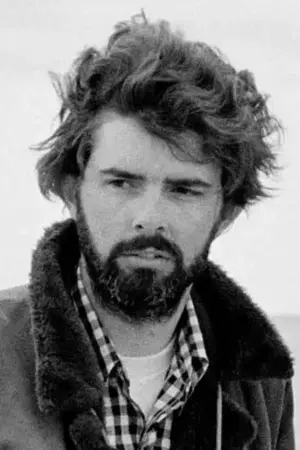
Producer
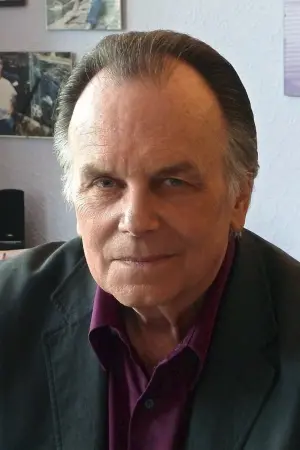
Executive Producer
Writer
Casting
Irene Lamb
Casting
Dianne Crittenden
Casting
Editor
Richard Chew
Editor
Art Direction
Norman Reynolds
Art Direction
Leslie Dilley
Art Direction
Costume Design
Stunts
Marc Boyle
Stunts


Bill Weston
Stunts
Tex Fuller
Stunts
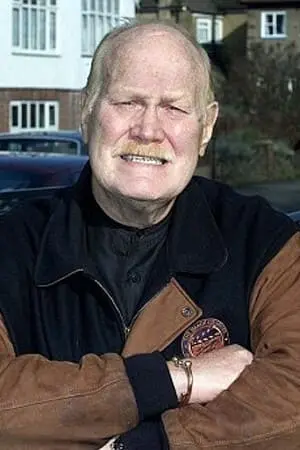
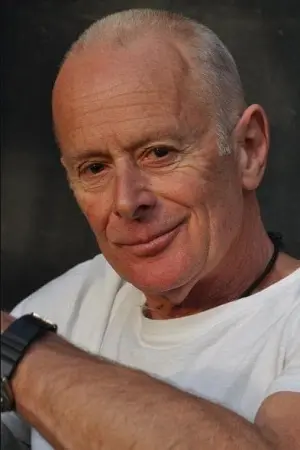
Andy Bradford
Stunts
George Leech
Stunts
Rip Clark
Stunts
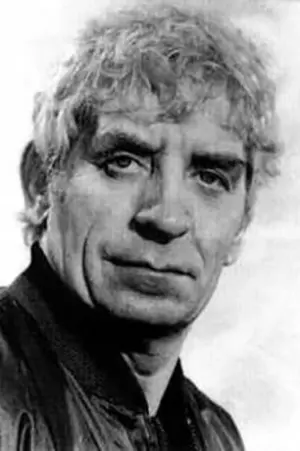
Tim Condren
Stunts
Sadie Eden
Stunts
Reg Harding
Stunts
Frank Henson
Stunts
Arthur Howell
Stunts
Dave Holland
Stunts
Rick Lester
Stunts
Jim Dowdall
Stunts

Colin Skeaping
Stunts
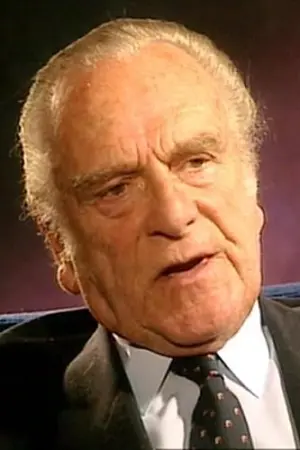
Richard Graydon
Stunts
Bronco McLoughlin
Stunts
Terry Cade
Stunts
Richard Hammatt
Stunts
Production Design
John Barry
Production Design
Stunt Coordinator

Set Decoration

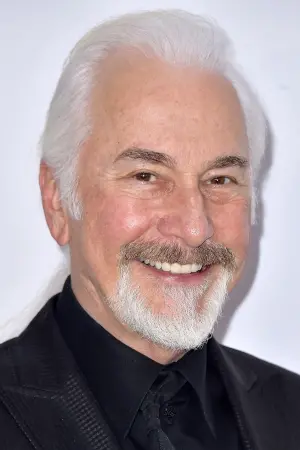
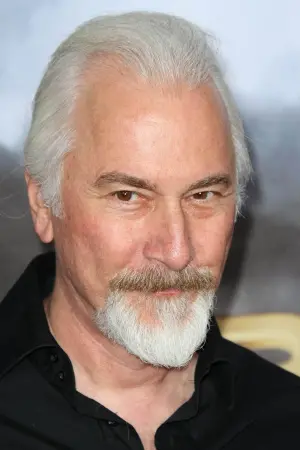
Makeup Artist
Sound Re-Recording Mixer
Richard Portman
Sound Re-Recording Mixer
Don MacDougall
Sound Re-Recording Mixer
Les Fresholtz
Sound Re-Recording Mixer
Robert J. Litt
Sound Re-Recording Mixer
Bob Minkler
Sound Re-Recording Mixer
Ray West
Sound Re-Recording Mixer
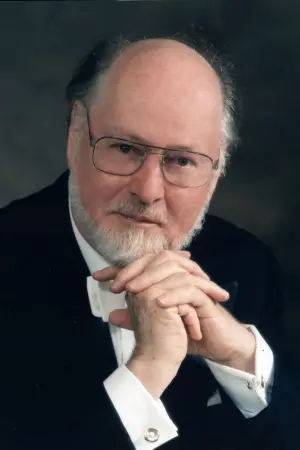
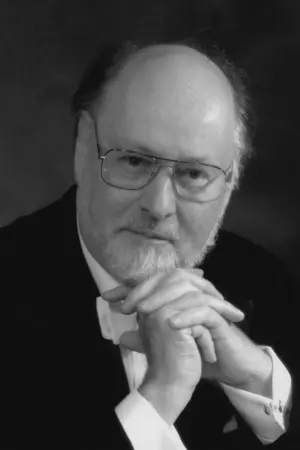
Original Music Composer
Production Supervisor


Associate Producer
James Nelson
Associate Producer
Orchestrator
Alexander Courage
Orchestrator
Stunt Double
Peter Brace
Stunt Double
Wendy Leech
Stunt Double
Mags Kavanaugh
Stunt Double
Director of Photography
Gilbert Taylor
Director of Photography
Musician
London Symphony Orchestra
Musician
Camera Operator
Geoff Glover
Camera Operator
Ronnie Taylor
Camera Operator
Supervising Sound Editor
Still Photographer
John Jay
Still Photographer
First Assistant Director
Gary White
First Assistant Director
Animation
Production Manager
David V. Lester
Production Manager
Bruce Sharman
Production Manager
Joseph Lenzi
Production Manager
Peter V. Herald
Production Manager
Boom Operator
Sound Designer
Assistant Editor
Bruce Green
Assistant Editor
Painter
George Dean
Painter
Makeup Supervisor
Stuart Freeborn
Makeup Supervisor
Gaffer
Ron Taberer
Gaffer
Assistant Director
Anthony Waye
Assistant Director
Terry Madden
Assistant Director
Gerry Gavigan
Assistant Director
Production Sound Mixer
Stand In
Jack Dearlove
Stand In
Roy Seely
Stand In
David Stone
Stand In
Penny McCarthy
Stand In
Len Mathewman
Stand In
Visual Effects
Paul Huston
Visual Effects
Sound Mix Technician
Sound Recordist
Michael Galloway
Sound Recordist
Wardrobe Supervisor
Ron Beck
Wardrobe Supervisor
Title Designer
Sound Editor
Gordon Davidson
Sound Editor
Gene Corso
Sound Editor
Robert R. Rutledge
Sound Editor
Sound Effects
Nelson Shin
Sound Effects
Dolby Consultant
Stephen Katz
Dolby Consultant
Continuity
Ann Skinner
Continuity
Script


Visual Effects Camera
Selwyn Eddy
Visual Effects Camera
What's left behind the scenes
- According to research, the sound of the TIE fighter is a combination of the roar of a young elephant and the sound of a car speeding on a wet highway.
- Lucas had difficulty securing funding for this film, as most studios believed that no one would want to watch it.
- The American Directors Guild (DGA) disliked the lack of conventional opening credits at the beginning of the film. They "ordered" Lucas to re-edit the film and add credits to the beginning. Lucas refused, stating that it would ruin the film's opening. The American Directors Guild fined Lucas, who paid it and immediately left the DGA.
- The 'Millennium Falcon' ship was conceived by Lucas in a diner: an olive-topped hamburger seemed like a good model for creating the spacecraft.
- Everything old is new again: many elements of 'Star Wars' were borrowed from earlier films. For example, the characters Obi-Wan Kenobi and droids C-3PO and R2-D2 are very reminiscent of the heroes of the Japanese film 'Kakushi toride no san akunin' (1958), where a samurai warrior rescues a princess with the help of two small-time swindlers. The appearance of the C-3PO droid was copied from a robot in the cult film Metropolis (1926). The final battle was borrowed from 'Dam Busters, The' (1954), but it is even closer to a similar scene in '633 Squadron' (1964). The final scene of honoring the heroes is almost shot-for-shot copied from 'Triumph des Willens' (1934).
- The word “Jedi” comes from the Japanese “Jidai Geki,” which translates to “historical drama”: this is how samurai-era television series were called in Japan. Lucas once mentioned in an interview that he watched “Jidai Geki” when he was in Japan, and he liked the word.
- Initially, Sissy Spacek was cast for the role of Princess Leia, but when Carrie Fisher refused to film nude in “Carrie” (1976), they switched roles. Jodie Foster was another candidate for the role of Princess Leia.
- Initially, Burt Reynolds was considered for the role of Han Solo, but he dropped out; Nick Nolte and Christopher Walken were also suggested.
- The episode and subtitle number “A New Hope” was not present in the original version of the film. It was added later upon re-release to indicate the sequence between the first “Star Wars” and “The Empire Strikes Back” (1980).
- The scene of the escape pod launching from Leia’s ship is the first work of Industrial Light & Magic (ILM) – the special effects studio created by Lucas specifically for filming this movie.
- The scenes on Tatooine were filmed in Tunisia, where there is a place called "Tatahouine". Some interiors of Luke's home were filmed in a hotel in Tunisia, but its exterior is a real house in the village of Matmata, which is abundant with caves and craters.
- During the scene in the garbage disposal, Mark Hamill held his breath for so long when diving underwater that a blood vessel burst on his face. Subsequent filming was done from only one side.
- At a certain point in the film's creation, future prospects seemed so unpromising that it was suggested to remove the special effects and turn it into a television series.
- George Lucas began working on the script in 1974.
- Kurt Russell auditioned for the role of Han Solo.
- The most famous robots – R2-D2 and C-3PO – could have been called A2 and C3, but then George Lucas decided to give the droids more complete names. According to the director, their names are simply a pleasant-sounding combination of letters and numbers that doesn't mean anything and cannot be deciphered.
- In 1980, three years after the release of the first film in the Star Wars saga, “Star Wars-IV: A New Hope” (1977), the first pictures were taken of Saturn’s moon Mimas, which turned out to be very similar to the “Death Star” from George Lucas’s film. Astronomers believe that the similar indentation on Mimas is a crater formed as a result of a collision between a celestial body and a huge asteroid. George Lucas did not comment on this report.
- The character Luke Skywalker underwent many changes before becoming who he is. Initially, George Lucas wanted to make him a girl. Then he considered making Luke a gnome. According to the director’s next idea, Skywalker could have become a 60-year-old general.
- Chewbacca was modeled after Lucas’s dog, Indiana. Not only the appearance but also the name of this dog were immortalized: in “Indiana Jones and the Last Crusade” (1989), Indiana Jones’s father clarifies the mystery of his son’s name: “Actually, he’s named Jones, we named the dog Indiana.” Indiana’s father was named Henry Jones. Henry constantly called Indiana “Junior,” which means that his name, like his father's, was Henry, and this is stated at the very end of the film.
- The special edition of the film had a runtime of 125 minutes.
- Towards the very end of filming the first episode of Star Wars, Mark was in a serious car accident where he severely injured his face. Therefore, in some final episodes, a stunt double was used for general shots, and in close-ups, you can see that the actor's face is slightly different from how it was at the beginning – this is the result of cosmetic surgery.
- The name of the droid R2-D2 dates back to when Lucas was filming 'American Graffiti'. Sound engineer Walter Murch stated that he was responsible for the utterance that gave the droid its name. Murch requested the second reel, the second dialogue track, i.e., Reel 2, Dialog Track 2, abbreviated as 'R-2-D-2'. Lucas, who was in the room at the time, working on the script for 'Star Wars', heard the request and, learning the decryption, said 'great name'.
- "Vader" means "father" in Dutch.
- Han and Luke 'move' Chewbacca from prison block 1138: a reference to the film 'THX 1138' (1970), directed by George Lucas.
- Scenes involving Luke and his friend Biggs were cut from the film. Biggs is a young pilot who left the Imperial Academy and joined the Rebellion. Luke mentions him when telling his aunt and uncle about his desire to enter the Academy; and Biggs himself appears in the finale of the film, during the attack on the Death Star – he was one of the Rebel pilots who died in that battle.
- All scenes with spaceships were filmed using handmade models. For the final scene, with the destruction of the Death Star, a tunnel was also built to the size of the models.
- At the 31st minute of the film, upon Obi-Wan Kenobi's first appearance, he tells Luke that he stopped being called Obi-Wan long before Luke was born. This does not correspond with the events shown in the subsequently filmed prequels, particularly 'Star Wars: Episode III – Revenge of the Sith' (2005), in which Luke is born.
- Filming took place from March 22 to July 16, 1976.
- The Directors Guild of America (DGA) disliked the fact that the film did not have standard opening credits. They "ordered" Lucas to re-edit the film and add credits to the beginning. Lucas refused, stating that it would ruin the film's opening. The DGA fined Lucas, who paid them and immediately left the DGA.
- The spaceship “Millennium Falcon” was conceived by Lucas in a diner: a hamburger with an olive seemed like a successful model for creating a spaceship.
- The name of the droid R2-D2 dates back to when Lucas was filming “American Graffiti”. Sound engineer Walter Murch stated that he was responsible for the utterance that gave the droid its name. Murch requested the second reel, second dialogue track, abbreviated “R-2-D-2”. Lucas, who was in the room at the time working on the script for “Star Wars”, heard the request and, learning the decryption, said “great name”.
Did you like the film?
 Auditions in India
 Casting calls in USA
 Castingi w Polsce
 Кастинги в Україні
