The First Great Train Robbery - crew, film crew
The entire team, the film crew of the film "The First Great Train Robbery"
The First Great Train Robbery (1978)
Timing:
1:50 (110 min)

6.672/10
340
340

7.107/10
1631
1631

6.9/10
19124
19124
Film crew
Director
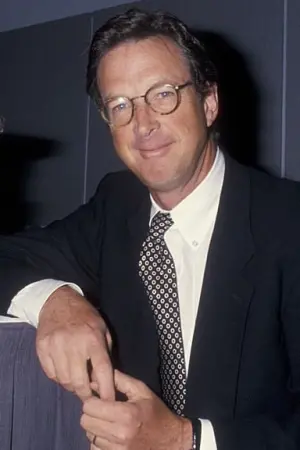
Producer
John Foreman
Producer
Executive Producer
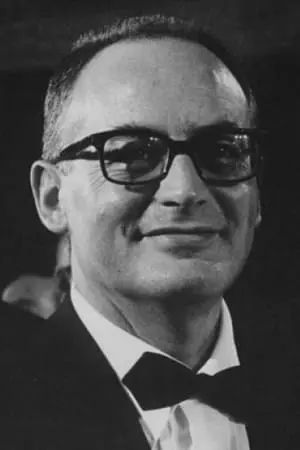
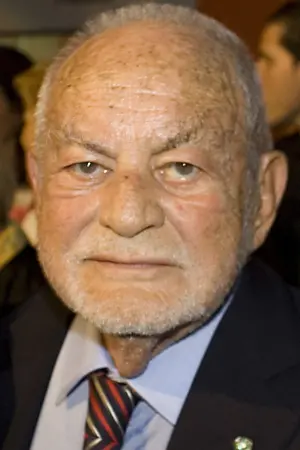
Casting
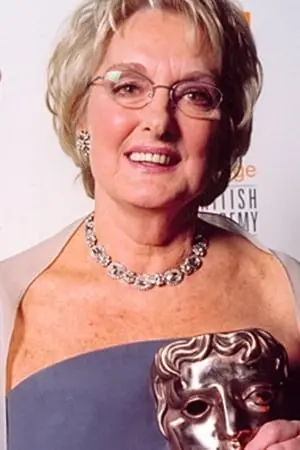
Editor
David Bretherton
Editor
Art Direction
Bert Davey
Art Direction
Costume Design
Anthony Mendleson
Costume Design
Production Design
Maurice Carter
Production Design
Makeup Artist
Basil Newall
Makeup Artist
Original Music Composer
Set Dresser
Director of Photography
Camera Operator
Gordon Hayman
Camera Operator
Hairstylist
Elaine Bowerbank
Hairstylist
Still Photographer
Laurie Ridley
Still Photographer
Screenplay
Novel
Assistant Director
Anthony Waye
Assistant Director
Music Editor
Michael Clifford
Music Editor
In Memory Of
Action Director
Draughtsman
Wardrobe Master
Rebecca Breed
Wardrobe Master
What's left behind the scenes
- The steam engine of the locomotive initially used for filming the train scenes was not powerful enough to pull the train. A diesel locomotive was disguised as a freight car and used as additional traction.
- During the filming of scenes with the train, the director's hair caught fire from sparks flying from the locomotive's firebox.
- Michael Crichton did not have the best relationship with his crew at the initial stage of filming. He then ordered a copy of his previous film, "Coma" (1978), and showed it to all the members of the film crew. Only then did the team decide that they were indeed being led by a good director.
- Sean Connery personally checked the speed of the train while on its roof. The speed was supposed to be 35 miles per hour; Connery insisted it was much higher. Only a speed measurement from a helicopter helped to confirm Connery's suspicions – the train was traveling at 55 miles per hour.
- The film "The Great Train Robbery" is based on a real train robbery that occurred in 1855. The crime was committed by four robbers, two of whom worked at the railway station. Their names were Pierce, Eagar, Burgess, and Tester – the last two being a guard and a clerk at the railway station.
- In England, the film was released under the title "The First Great Train Robbery." This was not accidental – in Britain, the name "the great train robbery" referred to a completely different case that occurred in 1963.
- The second of the bridges under which Piers travels on the roof of the train has a metal structure that could not have existed in 1855.
- The Folkestone railway line has always had double tracks.
- High platforms, reaching the level of the train doors, were not used at British stations until 1870.
- If you look closely, it is easy to see that the four keys, so painstakingly and ingeniously obtained by Piers and his assistants, are actually two pairs of identical keys. And any locksmith would know that such complex manipulations with their imprints are not needed to make duplicates of such keys. It would be enough to make an impression of only one side of the key.
- When Sean Connery’s wife, Micheline, saw the scenes on the roof of the train in the cinema, she was furious that Sean was performing these scenes without a stunt double and putting his life in such danger.
- This is the last film featuring actors André Morell (as the Judge) and Peter Butterworth (as Putnam).
- The film is dedicated to the memory of cinematographer Geoffrey Ansell, who passed away shortly after filming. The dedication reads: “Friends have lost him.”
- “The Great Train Robbery” was named the best film of the year at the annual Edgar Allan Poe Award for detective fiction.
- The role of Quick Willy was played by one of the leading dancers of the British Ballet, Wayne Sleep from The Royal Ballet Company. He performed all of his own stunts, including the escape from Newgate Prison, where he climbed over the prison wall at great risk of falling and being injured.
- The dog used for the rat-catching scenes, appearing in two scenes – one in Ireland where the dog is walked in front of Trent’s house, and the other, the rat-baiting scene, at the Pinewood Studios in England – was smuggled across the Irish Sea to avoid the six-month quarantine required by law for animal transport between England and Ireland.
- During filming at the Dublin station, a diesel locomotive experienced a fuel leak, and sparks from a steam engine traveling on the same tracks ignited the spilled fuel. As a result, a strong fire broke out within the station limits for a short time.
- Johannes Brahms's "Variations on a Theme by Haydn," which Elizabeth and Emilia play on their pianos, could not have been performed in 1855. Brahms composed the work between 1870 and 1873.
Did you like the film?
 Auditions in India
 Casting calls in USA
 Castingi w Polsce
 Кастинги в Україні
