Porco Rosso - crew, film crew
The entire team, the film crew of the film "Porco Rosso"
紅の豚 (1992)
Timing:
1:33 (93 min)

7.801/10
3713
3713

7.924/10
54742
54742

7.7/10
115000
115000
Film crew
Director


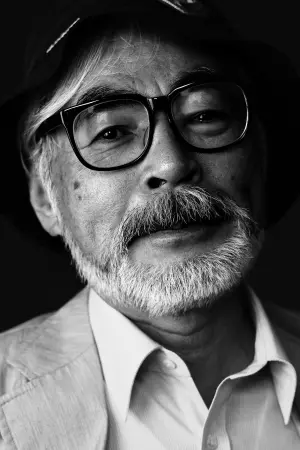

Producer



Matsuo Toshimitsu
Producer
Yoshio Sasaki
Producer
Executive Producer
Yoshio Sasaki
Executive Producer
Sokai Tokuma
Executive Producer
Matsuo Toshimitsu
Executive Producer
Editor

Production Design
Katsu Hisamura
Production Design
Second Unit Director
Shinichi Matsumi
Second Unit Director
Hiroshi Kawanishi
Second Unit Director
Masahito Yamamoto
Second Unit Director
Original Music Composer

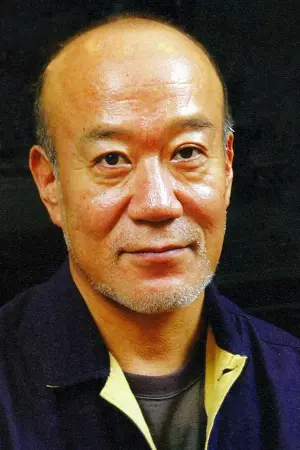
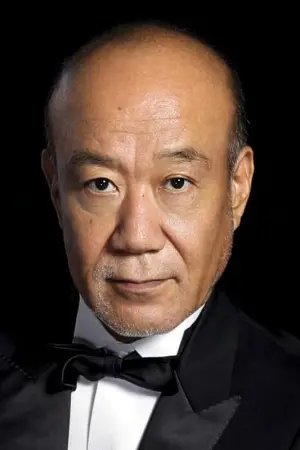
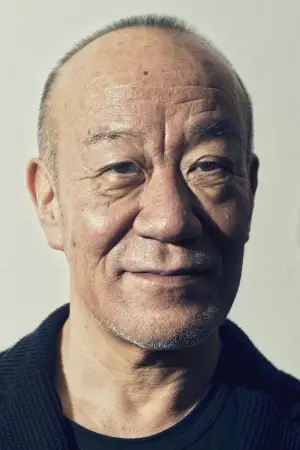
Director of Photography

Sound Effects Editor
Kazutoshi Sato
Sound Effects Editor
Sound Mixer
Makoto Sumiya
Sound Mixer
Production Manager
Nozomu Takahashi
Production Manager
Screenplay
Assistant Editor
Hiroshi Adachi
Assistant Editor
Hiroshi Adachi
Assistant Editor
Special Effects
Kaoru Tanifuji
Special Effects
Setsuko Tamai
Special Effects
Tomoji Hashizume
Special Effects
Other
Tatsumi Yamashita
Other
Hideo Ogata
Other
Production Assistant
Hiroyuki Ito
Production Assistant
Animation Director
Megumi Kagawa
Animation Director
Toshio Kawaguchi
Animation Director
Color Designer

Original Story
Sound Mix Technician
Hajime Takagi
Sound Mix Technician
Background Designer
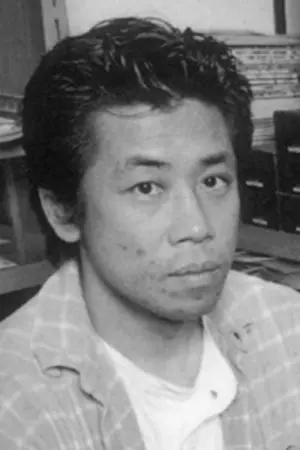
Yoji Takeshige
Background Designer
Naoya Tanaka
Background Designer

Satoshi Kuroda
Background Designer
Kyoko Naganawa
Background Designer
Kiyomi Oota
Background Designer
Akira Yamakawa
Background Designer
Naomi Sakimoto
Background Designer
Comic Book
Sound Effects
Hironori Ono
Sound Effects
Music Producer
Tomoko Okada
Music Producer
Yoshihiro Oikawa
Music Producer
Key Animation
Makiko Futaki
Key Animation

Masashi Ando
Key Animation


Yuji Shigekuni
Key Animation

Hiroko Minowa
Key Animation
Shinji Otsuka
Key Animation
Sachiko Sugino
Key Animation


Noriko Moritomo
Key Animation
Hiroshi Shimizu
Key Animation
Masako Shinohara
Key Animation

Kenichi Yoshida
Key Animation
Atsuko Otani
Key Animation

Shinji Morohashi
Key Animation
Akiko Hasegawa
Key Animation
Yuu Isomitsu
Key Animation
Atsuko Tanaka
Key Animation
Compositing Artist
Kumiko Taniguchi
Compositing Artist
Recording Supervision
What's left behind the scenes
- The film is based on Miyazaki's manga "The Age of the Flying Boat" [Hikoutei Jidai] (1990). However, the manga contained practically no mention of fascists or the love story between Porco and Gina.
- "Porco Rosso" was originally planned as a 30-45 minute film for showing on board aircraft of "Japan Airlines".
- Much of the events in "Porco Rosso" are based on real events and real people. The exception, of course, is the "pigheadedness" of Marco Pagot.
- The pirate gang "Mamma Aiuto" translates from Italian as "Mommy, help!".
- At the beginning of the film, titles are shown in the following languages: Japanese, Italian, Korean, English, Chinese, Spanish, Arabic, Russian, French, and German.
- In the film, Marco Pagott went to Milan to collect an airplane and discovered that only women were working at the factory. When he asked why, he was told that all the men had gone to work abroad due to the ‘Great Depression’. In reality, preparations for military and colonial conquests allowed Italy to emerge from the ‘Great Depression’ of the 1930s with minimal losses.
- The Japanese title of the film translates as ‘Crimson Pig’. However, Miyazaki recommended that foreign translators use the Italian version of the title. Crimson is the color of Porco’s seaplane.
- Porco turns into a pig specifically because Miyazaki himself loves pigs. He likes to depict himself as a pig and believes that ‘every man, upon reaching middle age, turns into a pig’.
- Marco Pagott is a real person, an Italian animator and a good friend of Miyazaki. Marco’s main rival, Donald Curtis, is named after Glenn Curtiss, one of the pioneers of American and world aviation.
- Initially, the film was to be set in one of the most beautiful cities on the Adriatic coast – Dubrovnik, Croatia, founded by the Romans. However, the Croatian and Yugoslav Wars began in 1991, and Serbian artillery practically wiped Dubrovnik off the face of the earth. Therefore, the film's action was moved to an unnamed island in the Adriatic. Specifically, the destruction of Dubrovnik prompted Miyazaki to make the film more serious.
- The seaplanes featured in the film actually existed, although Miyazaki slightly modified the design of most of them. Schneider Trophy seaplane races also existed. The only thing that didn't exist was an 'industry' of air piracy (although individual cases are known in the history of aeronautics).
- Tokiko Kato, who voiced Gina, Porco's former lover, in the film, is a famous Japanese singer.
- In the French dub of the film, the role of Porco was voiced by French actor Jean Reno. In the film that made him famous, 'Léon' (1994), Reno’s character says, 'Pigs are better than people.'
- The scene with the deceased pilots was taken from Roald Dahl’s story 'They Never Grow Old'.
- The original mentions an engine from "Folgore", but at the time of the film's events, neither the aircraft nor the engine could have existed.
- The film was based on Miyazaki's manga 'Hikoutei Jidai' (The Age of Hydroplanes) [1990]. However, the manga contained almost no mention of fascists or the love story between Porco and Gina.
- ‘Porco Rosso’ was originally planned as a 30-45 minute film for screening on board aircraft of ‘Japan Airlines’.
- In the film, Marco Pagot travels to Milan to assemble an airplane and discovers that only women are working at the factory. When he asks why, he is told that all the men have gone to work due to the ‘Great Depression’. In reality, preparations for military and colonial expansion allowed Italy to exit the ‘Great Depression’ of the 1930s with minimal losses.
- The Japanese title of the film translates as ‘Crimson Pig’. However, Miyazaki recommended that foreign translators use the Italian version of the title. Crimson is the color of Porco’s seaplane.
- Porco transforms into a pig specifically because Miyazaki himself adores pigs. He likes to depict himself as a pig and believes that “every man, upon reaching middle age, turns into a pig.”
- The seaplanes featured in the film actually existed, although Miyazaki slightly modified the design of most of them. Schneider Trophy seaplane races also existed. What didn’t exist was an “industry” of air piracy (although individual instances of such things are known in the history of aeronautics).
- In the French dub of the film, the role of Porco was voiced by the French actor Jean Reno. In the film that made him famous, “Léon” (1994), Reno’s character says, “Pigs are better than people.”
- The scene with the deceased pilots is borrowed from Roald Dahl’s story “They Never Grow Old.”
- The original mentions an engine from a “Folgore,” but at the time of the film’s events, neither that aircraft nor the engine could have existed.
Did you like the film?
 Auditions in India
 Casting calls in USA
 Castingi w Polsce
 Кастинги в Україні
