War and Peace - crew, film crew
The entire team, the film crew of the film "War and Peace"
War and Peace (1956)
Timing:
3:28 (208 min)

6.637/10
230
230

6.686/10
3337
3337

6.7/10
10650
10650
Film crew
Director


Producer
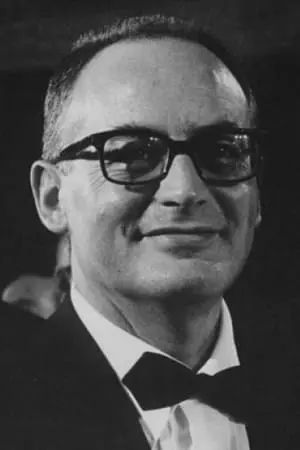
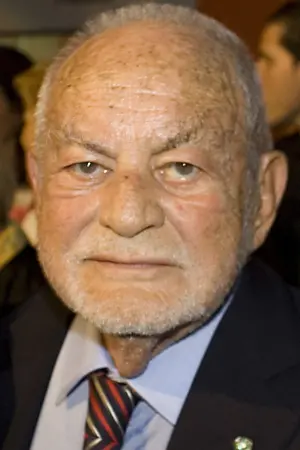
Executive Producer
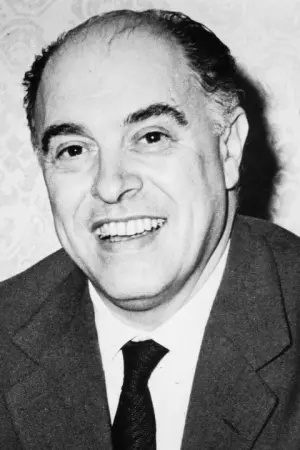
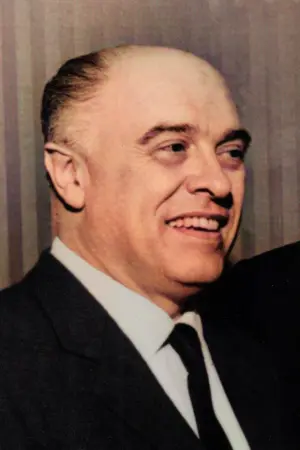
Editor

Leo Catozzo
Editor
Art Direction
Set Decoration
Makeup Artist
Bud Bashaw Jr.
Makeup Artist
Original Music Composer
Director of Photography
Assistant Art Director
Gianni Polidori
Assistant Art Director
Production Manager
Bruno Todini
Production Manager
Costume Designer
Maria De Matteis
Costume Designer
Screenplay
Ivo Perilli
Screenplay


Gian Gaspare Napolitano
Screenplay

Robert Westerby
Screenplay
Novel
Makeup Supervisor
Alberto De Rossi
Makeup Supervisor
Gaffer
Bill Neff
Gaffer
Assistant Director
Guidarino Guidi
Assistant Director

Second Unit Director of Photography
Sound Recordist
Charles Knott
Sound Recordist
Supervising Editor
Stuart Gilmore
Supervising Editor
Sound Editor
Leslie Hodgson
Sound Editor
Dialogue Coach

Guy Thomajan
Dialogue Coach
What's left behind the scenes
- An adaptation of the famous novel by Leo Tolstoy.
- Marlon Brando refused to play Pierre Bezukhov because he did not want to work with Audrey Hepburn.
- Audrey Hepburn suggested Peter Ustinov for the role of Pierre Bezukhov, while the film's producer, Dino De Laurentiis, envisioned Gregory Peck, Audrey Hepburn's co-star in "Roman Holiday," in the part. Director King Vidor favored Paul Scofield, Stuart Granger, or Richard Burton. Gino Cervi, Massimo Serato, and Sebastian Cabot were also considered.
- Some time after the film's release, Henry Fonda admitted that he was aware of the significant age difference between himself and his character, Pierre Bezukhov, and that he only took the role for the money.
- The voices of actresses May Britt and Anita Ekberg were dubbed by other performers.
- The first draft of the script contained 506 pages, five times the size of an average screenplay.
- In early April 1955, Dino De Laurentiis and King Vidor offered the leading roles to Mel Ferrer and Audrey Hepburn.
- Filming began on July 4, 1955, and took place in Italy. Studio scenes were shot in Rome and in a pavilion at the Cinecittà Studios, travel scenes in Felonica (province of Mantua), large-scale battle scenes in Pinerolo (province of Turin), and winter scenes in Finland.
- Audrey Hepburn’s fee was the highest ever received by an actress up to that time. For twelve weeks of filming, she received $350,000; $500 per week for living expenses, and $27,500 for each week of work beyond the shooting schedule. She was provided with a car and driver around the clock for the entire duration of filming. The script, cast, cinematographer, and makeup artists all required her approval.
- When Hepburn was informed of her record fee, she modestly told her agent, Kurt Frings, “I’m not worth it. It’s impossible. Please don’t tell anyone.”
- Due to the ten-hour workday, a miscarriage, and general weakness, Audrey later said that the role of Natasha was the most challenging of her life.
- Fredric March auditioned for the role of Kutuzov.
- Jeremy Brett was cast as Nikolai Rostov in part because he physically resembled his on-screen sister, Audrey Hepburn.
- Audrey Hepburn asked Hubert de Givenchy to design costumes for Natasha Rostova, but he refused, believing that working on “historical” costumes would undermine the authority of a leader in modern fashion. However, he flew to Rome several times to assess the choice of fabrics and colors for Audrey's costumes in “War and Peace”.
- Between 5 and 8 thousand Italian soldiers were used as extras in the battle scenes.
- Over 100,000 sets of military uniforms, costumes, and wigs were made based on original engravings and paintings from the Napoleonic era.
- During the filming of the battle scenes, producers hired 65 doctors, who were dressed in soldier’s uniforms and stationed throughout the area to provide assistance in case of injury to any of the extras or stunt performers.
- In the scene where the Rostovs invite Prince Andrei to join them on a hunt, Jeremy Brett is the only actor riding a real horse. Audrey Hepburn, Henry Fonda, Mel Ferrer, Barry Jones, and May Britt were filmed on mechanical horses in all of their close-ups.
- King Vidor himself directed the episode of the Battle of Borodino, instead of delegating it to a second unit director, as was customary.
- There are two different versions of the opening credits. Both are in English. In the first, the cast list is placed against a neutral background, while in the second it is against a backdrop of paintings depicting Napoleon before his troops.
- Arlene Dahl was originally cast as Hélène, but was replaced by Anita Ekberg due to illness.
- In the episode where Natasha visits the wounded Prince Andrei, a recording of the famous romance "Burn, Burn, My Star" performed by Georgy Vinogradov is used, with guitar accompaniment by Alexander Ivanov-Kramskoy.
- When Natasha sits by the bedside of the dying Prince Andrei, both her hands are resting on her knees. In the next shot, when Kolya enters the room, her right hand is on the top of the bedpost.
- Despite the Battle of Austerlitz taking place in December, the trees are covered in green foliage.
- The motif of the hymn "God Save the Tsar!" sounds in several scenes of the film, although it was written much later than the historical events depicted.
- The uniforms of the Russian officers at the beginning of the film are from 1812, not 1805. In 1805, the Russian army did not have epaulettes with fringe; they only had shoulder straps.
- In the battle scene at Austerlitz, Prince Andrei dismounts to take the flag from a falling wounded soldier. In the next frame, the wounded soldier falls to his knees a second time as Prince Andrei runs towards him.
- After the opera, when Anatole and Natasha meet, he approaches her from behind and puts his left hand on her shoulder. The next frame shows them a short distance apart.
Did you like the film?
 Auditions in India
 Casting calls in USA
 Castingi w Polsce
 Кастинги в Україні
