Mongol: The Rise of Genghis Khan - crew, film crew
The entire team, the film crew of the film "Mongol: The Rise of Genghis Khan"
Монгол (2007)
Timing:
2:5 (125 min)

6.786/10
657
657

7.193/10
158194
158194

7.2/10
51000
51000
Film crew
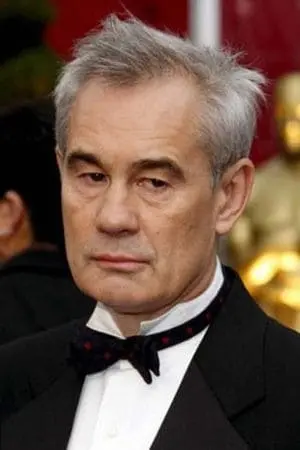
Director
Producer
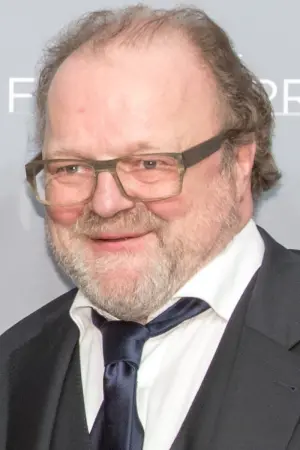

Manuela Stehr
Producer

Marcos Kantis
Producer
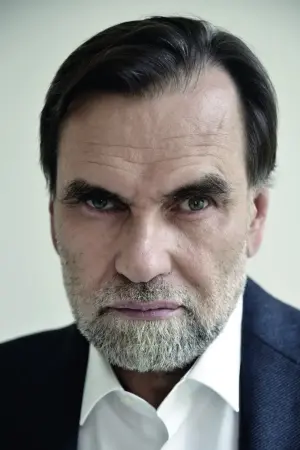
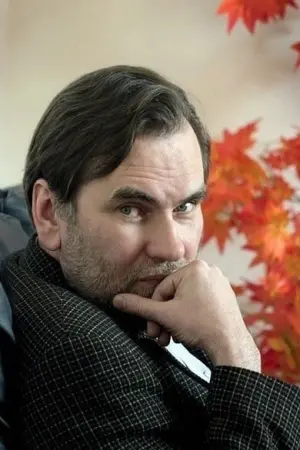
Anton Melnik
Producer
Alec Schulmann
Producer

Ulli Neumann
Producer
Bob Berney
Producer
Writer
Arif Aliev
Writer
Casting

Han Wei Biao
Casting
Ui Ri Ji Tu
Casting
Editor
Valdís Óskarsdóttir
Editor
Zach Staenberg
Editor
Art Direction
Wang Min Kwa
Art Direction
Hai Ming Xiang
Art Direction
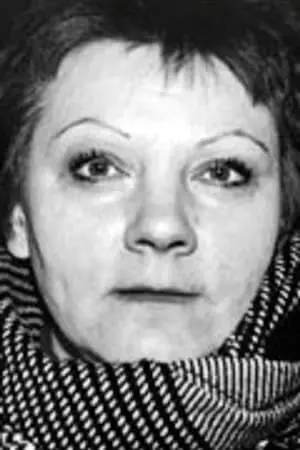
Elena Zhukova
Art Direction
Costume Design
Karin Lohr
Costume Design
Production Design
Dashi Namdakov
Production Design
Stunt Coordinator
Oleg Korytin
Stunt Coordinator
Byung Joon Yoon
Stunt Coordinator
Yoon Jin-yul
Stunt Coordinator
Second Unit Director
Set Decoration
Xin Wei An
Set Decoration
Original Music Composer

Tuomas Kantelinen
Original Music Composer
Director of Photography
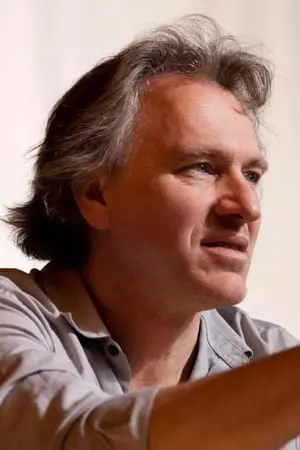
Sergey Trofimov
Director of Photography

Rafik Galeev
Director of Photography
Camera Operator
Alexey Solodov
Camera Operator
Steadicam Operator
Viktor Zubarev
Steadicam Operator
Costume Supervisor

Huang Baorong
Costume Supervisor
Sound Effects Editor
Hartmut Teschemacher
Sound Effects Editor
Thomas Knop
Sound Effects Editor
Guido Zettier
Sound Effects Editor
Assistant Art Director
Zhang Xiao Ming
Assistant Art Director
Jing Tao Zhao
Assistant Art Director
Property Master
Li Baotai
Property Master
Visual Effects Supervisor
Andrey Mesnyankin
Visual Effects Supervisor
Sergey Muravev
Visual Effects Supervisor
Dmitriy Tokoyakov
Visual Effects Supervisor
Arman Yakhin
Visual Effects Supervisor
Supervising Sound Editor
Stephan Konken
Supervising Sound Editor
Script Supervisor
Gulmira Karchalova
Script Supervisor
Special Effects Coordinator
Jianping Xia
Special Effects Coordinator
Still Photographer
Igor Vereshchagin
Still Photographer
Alexander Zabrin
Still Photographer
Sound Mixer
Bruno Tarrière
Sound Mixer
Visual Effects Producer
Aleksey Gusev
Visual Effects Producer
Screenplay
Set Designer
Zhi Xiang Shi
Set Designer
Location Manager
Wan Ding
Location Manager
Gau Ming Ku
Location Manager
Music
Tuomas Kantelinen
Music
Line Producer
Max Wang
Line Producer
Sound Recordist
Amedeo Malagia
Sound Recordist
Foley
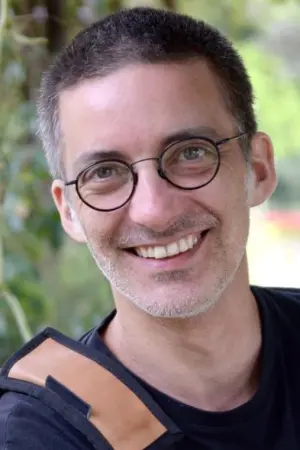
Martin Langenbach
Foley
What's left behind the scenes
- Filming took place mostly in Kazakhstan and China. In China, it was organized in Inner Mongolia, an autonomous region in northern China with a larger population of Mongols than Mongolia itself.
- Film director Sergei Bodrov and artist Dashi Namdakov specifically requested permission from the supreme shaman of Mongolia in the country's capital, Ulaanbaatar, to film a movie about Genghis Khan. He replied that many had spoken about filming such a movie, but they were the first to ask his permission.
- Filming took 14 months. 400 people worked on the film (300 from China and 100 from Russia). Over 1,500 extras were involved. Due to the participation of representatives from so many nationalities (Germans, Mongols, Chinese, Japanese, Russians, Ukrainians, Kazakhs), a team of 30 translators was constantly present on set.
- The film's epigraph is the Mongolian proverb, "Do not despise the weak cub, for he may turn out to be the son of a tiger."
- Over 1,500 riders were involved in the final battle scene. Their arrival from Kazakhstan to Inner Mongolia, where filming took place, had to be organized. The riders were not actors, and it took 2 months to train them to work in front of the camera.
- During breaks in filming, many extras consumed alcohol, which often led to quarrels between representatives of different nationalities. The filmmakers bought several soccer balls in the hope of distracting people from alcohol. This helped for a while, but soon the extras returned to the bottle. After that, the second assistant director came up with the idea of hiring singers and dancers. They were brought to the filming location, where they performed for the extras during breaks between shooting mass scenes. The problem was solved.
- Prior to filming scenes with Temujin, played by Tadanobu Asano, and Borte, played by Khulan Chuluun, director Sergei Bodrov forbade the actors from seeing each other and deliberately kept them apart. Bodrov did not want the actors to feel too comfortable in each other's company, as their characters had lived apart for several years.
- Some of the locations chosen for filming were in such remote areas that roads had to be built to transport the filming equipment.
- The film was shot in such a remote location that daily work with the footage was simply impossible. Fresh material had to be sent to Hamburg, Germany for development, and then returned to China for viewing. This process took 3 weeks, whereas usually filmed material is developed and returned to the filmmakers within 24 hours.
- Before appearing on screen as Borte, Khulan Chuluun studied to be a journalist and had never acted in a film before. Gulshat Omarova, responsible for casting, was tasked by director Sergei Bodrov with searching for a suitable actress in Mongolia. Her search for an actress for the role of Borte was unsuccessful. Disappointed, Omarova went to the Chinese embassy to extend her visa to return to China. It was at the embassy that she accidentally came across Chuluun and persuaded her to audition.
- Before filming scenes involving Temujin (Tadanobu Asano) and Börte (Hulan Chuluun), director Sergei Bodrov prevented the actors from seeing each other and kept them apart, so they wouldn't feel too comfortable in each other's company, as their characters had lived apart for several years.
- The film is prefaced with the Mongolian proverb, “Do not despise the weak cub, for he may turn out to be the son of a tiger.”
Did you like the film?
 Auditions in India
 Casting calls in USA
 Castingi w Polsce
 Кастинги в Україні
