The Hills Have Eyes - crew, film crew
The entire team, the film crew of the film "The Hills Have Eyes"
The Hills Have Eyes (1977)
Timing:
1:30 (90 min)

6.2/10
976
976

6.136/10
8074
8074

6.3/10
43000
43000
Film crew
Director
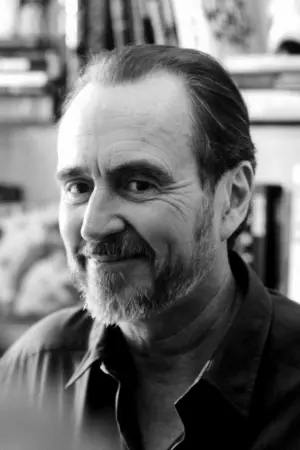
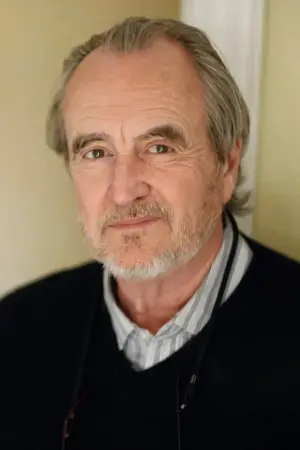
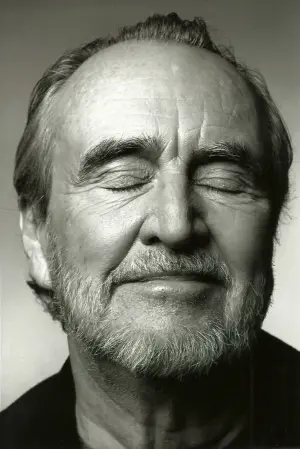
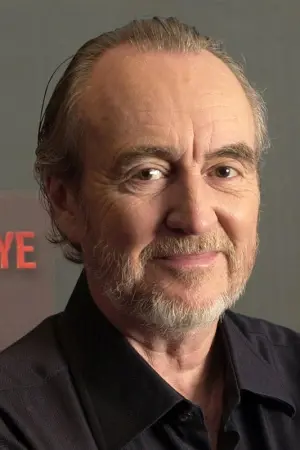
Producer
Peter Locke
Producer
Writer
Casting
Gus Schirmer
Casting
Editor
Art Direction

Robert A. Burns
Art Direction
Costume Design
Joanne Jaffe
Costume Design
Stunts
Al Jones
Stunts
Stunt Coordinator
Makeup Artist
Donald Mulderick
Makeup Artist
Karen Grant
Makeup Artist
Original Music Composer
Don Peake
Original Music Composer
Director of Photography
Eric Saarinen
Director of Photography
Script Supervisor
Joanie Blum
Script Supervisor
Still Photographer
Ray Fischer
Still Photographer
Sound Mixer
Jan Schulte
Sound Mixer
Production Manager
Walter R. Cichy
Production Manager
Set Designer
J. Larry Carroll
Set Designer
Location Scout
Tom Pickette
Location Scout
Assistant Editor
Robert Alsheimer
Assistant Editor
Best Boy Grip
Ken Wheeland
Best Boy Grip
Props
Mary Church
Props
Key Grip
Lynn Rogers
Key Grip
Grip
Larry Boyd
Grip
Bill Moore
Grip
Richard Scheid
Grip
Special Effects
John Frazier
Special Effects
Greg Auer
Special Effects
Special Effects Makeup Artist
Dave Ayres
Special Effects Makeup Artist
Ken Horn
Special Effects Makeup Artist
Gaffer
Dennis Bishop
Gaffer
Assistant Director
Valley Hoffman
Assistant Director
Conductor
Don Peake
Conductor
Sound Engineer
Hal Watkins
Sound Engineer
Production Assistant
Rhonda Hopkins
Production Assistant
Florence M. Amico
Production Assistant
Location Coordinator
Tom Pickette
Location Coordinator
Wardrobe Supervisor
Paula Cain
Wardrobe Supervisor
Second Unit
Craig Felburg
Second Unit
Carolyn Ames
Second Unit
Karen Grant
Second Unit
Tim Wawrzeniac
Second Unit
Bob Eber
Second Unit
Rick Braverman
Second Unit
Animal Coordinator
Jim Dannaldson
Animal Coordinator
Moe DiSesso
Animal Coordinator
Tom Morrocco
Animal Coordinator
Sound Effects
David Lee Fein
Sound Effects
David Marsh
Sound Effects
Peter Hitchcock
Sound Effects
Jill Debin
Sound Effects
Producer's Assistant
Rose Marie Yurinko
Producer's Assistant
Assistant Camera
Leslie Otis
Assistant Camera
Assistant Sound Designer
D. G. Fisher
Assistant Sound Designer
Presenter
Peter Locke
Presenter
What's left behind the scenes
- A torn poster for the film "Jaws" (1975) is visible in the movie.
- Research at the New York Public Library led Wes Craven to the story of the Sawney Bean cannibal family, who in 15th-century Scotland lured travelers into a trap.
- The film's plot is based on the legend of Sawney Bean and his family (wife, eight sons and six daughters) – a clan of wild, insane, cannibalistic maniacs who lived in the mountains near Edinburgh, East Lothian County, Scotland in the early 15th century. They captured, tortured, and ate several travelers. Eventually, all members of the Sawney Bean clan were captured by order of the King of Scotland, James, recognized as dangerous lunatics, and, according to the laws of the time, executed without trial.
- Much of the props in the cave of the wild cannibal family were taken by production designer Robert A. Barns from his previous project – the cult horror film 'The Texas Chain Saw Massacre' (1974).
- Although Brenda Marinoff is credited as the sole performer of the baby Katie role, another baby was actually used in the film, whose identity remains a secret.
- The initial version of the film received an X rating, which meant extremely limited distribution and, consequently, fatally reduced box office revenue. Wes Craven shortened the film, cutting all the most bloody and violent episodes, which allowed it to receive a milder R rating.
- The idea for the film came to director and screenwriter Wes Craven partly as a result of an incident that occurred during a motorcycle trip with his wife. When the Cravens stopped in a small town in Nevada, they were harassed by three locals. It started with them shooting a crossbow bolt over his head, and then escalated to outright insults. When Craven stated he would sue them, the local trio assured the travelers they would simply be killed, their bodies dumped into a nearby salt mine, and no one would ever know what happened.
- Difficulties arose during the scene where Virginia Vincent's character (who played Ethel Carter) is shot, due to a hidden flammable substance under the actress's dress. The actress even had to be briefly taken to the hospital.
- Wes Craven originally planned to title the film "Blood Relations," but producer Peter Locke disliked it. Many different options were tried, and it turned out that the audience was most eager to attend previews for a film titled "The Hills Have Eyes," although Craven himself initially did not like the title.
- During the casting process for the role of Ruby, the candidates were asked to run a short distance. When Craven shouted “Go!”, and everyone dashed off, Janus Blythe hesitated at the start, then ran and finished the distance first. She was given the role.
- According to Janus Blythe, Wes Craven constantly insisted that she cover herself in dirt as much as possible before filming, because, in his opinion, she looked too attractive for a character who had lived in the desert her entire life.
- The scene with the tarantula was not written into the script. Someone from the crew simply noticed a spider near the set and decided to use it in the filming (the insect was not harmed during the process and was later released). Dee Wallace-Stone (who played Lynn) is very afraid of spiders, so she didn’t even have to try hard to portray fear in the scene with the tarantula.
- According to Robert Houston, who played Bobby, much of the actor selection for a particular character depended on whether the actor or actress could cry on cue.
- According to Susan Lanier, her agent strongly advised her not to take on the role of Brenda, claiming that it could ruin her entire future career. Nevertheless, Lanier, a big fan of horror films and a devotee of Craven, ignored him and did as she pleased.
- Filming in the desert was difficult. Walking, let alone running, on the rocky surface was challenging. During the day, the temperature rose to 48 degrees Celsius, and at night it dropped to minus one.
- During the preparation for filming the scene in the crevice between the rocks, a rattlesnake escaped from its enclosure. All the filmmakers and actors involved in the scene were frightened and immediately fled the crevice. The snake was found and returned to its enclosure almost immediately.
- When we see the dog named Beauty being stabbed, it’s not a prop, but a real dead dog in the frame. The animal was not killed for the filming: director Wes Craven and producer Peter Lock bought the carcass of a deceased dog from the local sheriff's department.
- Much of the props in the cave of the wild cannibal family were taken by artist Robert A. Barns from his previous project – the cult horror film “The Texas Chain Saw Massacre” (1974).
- Initially, Wes Craven planned to title the film "Blood Relations," but producer Peter Locke disliked it. Many different options were tried, and it turned out that audiences were most eager to attend previews for a film called "The Hills Have Eyes," although Craven himself initially didn't like the title.
Did you like the film?
 Auditions in India
 Casting calls in USA
 Castingi w Polsce
 Кастинги в Україні
