Mirror - crew, film crew
The entire team, the film crew of the film "Mirror"
Зеркало (1975)
Timing:
1:47 (107 min)

7.952/10
1089
1089

0/10
12
12

6.6/10
13
13
Film crew
Director
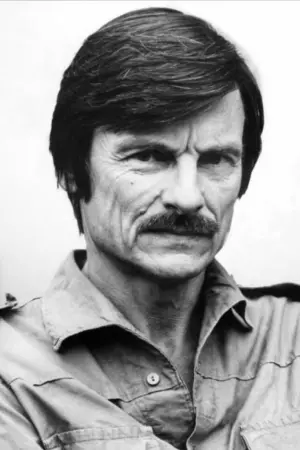
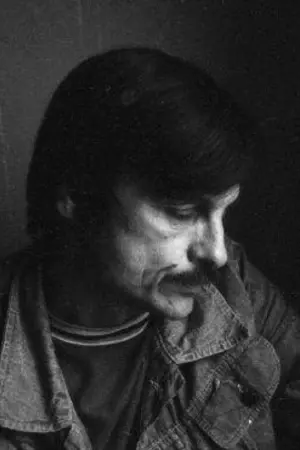
Producer
Erik Waisberg
Producer
Executive Producer
Erik Waisberg
Executive Producer
Writer
Aleksandr Misharin
Writer
Editor
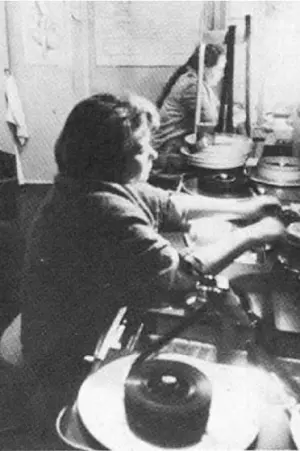
Lyudmila Feiginova
Editor
Costume Design
Nelli Fomina
Costume Design
Production Design
Nikolay Dvigubskiy
Production Design
Set Decoration
A. Merkulov
Set Decoration
Makeup Artist
Vera Rudina
Makeup Artist
Original Music Composer
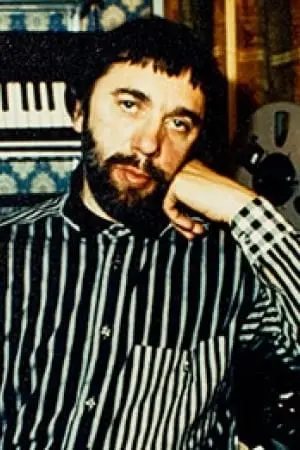
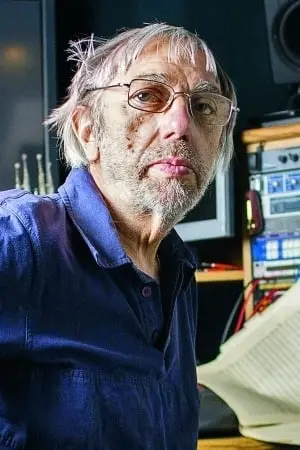
Director of Photography


Camera Operator
Anatoliy Nikolayev
Camera Operator
Igor Shtanko
Camera Operator
Still Photographer
Vadim Murashko
Still Photographer
First Assistant Director
Mariya Chugunova
First Assistant Director
Valeriy Kharchenko
First Assistant Director
Production Manager
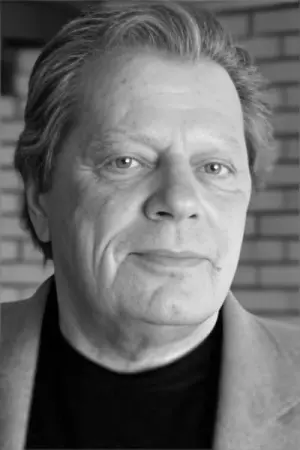

Yuriy Kushneryov
Production Manager
Construction Foreman
A. Merkulov
Construction Foreman
Assistant Director
Mariya Chugunova
Assistant Director
Valeriy Kharchenko
Assistant Director
Yuriy Kushneryov
Assistant Director
Music
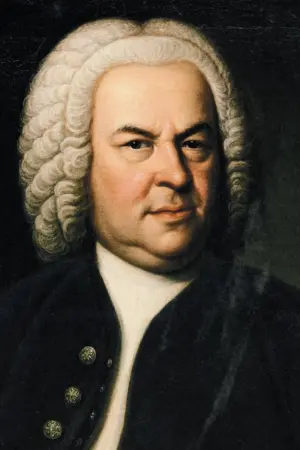
Henry Purcell
Music
Giovanni Battista Pergolesi
Music
Sound
Semyon Litvinov
Sound
Lighting Director
V. Gusev
Lighting Director
Sound Director
Semyon Litvinov
Sound Director
Assistant Camera
Ventzislav Ivanov
Assistant Camera
Vladimir Ivanov
Assistant Camera
Author


VFX Director of Photography
Yuri Potapov
VFX Director of Photography
Poem
Script Editor
N. Boyarova
Script Editor
L. Lazarev
Script Editor
What's left behind the scenes
- Originally, there was no role for Anatoly Solonitsyn in the script; it was created specifically for him. (From the recollections of M. Terekhova).
- In Alexei's apartment, while he is talking on the phone with his mother, you can notice a poster for the film 'Andrei Rublev,' which was also directed by Andrei Tarkovsky.
- The idea for the film arose in 1967 after the completion of filming for "Andrei Rublev." According to the recollections of playwright A. Misharin, during a walk with Tarkovsky along the Izmailovo Ponds, the conversation turned to a screenplay that would reflect the current state of the country, the present day, the realities of our lives. The plot of the proposed film largely coincided with Tarkovsky's real life, in particular, details such as his father's departure from the family and the protagonist's difficult relationship with his parents were discussed.
- The film's screenplay was titled "White, White Day."
- A. Misharin and A. Tarkovsky began writing the screenplay in early 1968 at the "Repino" cinematographers' sanatorium near Leningrad. The plot emerged from Tarkovsky's own memories, stories told by others, discussions of literary works, and so on. Initially, there were no written notes. Only after a large number of ideas and images had accumulated did Misharin and Tarkovsky begin to try to systematize everything they had discussed. 36 episodes were identified (later, taking into account the intended length of the film, their number was reduced to 28). After that, the screenplay began to be transcribed to paper – they would write two episodes daily, discuss them, and make corrections. The screenplay was completed in two weeks, 14 episodes were written by Misharin, and 14 by Tarkovsky. The screenplay had an unusual form: it was structured around a hypothetical dialogue with Tarkovsky’s mother in the form of a questionnaire – she answered questions about her life, and each of her answers was accompanied by a kind of cinematic commentary.
- The screenplay was supported at the studio of Grigory Chukrai's experimental creative association, but the chairman of Goskino, A.V. Romanov, was categorically against it. The realization of the "White, White Day" screenplay proved impossible, and Tarkovsky had to turn to another topic: he began filming "Solaris."
- In 1972, F.T. Yermash was appointed chairman of Goskino, the views of Soviet cinema officials became more liberal, and Tarkovsky received permission to film "White, White Day." Before starting work on the film, the director revisited the approach to the screenplay, in which the dialogue with his mother was supposed to be filmed with a hidden camera. Tarkovsky decided to rewrite the screenplay, as a result of which the dialogue in the form of a questionnaire with his mother, which preceded each episode, was removed. Moreover, when the film was launched into production, the screenplay was constantly changing, and each day the film crew did not know which scene would be filmed. The co-authors of the screenplay reworked the scene on the eve of filming and arrived on set with scraps of paper on which the new version of the episode was written.
- During filming, new episodes were added, replacing the interview with the mother that had been removed from the script, and the mother's role, as played by M. Terekhova, was significantly expanded.
- According to Oleg Yankovsky, part of the film was shot in Tuchkovo.
- While filming one of the last episodes of the film, Tarkovsky proposed a new title for the picture – "Mirror".
- After filming was completed, during the editing stage, the screenwriter and director faced difficulties in choosing the sequence of the film's episodes. A total of 32 episodes were filmed. Tarkovsky proposed creating a "letterbox with 32 compartments" and placing a card with the title of each episode in each compartment: "Selling Earrings", "Printing House", "Hypnosis Session", "Spaniards", and so on. According to A. Misharin's recollections, rearranging the cards took more than 20 days—each variation of the sequence revealed episodes that did not fit into the imagery, were not connected to, or did not flow from other episodes. Ultimately, a solution was found after one of the episodes was moved to the prologue, after which the sequence of all the remaining episodes harmoniously "fell into place".
- L. Feiginova was responsible for the film's editing. According to her, she insisted that the episode "I Can Speak", which was originally intended to be within the film, be moved to the prologue. In addition, Tarkovsky accepted her suggestion to read poetry against the backdrop of newsreel footage, thereby making the poetry "more authentic and accessible, and the newsreel—more poetic".
- The film's premiere was held in a narrow circle, with D. Shostakovich, P. Kapitsa, V. Shklovsky, P. Nilin, Yu. Bondarev, and Ch. Aitmatov invited. Their feedback on the film was positive.
- According to A. Misharin, the Chairman of Goskino, F.T. Ermash, after watching the film, paused for a long time and then said: 'We certainly have freedom of creativity! But not to this extent!' On the one hand, no corrections were made to the finished film; on the other hand, the Chairman of Goskino's reaction influenced the film's distribution – it was shown in only a few cinemas in Moscow.
- F.T. Ermash twice promised to send the film 'Mirror' to the Cannes Film Festival, but never gave permission, and the film was also not entered into the Moscow Film Festival competition. At the same time, the film was sold to foreign distribution companies and shown in France, Italy, and other countries. In Italy, 'Mirror' was named the best foreign film of 1980.
Did you like the film?
 Auditions in India
 Casting calls in USA
 Castingi w Polsce
 Кастинги в Україні
