Doctor Dolittle - crew, film crew
The entire team, the film crew of the film "Doctor Dolittle"
Doctor Dolittle (1967)
Timing:
2:32 (152 min)

6.105/10
167
167

6.21/10
966
966

6.2/10
11000
11000
Film crew
Director
Producer
Arthur P. Jacobs
Producer
Editor
Samuel E. Beetley
Editor
Marjorie Fowler
Editor
Art Direction
Jack Martin Smith
Art Direction
Ed Graves
Art Direction
Costume Design
Ray Aghayan
Costume Design
Production Design
Set Decoration
Walter M. Scott
Set Decoration
Stuart A. Reiss
Set Decoration
Original Music Composer
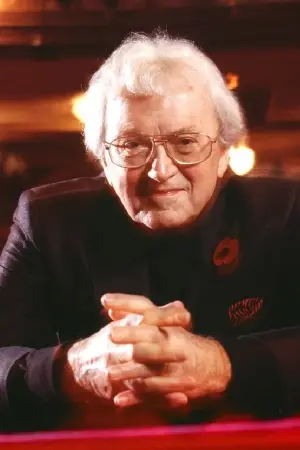
Leslie Bricusse
Original Music Composer
Unit Production Manager
William Eckhardt
Unit Production Manager
Jack Stubbs
Unit Production Manager
Associate Producer
Mort Abrahams
Associate Producer
Second Assistant Director
Ray Corbett
Second Assistant Director
Paddy Carpenter
Second Assistant Director
Director of Photography
Script Supervisor
June Santantonio
Script Supervisor
Screenplay
Leslie Bricusse
Screenplay
Novel
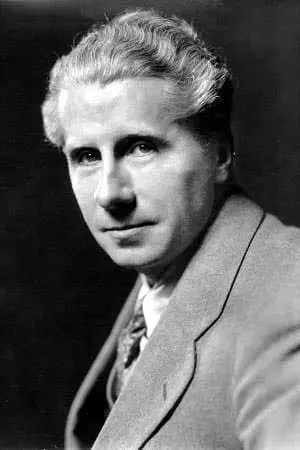
Hugh Lofting
Novel
Songs
Leslie Bricusse
Songs
Assistant Director
What's left behind the scenes
- The film was part of 20th Century Fox's ambitious plans to replicate the success of the musical *The Sound of Music* (Robert Wise, 1965) with films like *Star!* (Robert Wise, 1968), *Doctor Dolittle*, and *Hello, Dolly!* (Gene Kelly, 1969). All the films were released with a large-scale promotional campaign and yet proved surprisingly unprofitable. The studio lost a tremendous amount of money. Several of its high-ranking employees lost their jobs, and 20th Century Fox found itself in such a financial hole that it released only one film throughout the entire year of 1970.
- No one expected problems filming ducks on the pond until the birds, placed on the water, began to sink. It turned out the filming took place during a season when ducks lack a special oil on their feathers that allows them to stay afloat.
- The film received scathing reviews from critics, and the news that it was nominated for an "Oscar" for "Best Picture" caused a considerable scandal. Anthony Holden claims in his 1994 book "Behind the Oscar," that this happened because the film company spared no expense courting members of the Academy of Motion Picture Arts and Sciences. As a result, the film was indeed nominated for the award in 9 categories, including "Best Picture."
- The piglet appearing in the film had to be replaced several times, as piglets grow very quickly.
- The squirrels involved in the filming damaged (gnawed on) some of the set decorations. Several thousand dollars were spent on their repair and replacement.
- Filming the scene in which Rex Harrison (1908-1990) sings in a field among sheep had to be interrupted several times to spray the actor with insect repellent. Moreover, several sheep decided to urinate on him, which also did not contribute to the filming process.
- During a break in filming, a goat left the set and ate the director's copy of the script.
- Producers felt Rex Harrison was too old at 58 to play Dr. Dolittle, but hoped his name alone would help the film repeat the success of the dramatic musical "My Fair Lady" (George Cukor, 1964).
- The script required a squirrel to sit next to the parrot for a few seconds while Dolittle sang it a few lines. They initially tried tying its paws to a perch, but that didn't work. One of the producers eventually found a veterinarian who gave the animal a sedative before the evening shoot. The squirrel was given gin, drop by drop, from a refilled fountain pen until it became "limp." As Rex Harrison later recounted: "...the squirrel managed to sit still for a few seconds, nodding and swaying, .. and then simply passed out."
- The pink sea slug is an 8-ton machine worth $65,000.
- Hundreds of animals were trained in California for filming, but their arrival in the UK was prohibited due to the country's specific national legislation. New animals had to be trained on location, and it cost a pretty penny.
- During filming in warm weather, the actors and technical crew greatly suffered from bites of blood-sucking insects. Often, the bite wounds began to fester. Anthony Newley and William Dix fell ill with the flu.
- Along with Joshua Logan's *Camelot*, which was released a couple of months earlier, the film *Doctor Dolittle* is accused of "killing" the genre of musicals for family viewing.
- The film used over 1,200 animals, including dogs, pigs, birds, and even giraffes. One of the giraffes died on set.
- The cost of keeping the animals averaged $750 per week.
- Set decorator Stuart A. Reiss later recalled that the sets in California had to be arranged on a slope so that animal waste could be washed away with a hose if necessary. In addition, workers with long brushes were constantly on duty on the sets for the same purpose. All the decorations, including even the walls, had to be created in duplicate, because any element could be damaged by a large animal at any moment. The smell on the sets was unbearable—from animal excrement and detergent. Birds were usually tied by the foot to perches, but some of them occasionally broke free and invariably became entangled in the net stretched above.
Did you like the film?
 Auditions in India
 Casting calls in USA
 Castingi w Polsce
 Кастинги в Україні
