The Green Inferno - crew, film crew
The entire team, the film crew of the film "The Green Inferno"
The Green Inferno (2013)
Timing:
1:40 (100 min)

5.705/10
1375
1375

5.286/10
17032
17032

5.4/10
54000
54000
Film crew
Director

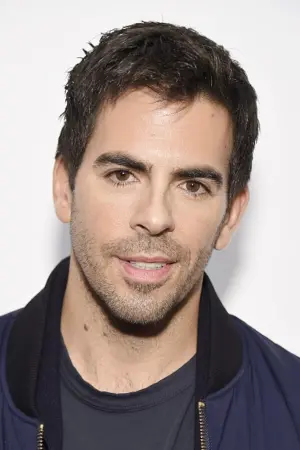

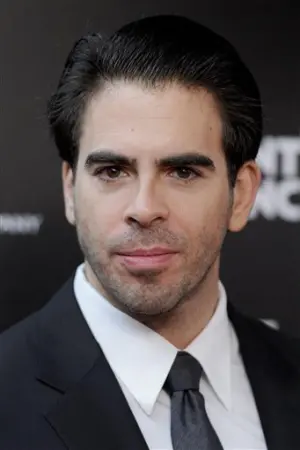
Producer


Molly Conners
Producer
Miguel Asensio Llamas
Producer

Christopher Woodrow
Producer
Executive Producer
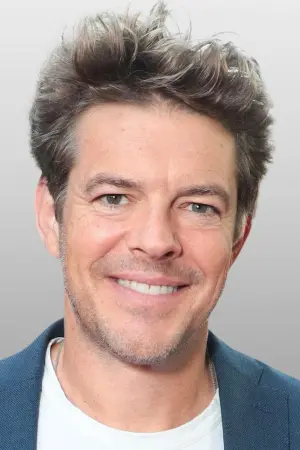
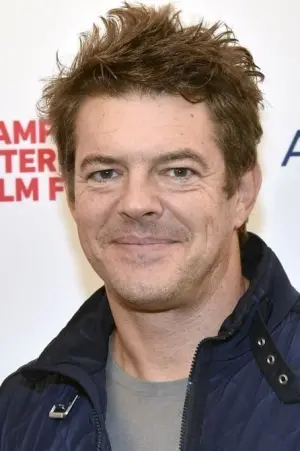
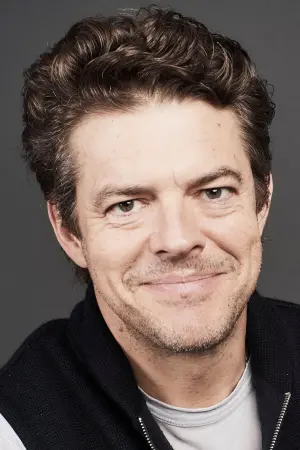
Maria Cestone
Executive Producer
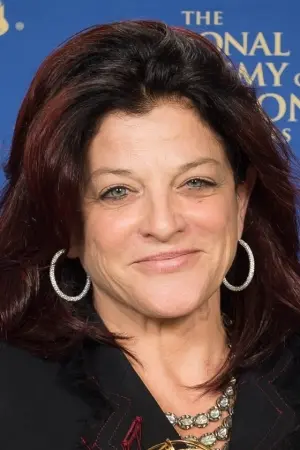
Sarah E. Johnson
Executive Producer
Hoyt David Morgan
Executive Producer
Michael Joe
Executive Producer
Casting
Kelly Wagner
Casting
Dominika Posserén
Casting
Editor
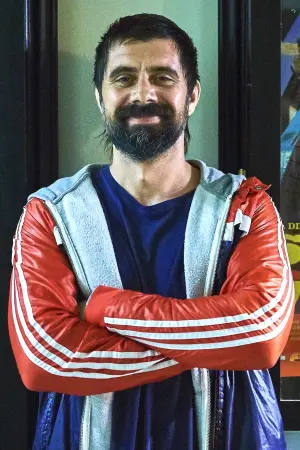

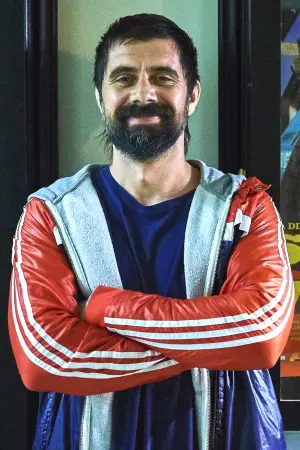
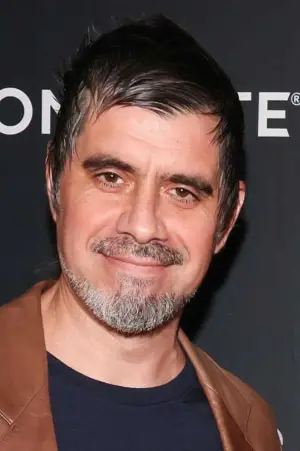
Art Direction
Nicholas Tong
Art Direction
Fernando Alé
Art Direction
Costume Design
Elisa Hormazábal
Costume Design
Kama K. Royz
Costume Design
Production Design
Marichi Palacios
Production Design
Paola Zoccola
Production Design
Stunt Coordinator
Wernher Schurmann
Stunt Coordinator
Set Decoration
Armann Ortega
Set Decoration
Makeup Artist
Cristián Barraza
Makeup Artist
Paul Bichón
Makeup Artist
Sound Re-Recording Mixer
Martin Seltzer
Sound Re-Recording Mixer
Mauricio Molina
Sound Re-Recording Mixer
Original Music Composer
Manuel Riveiro
Original Music Composer
Co-Producer
Amanda Bowers
Co-Producer
Michael Romero
Co-Producer
Associate Producer
Gustavo Sánchez
Associate Producer
Fight Choreographer
Wernher Schurmann
Fight Choreographer
Director of Photography
Antonio Quercia
Director of Photography
Camera Operator


Chechu Graf
Camera Operator
Steadicam Operator


Dave Isern
Steadicam Operator
Sound Effects Editor
Mauricio López
Sound Effects Editor
Property Master
Grace Yun
Property Master
Visual Effects Supervisor
Rodrigo Rojas Echaiz
Visual Effects Supervisor
Script Supervisor
Veronica Mulero
Script Supervisor
Gabriela Sobarzo
Script Supervisor
Hairstylist
Felipe Figueroa
Hairstylist
Manuel Farias
Hairstylist
First Assistant Director
Pablo Atienza
First Assistant Director
Boom Operator
Soledad Andrade
Boom Operator
Harry Ryan
Boom Operator
Screenplay
Guillermo Amoedo
Screenplay
Dialogue Editor
Karen Cruces
Dialogue Editor
Production Controller
Lavinia Zetina
Production Controller
Music Editor
Sokio
Music Editor
Makeup & Hair
Felipe Figueroa
Makeup & Hair
Line Producer
Miguel Asensio Llamas
Line Producer
ADR & Dubbing
Karen Cruces
ADR & Dubbing
Foley
Mauricio Castañeda
Foley
Makeup Effects
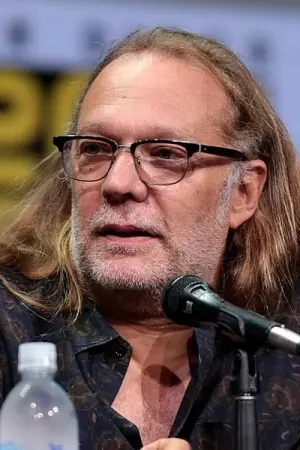

Howard Berger
Makeup Effects
Ozzy Alvarez
Makeup Effects
Jonah Levy
Makeup Effects
Second Unit Cinematographer
What's left behind the scenes
- In the end credits, between the songwriter/performer and the individuals and organizations to whom the filmmakers express special thanks, there is a "brief history of cannibalism in Italian cinema and the names of directors who worked in this genre".
- The end credits list the names of the main cast members, alongside their "Twitter" usernames (this also applies to some crew members and director Eli Roth).
- The film is dedicated to Italian director Ruggero Deodato, known for his horror films. The inscription "Dedicated to Ruggero" appears on the screen.
- At the very end of the closing credits, you can hear pig squeals.
- The closing credits state that in some scenes, director Eli Roth stood in for Daryl Sabara.
- The filmmakers express special gratitude to Brad Pitt (a motorcycle taxi with his name and the actor himself, who has been nominated for an Academy Award).
- Eli Roth and his assistants approached the villagers with a request to act as extras, but soon realized that they had never seen a movie and had no idea what it was. Eli had to bring a television and organize a screening of "Cannibal Holocaust" (1979) for the locals. They were delighted and gladly agreed to help the filmmakers.
- Eli Roth said that in gratitude for the opportunity to participate in the filming, the villagers offered the production designer a two-year-old child. He politely declined.
- As stated in the trailer for the film, the inhabitants of the Peruvian jungle depicted in "Green Inferno" had never been photographed or filmed by representatives of Western civilization before.
- The villagers had no idea what cinema was. After watching Ruggero Deodato’s "Cannibal Holocaust" (1979), they decided it was a comedy.
- In reality, cannibal tribes in the Amazon no longer exist.
- Eli Roth stated that the film being released is exactly the one he shot. He didn’t have to cut a single scene at the request of the American Film Association.
- The film "Green Inferno" includes numerous parallels with "Cannibal Holocaust" (1979). Eli Roth calls the latter one of his favorite horror films and openly admits that "Cannibal Holocaust" had a huge impact on his development as a director. Moreover, the working title of "Cannibal Holocaust" during filming was, in fact, "Green Inferno." Ruggero Deodato only later changed the title to what he considered a more shocking one.
- As they approached the village in boats, the missionaries sang religious hymns. Completely unaware that a film was being shot, they saw the sets and props – skeletons and bodies impaled on stakes. The missionaries were horrified and sang even louder. They came to their senses only when they were explained that a film crew was present in the village and that everything was the set design for an upcoming film.
- Virtually all the villagers participated in the extras casting. Some even helped the film crew with the equipment.
- During the screening of the film at the American Film Festival in Deauville (France), one viewer fainted.
- When casting actors for the film, Eli Roth considered only candidates who agreed to get vaccinated against yellow fever and then go to the Amazon rainforest, where there are no toilets, but plenty of tarantulas, snakes, and poisonous frogs. After filming was completed, the cast and crew underwent a thorough medical examination.
- The air temperature during filming reached 32 degrees Celsius. The Peruvian members of the camera crew quit on the very first day.
- Some village children had the idea that it would be a good idea to throw real pythons at the actors during the filming of the corresponding scene. Believing that pythons do not bite, the film crew gave their permission. It turned out later that pythons of this species are actually capable of biting. Fortunately, no unpleasant incidents occurred.
- The children from the village came to Eli Roth with an idea that seemed interesting to them: what if they used a real python in the scene where the heroine is sitting in a cage? They had just caught a small specimen. Roth liked the idea and allowed the children to 'scare' the actors in the cage with the snake. The children got carried away and hit the actress in the face with the snake several times. According to Roth's account, she had no idea how dangerous it was.
- The film crew and actors suffered from insect bites. Everyone got bitten, but only Kirby Bliss Blanton ended up in the hospital because of it.
- The film's morality and aesthetics are rooted in Ruggero Deodato's 'Cannibal Holocaust' (1979), and the scenes of violence shown in it bear a certain resemblance to the less scandalous film 'Cannibals' (1981) directed by Umberto Lenzi.
- Despite the active advertising campaign launched at the end of 2013, and promises that singer and model Sky Ferreira would play one of the main roles, she ultimately received a minor part. Ferreira played Justine's friend, who did not go on the expedition to the Amazon. Photos from the set that appeared online sparked a lively discussion. Some mistook Ferreira for Amy, the character played by Kirby Bliss Blanton. Others decided that Ferreira was Cara, who was actually played by Ignacia Allamand.
- The roles of the bald hunter and the female chief were actually played by representatives of a Chilean tribe that Eli Roth had met during his travels through the Amazon rainforest. Ramon Llavao played the bald hunter, having previously worked with Roth in the dramatic thriller "Aftershock" (2012) directed by Nicolas Lopez. Antonieta Pari played the female chief. Interestingly, with the exception of Kirby Bliss Blanton, Magda Apanovich, and Daryl Sabara, all the other victims of the cannibal tribe in "Green Inferno" also appeared in "Aftershock".
- Lorenza Izzo, Ariel Levy, Ignacia Allamand, Nicolas Martinez, Matias Lopez, and Ramon Llavao starred in "Aftershock" (2012). Eli Roth played the main role in it and also participated in writing the screenplay.
- A-Film Benelux MSD had scheduled the premiere of "Green Inferno" in the Netherlands for October 29, 2015, but went bankrupt in September, forcing the film's release date to be postponed. A distribution contract was signed with Remain In Light, and the film finally saw the light of day in November 2015.
- The end credits are interrupted approximately 20 seconds in by a scene in which Alejandro's sister, Lucile, calls Justine and tells her that she has found a satellite image of her brother, who is still alive.
- The scene of Samantha and Daniel's escape was filmed many times. Leading actress Lorenza Izzo nearly drowned when her character, Justine, jumped into the river hoping to escape, but was caught again. Lorenza was pulled out of the water only when someone on the crew realized she was about to actually go under. Some footage from that take made it into the film.
- The characters reach the cannibal settlement on the Amazon only at the 46th minute of the film.
- In the end credits, between the songwriter/performer and the individuals and organizations to whom the filmmakers express special thanks, there is given a "brief history of cannibalism in Italian cinema and the names of directors who worked in this genre."
- The end credits list the names of the main cast members, along with their Twitter usernames (this also applies to some members of the film crew and director Eli Roth).
- The film is dedicated to Italian director Ruggero Deodato, known for his horror films. The inscription “Dedicated to Ruggero” appears on the screen.
- The filmmakers express special gratitude to Brad Pitt (a motorcycle taxi with his name and the Oscar-nominated actor himself).
- Eli Roth, with his assistants, approached the villagers with a request to act as extras, but soon realized that they had never seen a movie and had no idea what it was. Eli had to bring in a television and organize a screening of 'Cannibal Holocaust' (1979) for the locals. They were delighted and happily agreed to help the filmmakers.
- As stated in the trailer for the film, the inhabitants of the Peruvian jungle shown in 'Green Inferno' had never been photographed or filmed by representatives of Western civilization before.
- The villagers had never seen a movie before. After watching Ruggero Deodato's "Cannibal Holocaust" (1979), they decided it was a comedy.
- The film "Green Inferno" contains numerous parallels with "Cannibal Holocaust" (1979). Eli Roth calls the latter one of his favorite horror films and openly admits that "Cannibal Holocaust" had a huge impact on his development as a director. Moreover, the working title of "Cannibal Holocaust" during filming was actually "Green Inferno." Ruggero Deodato later changed the title to what he thought was more shocking.
- Children from the village came to Eli Roth with an idea they found interesting: what if they used a real python in the scene where the heroine is sitting in a cage? They had just caught a small specimen. Roth liked the idea and allowed the children to "scare" the actors in the cage with the snake. The children got carried away and hit the actress in the face with the snake several times. According to Roth's story, she had no idea how dangerous it was.
- The morality and aesthetics of the film are rooted in Ruggero Deodato's "Cannibal Holocaust" (1979), and the scenes of violence it depicts bear a certain resemblance to Umberto Lenzi's less scandalous film "Cannibals" (1981).
- The roles of the bald hunter and the female chief were actually played by members of a Chilean tribe that Eli Roth had once met while traveling through the Amazon jungle. Ramon Llao, who played the bald hunter, starred alongside Roth in the dramatic thriller "Aftershock" (2012) directed by Nicolas Lopez. Antonieta Pari played the female chief. Interestingly, with the exception of Kirby Bliss Blanton, Magda Apanovich, and Daryl Sabara, all the other victims of the cannibal tribe in "Green Inferno" also appeared in "Aftershock."
- A-Film Benelux MSD scheduled the premiere of the film “Green Hell” in the Netherlands for October 29, 2015, but went bankrupt in September, forcing the film’s release date to be postponed. A distribution agreement was signed with Remain In Light, and the film finally saw the light of day in November 2015.
Did you like the film?
 Auditions in India
 Casting calls in USA
 Castingi w Polsce
 Кастинги в Україні
