Gigi - crew, film crew
The entire team, the film crew of the film "Gigi"
Gigi (1958)
Timing:
1:56 (116 min)

6.3/10
303
303

6.362/10
1994
1994

6.6/10
26000
26000
Film crew
Director
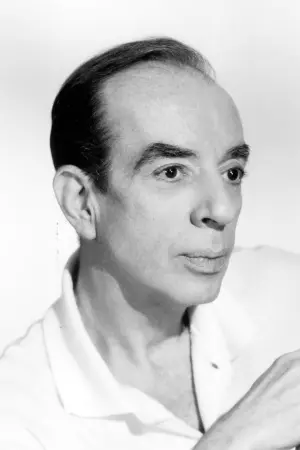
Producer
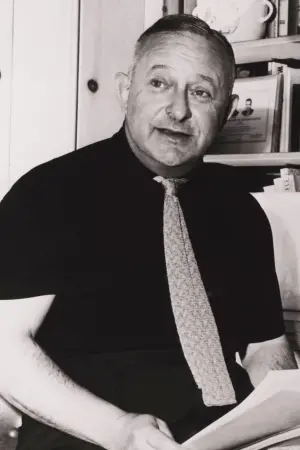
Editor
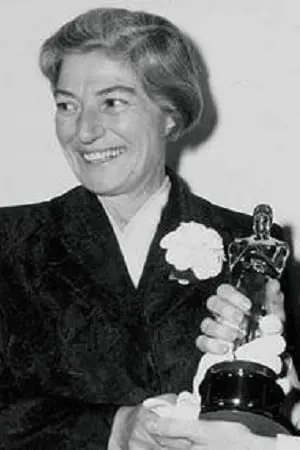
Art Direction
William A. Horning
Art Direction
E. Preston Ames
Art Direction
Costume Design

Production Design
Set Decoration
Henry Grace
Set Decoration
F. Keogh Gleason
Set Decoration
Director of Photography
Hairstylist
Screenplay

Novel


Songs
Frederick Loewe
Songs
Assistant Director
William McGarry
Assistant Director
William Shanks
Assistant Director
Music
Frederick Loewe
Music
Lyricist
Recording Supervision
What's left behind the scenes
- In all scenes with Leslie Caron, the cat reacted with a kind of nervous aggression, but director Vincente Minnelli insisted on filming with that particular animal, so the cat had to be sedated.
- The day after the film won nine Oscars, the telephone operators at MGM were instructed to answer calls with “Hello, Em-Gee-Em.”
- Initially, after completing work on the film, screenwriter Alan Jay Lerner (1918-1986) and composer Frederick Loewe (1901-1988) were disappointed. Lerner found the film's pace too slow and believed it could and should be cut by twenty minutes. He proposed making corresponding changes to the film, but this would have meant additional expenses totaling $300,000, and producer Arthur Freed (1894-1973) flatly refused. The composing team offered to buy 10% of the film for $300,000, and then offered another $3 million – to prevent the film from being released at all. This impressed the management of 'MGM' so much that they agreed to the proposed changes, which required eleven days of reshooting numerous scenes and exceeding the project's budget by $400,000. However, test screenings showed a change in perception of the film from indifferent-positive (before all these changes) to much warmer (after the changes), and Lerner decided that now the work on the film was truly finished.
- Filming in Paris had to be rushed while the weather was good, so the actors were forced to simply open their mouths to the accompaniment of the piano, as the songs hadn't been recorded yet.
- For the scene in the “Le Bois” restaurant, costume designer Cecil Beaton (1904-1980) had to create over 150 costumes from the corresponding historical period, and for the scene in the “Maxim’s” restaurant – 20 chic evening dresses for the ladies. Costumes were tight in Paris, but when the film crew moved to Hollywood, everything necessary was found in the film company's warehouses, both in terms of clothing and furniture.
- During location shooting, the filmmakers often noticed how harsh representatives of the local authorities were with them, and how they demanded that everything be returned to its original condition after filming. This annoyed Arthur Freed so much that one day, when a mirror fell from the ceiling of the dining room during filming at 'Maxim’s' and, of course, broke, he was frightened, assuming that the restaurant administration would now present the filmmakers with an unaffordable bill for thousands of dollars. The administrator, however, reassured him, stating that mirrors fall from the ceiling regularly because champagne lovers constantly hit them with corks, and adding that the restaurant keeps a supply of mirrors specifically for such occasions.
- When Alan Jay Lerner met Leslie Caron in Paris to discuss working on a future film, he noticed that Caron, of French origin, had adapted so much to English culture that she even spoke completely without an accent.
- Initially, after completing work on the film, screenwriter Alan Jay Lerner (1918-1986) and composer Frederick Loewe (1901-1988) were disappointed. Lerner found the film's pace too slow and believed it could and should be cut by twenty minutes. He proposed making the corresponding changes to the film, but this would have meant additional expenses totaling $300,000, and producer Arthur Freed (1894-1973) flatly refused. The composing team offered to buy 10% of the film for $300,000, and then offered another $3 million – to prevent the film from being released at all. This impressed the management of "MGM," and they agreed to the proposed changes, which required eleven days of reshoots and exceeded the project's budget by $400,000. Nevertheless, test screenings showed a change in perception of the film from indifferent-positive (before all these changes) to much warmer (after the changes), and Lerner decided that the work on the film was finally finished.
- During location shooting, the filmmakers often noticed how harsh the local authorities were with them and how they demanded that everything be returned to its original condition after filming. Arthur Freed was so tired of this that one day, when a mirror fell from the ceiling of the "Maxim’s" restaurant dining room during filming and, of course, shattered, he panicked, assuming that the restaurant administration would now present the filmmakers with an exorbitant bill for thousands of dollars. The administrator, however, reassured him, stating that mirrors fell from the ceiling regularly because champagne lovers constantly hit them with corks, and adding that the restaurant kept a stock of mirrors specifically for such occasions.
Did you like the film?
 Auditions in India
 Casting calls in USA
 Castingi w Polsce
 Кастинги в Україні
