A Clockwork Orange - crew, film crew
The entire team, the film crew of the film "A Clockwork Orange"
A Clockwork Orange (1971)
Timing:
2:17 (137 min)

8.177/10
13813
13813

0/10
84
84

0/10
0
0
Film crew
Director
Producer
Executive Producer
Si Litvinoff
Executive Producer
Max L. Raab
Executive Producer
Casting
James Liggat
Casting
Editor
Bill Butler
Editor
Art Direction
Russell Hagg
Art Direction
Peter Sheilds
Art Direction
Costume Design
Production Design
John Barry
Production Design
Stunt Coordinator

Makeup Artist
Barbara Daly
Makeup Artist
Sound Re-Recording Mixer
Bill Rowe
Sound Re-Recording Mixer
Eddie Haben
Sound Re-Recording Mixer
Original Music Composer

Associate Producer
Bernard Williams
Associate Producer
Director of Photography

Camera Operator
Ernest Day
Camera Operator
Mike Molloy
Camera Operator
Property Master
Frank Bruton
Property Master
Electrician
Lou Bogue
Electrician
Derek Gatrell
Electrician
Hairstylist
Olga Angelinetta
Hairstylist
Chief Lighting Technician
Frank Wardale
Chief Lighting Technician
Boom Operator
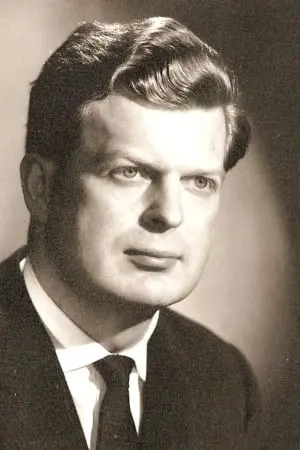
Peter Glossop
Boom Operator
Screenplay
Novel
Sound Designer
Brian Blamey
Sound Designer
Assistant Editor
Peter Burgess
Assistant Editor
Gary Shepherd
Assistant Editor
David Beesley
Assistant Editor
Location Manager
Terence A. Clegg
Location Manager
Grip
Tony Cridlin
Grip
Don Budge
Grip
Amber Nordstrand
Grip
Construction Foreman
Bill Welch
Construction Foreman
Production Accountant
Len Barnard
Production Accountant
Assistant Director
Dusty Symonds
Assistant Director

Derek Cracknell
Assistant Director
Focus Puller
Ron Drinkwater
Focus Puller
First Assistant Camera
David Lenham
First Assistant Camera
Sound Recordist
John Jordan
Sound Recordist
Wardrobe Supervisor
Ron Beck
Wardrobe Supervisor
Assistant Camera
Laurie Frost
Assistant Camera
Continuity
June Randall
Continuity
What's left behind the scenes
- The film is based on Anthony Burgess's novel "A Clockwork Orange" (1962).
- Before Stanley Kubrick became involved with the project, the members of The Rolling Stones were planned to play the roles of Alex and his gang.
- Following accusations of promoting violence and after receiving anonymous death threats, Kubrick withdrew the film from circulation in the United Kingdom a year after its premiere. The ban remained in place until 1999, until the director's death.
- Several real-life instances of imitation of the film's characters were reported, manifesting in real acts of teenage violence. It was reported that perpetrators sang "Singin’ in the rain" during the crimes.
- During filming, McDowell and Kubrick often played table tennis for long periods. To his great disappointment, McDowell later discovered that the hours spent playing tennis had been deducted from his fee.
- Burgess, wanting to enliven his novel, saturates it with slang words from the so-called “nadsat,” created by Burgess in Leningrad and taken from the Russian language. The main difficulty in translating the novel into Russian is making these words seem as unfamiliar to a Russian-speaking reader as they do to an English-speaking one. V. Bosnyak, who translated the text, came up with the idea of writing these words in Latin script, thereby distinguishing them from the text in Russian. The characters mainly use common, everyday Russian words as slang – “malchik” (boy), “litso” (face), “chai” (tea), etc. Due to this same “nadsat,” Stanley Kubrick stipulated that the film “A Clockwork Orange” should be shown with subtitles only in Russian distribution.
- The novel received the title “A Clockwork Orange” from an expression that was once widespread among London Cockneys – inhabitants of the working classes of the East End. Older generation Cockneys describe unusual or strange things as being “bent as a clockwork orange,” meaning they are things of the most peculiar and incomprehensible kind. Anthony Burgess lived in Malaysia for seven years, and in Malay, the word “orang” means “person,” while in English “orange” means “orange.”
- The wine offered by the writer is too light for a 10-year-old “Château Medoc.” Kubrick wanted McDowell’s character to drink precisely this wine, but to prevent the actor from passing out, the wine was diluted with water after each take.
- The snake appeared in the film after McDowell carelessly admitted to Kubrick that he was afraid of reptiles.
- Stanley Kubrick asked Pink Floyd to sell the rights to their song "Atom Heart Mother." But since he wanted a perpetual license and unlimited ability to mutilate the musical material, the band refused. In the record store scene, the album cover of "Atom Heart Mother" hangs above the counter.
- Kubrick forced his assistant to destroy all footage that did not make it into the film.
- A promotional poster for the film "2001: A Space Odyssey" is visible on the vinyl rental counter (00:26:30).
- Kubrick demanded that the milk in the milk machines be changed every hour. The reason was that under strong lighting, the milk would thicken and turn into curd cheese.
- Once, Kubrick stated that if he hadn't found Malcolm McDowell, the film probably would never have been made.
- On the counter of the music store, at the 26th minute of the film, is visible the ninth studio album by The Beatles, "Magical Mystery Tour".
- While working on the film "Dr. Strangelove or: How I Learned to Stop Worrying and Love the Bomb," Terry Southern suggested to Kubrick that he take on the adaptation of Anthony Burgess's novel "A Clockwork Orange." When Kubrick first read the book, he was put off by Burgess's linguistic sophistication. Southern recalled: "Initially, the novel didn't appeal to Stanley at all. He said: no one will understand this language." Then Southern requested the novel for six months of work and, together with Michael Cooper, wrote a screenplay. Producer David Puttnam considered the screenplay promising but advised the screenwriters to find out if their work was acceptable to the British film censorship board. The censor returned the screenplay unread and stated, according to Southern, the following: "I am familiar with this book, and there is no point in reading a screenplay based on it, since the novel depicts the disobedience of youth to authority; that won't pass." Southern extended the rights but then abandoned the idea. His lawyer, Sy Litvinoff, who at the time dreamed of breaking into the film industry, bought the rights in the hope that the film would serve as a striking advertisement for The Rolling Stones, with Mick Jagger, a great admirer of the novel, playing Alex. A screenplay was commissioned from Burgess. English critic Adrian Turner recalled: "It was about 300 pages long, and it was completely unreadable. Burgess simply rewrote the book entirely." Although Litvinoff retained the rights to the adaptation, the project failed. Italian director Tinto Brass also intended to adapt Burgess's novel, dreaming of bringing many erotic scenes from the book to the screen. Meanwhile, Kubrick realized the book's potential and bought the rights from him.
- To finance the project, Kubrick negotiated with the American Zoetrope film studio, founded by Francis Ford Coppola; however, the collaboration did not work out. Finally, in 1970, Kubrick signed a contract with Warner Bros. for three films at once. By that time, Malcolm McDowell, noticed by Kubrick after the release of "If....", had already been approved for the main role.
- The futuristic-looking car that appeared in the film under the name Durango 95 is actually a car called Probe 16, built in three copies by the Adams brothers.
- Burgess's first impression of watching the film, arranged for him by Kubrick, was terrible. The writer's wife and his literary agent wanted to leave after the first ten minutes, but Burgess decided that it would look provocative.
- Despite the lower technological level in the film compared to "2001: A Space Odyssey", Kubrick demonstrated his talent for innovation; for filming one scene, he dropped model "Newman Sinclair" cameras with spring motors from the roof to achieve the desired effect.
- Initially, Ken Russell was supposed to adapt the novel, as his style seemed the most suitable (he even found an actor for the lead role – Oliver Reed). Burgess was unhappy when Kubrick took on the project, but he was ultimately extremely pleased with the result, although he wistfully admitted that the film's success had made "A Clockwork Orange" his most famous work, while his other novels faded into obscurity.
- Malcolm McDowell suffered a great deal during filming: in one scene he broke his ribs, in another he injured his eyes, and in the scene of Alex's immersion, McDowell nearly choked due to a malfunction in his breathing apparatus.
- During the rape scene, Malcolm McDowell sang "Singin' in the Rain" simply because it was the only song he knew the words to.
- The numbers of Alex's former friends, who became police officers, are 665 and 667. A hint that Alex is the 666th among them.
- After writing the screenplay, Kubrick said: "I think Burgess wanted to say in the book the same thing that came out in the screenplay, but I introduced some changes and altered some scenes." The most significant difference between the film and the source material was the omission of the final chapter, in which Alex loses interest in violence, listens to German romances instead of Beethoven, and dreams of having a wife and children. Kubrick was not familiar with the original ending when he began working on the project. The fact is that he had the American edition of the book, which had removed the final chapter because the director of W. W. Norton & Company publishing house believed it was unjustified and released the tension. Kubrick later stated that even if he had known about the different editions, it would not have affected the script.
- Upon returning home and deciding to listen to Beethoven, Alex removes the red cassette from the tape recorder twice: first, he places it on the table and finds a yellow one with Beethoven, and then, in a close-up, he pulls out the same red cassette from the tape deck.
- When Alex notices the police chaplain at his home, the chaplain is sitting on the edge of the bed. With a change of shot, the chaplain moves closer to the center of the bed.
- During the rape in the opera, one sandal with straps around the ankle is removed from the victim. Shortly after, when Alex and his droogs appear, the woman is wearing both sandals again.
- During the assault on the homeless man, the shadows in the tunnel are different. This is especially noticeable in the upper part of the wall.
- During the massacre on the embankment, as Dim crawls out of the water, a hat appears on George.
- At the police station, when Deltond's mentor arrives, Alex is bleeding, and papers, like napkins, are thrown at him. One of the napkins unexpectedly appears on the floor.
- When Alex arrives at the prison, the stamp for sealing on the guards' table continuously rotates when shown from the front and back.
- In the prison library, Alex studies the Bible while a priest walks by. With a change of frame, the hero's hands are positioned differently, and the books are slightly closer.
- When Alex talks to the prison warden in his office, the warden's glasses move on their own. When the warden asks him to sign a document, the glasses jump onto the yellow folders to the left, and then return to their original position.
- When Alex struggles with the cat's owner, blurred shadows of the operator breathing down their necks are visible on each of the opponents.
- During the wine tasting at the writer's house, a black-and-red ottoman standing against the wall disappears in the background. Later, the ottoman will repeatedly appear and disappear.
- The wine bottle is turned twice when the writer's influential friends appear.
- When the police officers bring the 'corrected' Alex to the forest, the car stops behind a concrete post by the road, but when he is led out, the post is opposite the back door.
- After Alex lands face-first in spaghetti, the remnants of food on his face look different in various shots.
- When the female doctor approaches Alex, who is lying in a cast, and takes his newspaper, everything in the ward changes abruptly: the pillows are arranged differently, and the projector cart moves closer to the bed.
- After being released from prison, Alex leaves home and walks along the embankment. At that moment, there are waves on the canal, but when Alex looks into the distance, the waves disappear. When a homeless man approaches, waves reappear on the canal.
- Operation 'Uninvited Guest' (11th minute): an elderly writer is pressed to the floor, filmed from different angles.
- The film is based on Anthony Burgess's novel 'A Clockwork Orange' (1962).
- Several real-life instances of imitation of the film's characters, manifested in real acts of teenage violence, were reported. It was reported that attackers sang 'Singin’ in the rain' during their crimes.
- Burgess, seeking to enliven his novel, saturates it with slang words from the so-called "nadsat," created by Burgess in Leningrad and borrowed from the Russian language. The main difficulty in translating the novel into Russian is to make these words appear as unfamiliar to a Russian-speaking reader as they do to an English-speaking one. V. Boshniak, who translated the text, came up with the idea of typing these words in Latin script, thereby distinguishing them from the text in Russian. Mostly, the characters use common, everyday Russian words as slang – “malchik” (boy), “litso” (face), “chai” (tea), etc. Due to this same "nadsat," Stanley Kubrick stipulated that the film "A Clockwork Orange" should be shown in Russian distribution exclusively with subtitles.
- The novel received the title "A Clockwork Orange" from an expression that was once widespread among London Cockneys – inhabitants of the working classes of the East End. Older generation Cockneys speak of unusual or strange things as being "crooked as a clockwork orange," meaning things of a most whimsical and incomprehensible nature. Anthony Burgess lived in Malaysia for seven years, and in Malay, the word "orang" means "person," while in English, "orange" means "orange."
- The wine the writer offers is too light for a 10-year-old "Château Médoc." Kubrick wanted McDowell's character to drink precisely this wine, but in order to prevent the actor from becoming incapacitated, the wine was diluted with water after each take.
- Stanley Kubrick asked the band "Pink Floyd" to sell the rights to their song "Atom Heart Mother." But since he wanted a perpetual license and unlimited opportunities to mutilate the musical material, the band refused. In the record store scene, an album cover for "Atom Heart Mother" hangs above the counter.
- On the vinyl rental counter (00:26:30), a promotional poster for the film "2001: A Space Odyssey" is visible.
- On the counter of a music store, at the 26-minute mark of the film, is visible The Beatles' ninth studio album, "Magical Mystery Tour".
- While working on the film "Dr. Strangelove or: How I Learned to Stop Worrying and Love the Bomb," Terry Southern suggested to Kubrick that he adapt Anthony Burgess's novel "A Clockwork Orange." When Kubrick first read the book, he was put off by Burgess's linguistic sophistication. Southern recalled: "Initially, the novel didn't appeal to Stanley at all. He said that no one would understand such language." Southern then requested the rights to work on the novel for six months and, together with Michael Cooper, wrote a screenplay. Producer David Puttnam considered the screenplay promising but advised the screenwriters to find out whether their work would be acceptable to the British film censor. The censor returned the screenplay unread and, according to Southern, stated the following: "I am familiar with this book, and there is no point in reading a screenplay based on it, since the novel depicts youth's disobedience to authority; it won't pass." Southern extended the rights but then abandoned the idea. His lawyer, Saul Litvinoff, who was then dreaming of breaking into the film industry, bought the rights in the hope that the film would serve as a striking advertisement for The Rolling Stones, with Mick Jagger playing Alex, a great admirer of the novel. A screenplay was commissioned from Burgess. English critic Adrian Turner recalled: "It was about 300 pages long, and it was completely unreadable. Burgess simply rewrote the book in its entirety." Although Litvinoff retained the rights to the adaptation, the project failed. Italian director Tinto Brass also intended to adapt Burgess's novel, dreaming of transferring many of the erotic scenes from the book to the screen. Meanwhile, Kubrick realized the potential of the book and bought the rights from him.
- Despite its low-tech nature compared to "2001: A Space Odyssey," Kubrick demonstrated his talent for innovation; to film one scene, he dropped Newman Sinclair spring-motor cameras from the roof to achieve the effect he wanted.
- Initially, it was assumed that Ken Russell would adapt the novel, as his style seemed the most suitable (he even found an actor for the lead role – Oliver Reed). Burgess was unhappy when Kubrick took over the project, but he was ultimately highly satisfied with the result, although he admitted with a touch of regret that the film's success made "A Clockwork Orange" his most famous work, while his other novels were overshadowed.
- During the rape scene, Malcolm McDowell sang "Singin’ In The Rain" simply because it was the only song whose lyrics he knew.
- Having written the screenplay, Kubrick said: “I think Burgess wanted to say in the book the same thing that came out in the screenplay, but I introduced some changes and altered some scenes.” The most significant difference between the film and the source material was the omission of the final chapter, in which Alex loses interest in violence, listens to German romances instead of Beethoven, and dreams of having a wife and children. Kubrick was not familiar with the original ending when he began working on the film. The fact is that he had the American edition of the book, from which the final chapter had been removed because the director of W. W. Norton & Company publishing house believed it was unjustified and diminished the tension. Kubrick later stated that even if he had known about the different editions, it would not have affected the screenplay.
Did you like the film?
 Auditions in India
 Casting calls in USA
 Castingi w Polsce
 Кастинги в Україні
