Metropolis - crew, film crew
The entire team, the film crew of the film "Metropolis"
Metropolis (1927)
Timing:
2:28 (148 min)

8.091/10
3061
3061

8.087/10
28954
28954

8.2/10
200000
200000
Film crew
Director
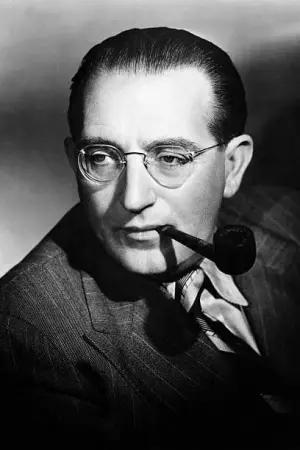
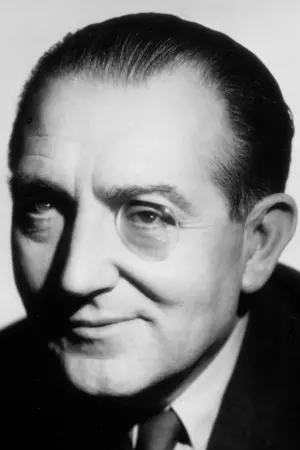
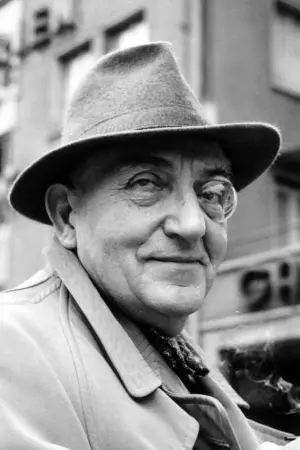
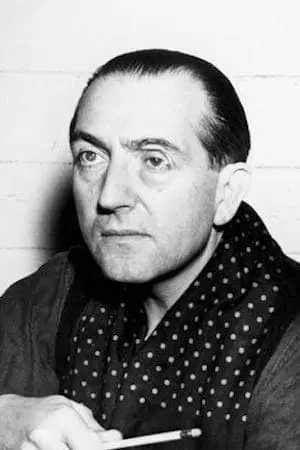
Producer
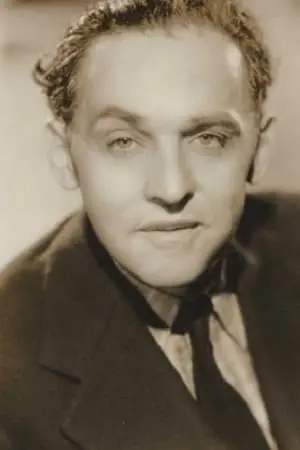
Editor
Art Direction
Karl Vollbrecht
Art Direction
Erich Kettelhut
Art Direction
Otto Hunte
Art Direction
Costume Design
Aenne Willkomm
Costume Design
Original Music Composer
Gottfried Huppertz
Original Music Composer
Otto Harzner
Original Music Composer
Director of Photography
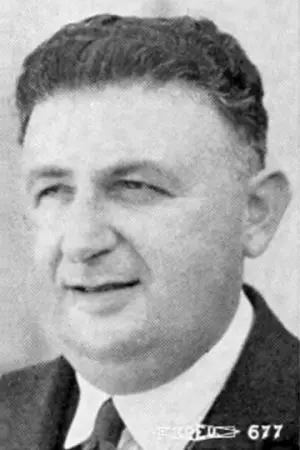
Günther Rittau
Director of Photography
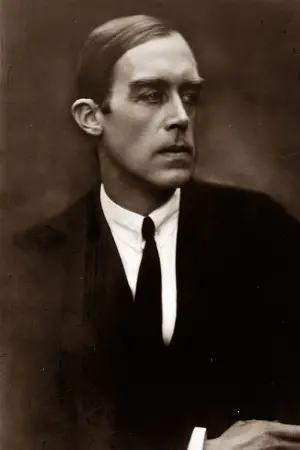
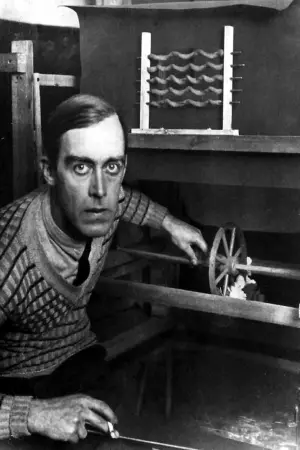
Camera Operator
Günther Rittau
Camera Operator
Still Photographer
Horst von Harbou
Still Photographer
Screenplay
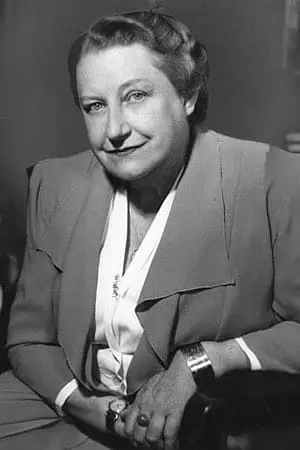
Novel
Set Designer
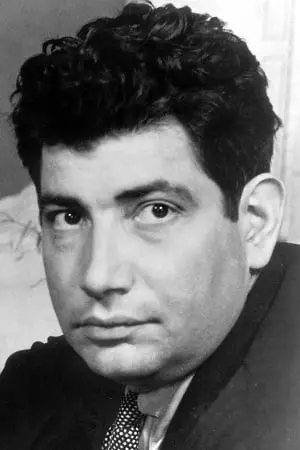
Karl Vollbrecht
Set Designer
Erich Kettelhut
Set Designer
Otto Hunte
Set Designer
Special Effects
Konstantin Irmen-Tschet
Special Effects
Ernst Kunstmann
Special Effects
Sculptor
Walter Schulze-Mittendorff
Sculptor
Assistant Director

Music Editor
Frank Strobel
Music Editor
First Assistant Camera
Robert Baberske
First Assistant Camera
Conductor
Frank Strobel
Conductor
Visual Effects
Production Office Assistant
Erich Kettelhut
Production Office Assistant
Erich Holder
Production Office Assistant
Hans Taussig
Production Office Assistant
Assistant Camera
Robert Baberske
Assistant Camera
Production Artist
Rudi George
Production Artist
What's left behind the scenes
- The film was the most expensive project in the history of German silent cinema. Despite critical acclaim and reasonably good box office receipts, it failed to recoup its production costs and nearly led to the studio's bankruptcy.
- "Metropolis" was one of Adolf Hitler's favorite films.
- Fritz Lang directed the film based on the novel by his wife and co-author, Thea von Harbou.
- Among the journalists covering the film's shooting for the press was Kurt Siodmak, who later became known as a science fiction writer, and then as a producer and screenwriter of many famous Hollywood trash films.
- The band Queen used footage from the film for their retrofuturistic music video for the song "Radio Ga Ga".
- The band "Aria" also used footage from the film for their music video "The Hermit".
- Filming lasted 2 years.
- In 2008, a duplicate negative of the complete version of the film on 16mm film stock was discovered at the Film Museum in Buenos Aires, printed in the mid-1970s from the original nitrate copy, which was subsequently destroyed. The missing scenes were restored and inserted into the 2001 version. Thus, this complete restored version has a duration of 150 minutes.
- Zlatan Dudov gained access to the film set posing as a correspondent for a Bulgarian newspaper, and Fritz Lang took him on as an intern. Dudov later became a director himself; his most famous film is “Kule Vampe, or Who Owns the World?” (1932).
- The film's plot was borrowed for one of the episodes of the series “Stargate SG-1”.
- More than 37,000 extras participated in the film, including: 25,000 men (over a thousand of whom agreed to shave their heads), 11,000 women, 750 children, 100 African Americans, and 25 Asians. A total of 310 shooting days were required for the film.
- To film what was then the most expensive German film in 1926, the largest studio pavilion in Europe was specially built in Babelsberg.
- The best German architects of the time were invited to recreate models of the skyscrapers of the utopian city: Otto Haentzschel, Erich Kettelhut, and Karl Vollbrecht.
- To Fritz Lang's dismay, Adolf Hitler and Joseph Goebbels turned out to be great fans of the film. Goebbels met with the director and told him that he could become an honorary Aryan, despite his Jewish origin. Goebbels also told him that they were the ones who decided who was Jewish and who was not. Lang left Paris that same night and moved to America.
- The film is set in 2026.
- This film greatly influenced the creators of Superman, Jerry Siegel and Joe Shuster. The character's city was named in its honor.
- The robot from this film inspired the creators of 'Star Wars: Episode IV – A New Hope' (1977) to create the character C-3PO many years later.
- The film's special effects were largely achieved through stop-motion animation. In particular, this is how the movement of cars along elevated highways was filmed (assistants moved each miniature model). To depict the rays of light crawling along the walls of the New Babylonian Tower, artist Erich Kettelhut drew about a thousand paintings measuring 40x60 cm – a separate image for each frame.
- The film poster was created by Heinz Schulz-Neudamm.
- The film premiered in Berlin on January 10, 1927. After several weeks of unsuccessful screenings in a single cinema, 'Metropolis' was removed from the screen. Following this, a decision was made to shorten it for release in Germany, with the cuts largely based on the American version. On August 5, 1927, a shortened version modeled after the American cut, and equipped with altered intertitles, was compiled – a new German version of 'Metropolis'. Fritz Lang was not involved in the work on the second German version of the film.
- Throughout the 20th century, only the shortened versions were known, which led to misunderstandings and incorrect interpretations of the author's intent. Starting in the 1960s, a number of attempts were made to restore the film.
- In 1984, Giorgio Moroder edited a new restored version of 'Metropolis' lasting 88 minutes, composed music, and enlisted well-known performers – Freddie Mercury, John Anderson, Bonnie Tyler – to work on the musical score.
- In 2001, under the auspices of the Friedrich Wilhelm Murnau Foundation, a compromise version lasting 117 minutes was created based on various surviving versions, providing a fairly complete representation of the film's plot.
- The robot costume (of the false Maria) was made by architect Walter Schulze-Mittendorf from a special plastic that hardened quickly in the air; before hardening, it could be molded into anything desired, soldered, bent, and straightened. Actress Brigitte Helm had to lie in a plaster cast for some time so that the 'mechanical man' costume would precisely replicate the contours of her body. The costume was modular, much like knightly armor.
- Shooting the scene of the flooding of the workers' homes, which lasts less than 10 minutes in the film, required more than six weeks of filming.
- The nightmare in which the workers were sent as fodder to Moloch was filmed in mid-winter. Despite floodlights and heaters, the studio was extremely cold. This particularly affected the extras, most of whom were unemployed. They had to enter the god’s mouth naked. Fritz Lang spent so many days and takes filming this scene that his assistants feared the extras would revolt. Finally, producer Erich Pommer arrived on set and informed Lang that they already had more than enough material for this scene and he should stop.
- The original length of the film was 153 minutes. For release in the USA by 'Paramount' in 1927, the film was cut almost in half, losing many essential plot lines, and with them, important motivations for the characters' actions. In particular, the main conflict between Freder and Rotwang – rivalry over the deceased Hel – was completely removed from the film; thus, the motivation for creating the robot-human disappeared, and ultimately the destruction of Metropolis as well. Scenes of Frederick being pursued by Hudie and lengthy chase episodes at the end of the film were also completely removed. To make the film remain understandable after all these cuts, the intertitles had to be largely rewritten and the surviving episodes remounted in some places.
- The band Queen used footage from the film for their retrofuturistic music video for the song "Radio Ga Ga."
- The band "Aria" also used footage from the film for their music video "Otshyelnik" (The Hermit).
- Zlatan Dudov infiltrated the film set under the guise of a correspondent for a Bulgarian newspaper, and Fritz Lang took him on as an intern. Dudov later became a director himself; his most famous film is "Kule Vampe, or Who Owns the World?" (1932).
- To Fritz Lang's disappointment, Adolf Hitler and Joseph Goebbels turned out to be great admirers of the film. Goebbels met with the director and told him that he could become an honorary Aryan, despite his Jewish origin. Goebbels also told him that they decide who is Jewish and who is not. Lang left Paris that same night and moved to America.
- The robot from this film inspired the creators of "Star Wars: Episode 4 – A New Hope" (1977) with the character C-3PO many years later.
- The film premiered in Berlin on January 10, 1927. There, after several weeks of unsuccessful screenings in a single cinema, "Metropolis" was removed from the screen. After that, a decision was made to shorten it for release in Germany, with the cuts largely based on the American version. On August 5, 1927, a shortened version, modeled after the American one and equipped with altered intertitles, was compiled – a new German version of "Metropolis". Fritz Lang was not involved in the work on the second German version of the film.
- In 1984, Giorgio Moroder assembled a new restored version of "Metropolis" lasting 88 minutes, wrote the music, and involved famous performers in the musical design – Freddie Mercury, John Anderson, Bonnie Tyler.
- The robot costume (False Maria) was made by architect Walter Schulze-Mittendorf from a special plastic that hardened quickly in the air; before hardening, it could be molded into anything, welded, bent, and straightened. Actress Brigitte Helm had to lie in a plaster cast for some time so that the 'mechanical man' costume would accurately follow the contours of her body. The costume was detachable, much like knightly armor.
Did you like the film?
 Auditions in India
 Casting calls in USA
 Castingi w Polsce
 Кастинги в Україні
