Jacob's Ladder - crew, film crew
The entire team, the film crew of the film "Jacob's Ladder"
Jacob's Ladder (1990)
Timing:
1:53 (113 min)

7.359/10
1854
1854

0/10
32
32

0/10
0
0
Film crew
Director


Producer
Alan Marshall
Producer
Executive Producer
Mario Kassar
Executive Producer
Writer
Casting
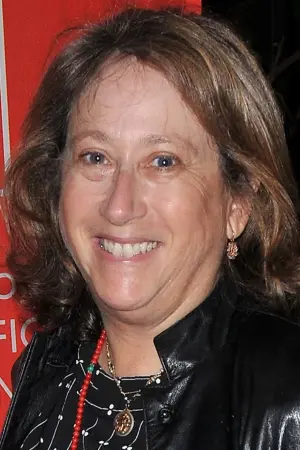
Heidi Levitt
Casting

Billy Hopkins
Casting
Editor
Tom Rolf
Editor
Art Direction
W. Steven Graham
Art Direction
Jeremy Conway
Art Direction
Costume Design




Stunts
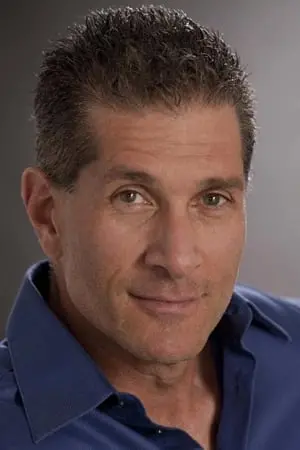
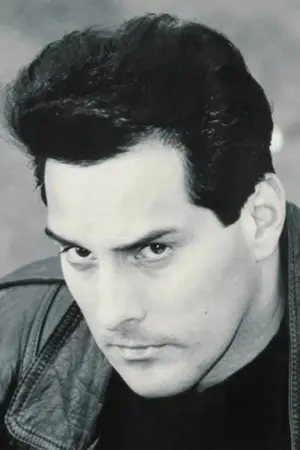
Peter Bucossi
Stunts
Production Design
Brian Morris
Production Design
Set Decoration
Kathleen Dolan
Set Decoration
Makeup Artist
Richard Dean
Makeup Artist
Sound Re-Recording Mixer
Andy Nelson
Sound Re-Recording Mixer
Steve Pederson
Sound Re-Recording Mixer
Mike Getlin
Sound Re-Recording Mixer
Original Music Composer
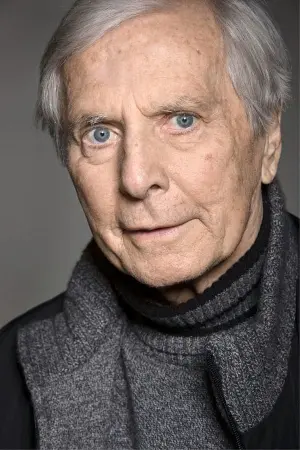
Associate Producer
Second Assistant Director
Vebe Borge
Second Assistant Director
Director of Photography

Supervising Sound Editor
Milton C. Burrow
Supervising Sound Editor
First Assistant Director
Joseph P. Reidy
First Assistant Director
Production Manager
Clayton Townsend
Production Manager
Grip
James McMillan
Grip
Second Second Assistant Director
Deborah Lupard
Second Second Assistant Director
Songs


David Hykes
Songs
LaBelle
Songs
Sound Recordist
Tod A. Maitland
Sound Recordist
Post-Production Manager
Michael R. Sloan
Post-Production Manager
Sound Editor
Gordon Davidson
Sound Editor
Mark Gordon
Sound Editor
Neil Burrow
Sound Editor
Chester Slomka
Sound Editor
Gary Shepherd
Sound Editor
Scott Burrow
Sound Editor
Richard Burrow
Sound Editor
Edward L. Sandlin
Sound Editor
Sound Effects
Steve Dewey
Sound Effects
Foley
Greg Orloff
Foley
Makeup Effects Designer
Russell Cate
Makeup Effects Designer
What's left behind the scenes
- To give the monsters from Jacob's hallucinations repulsive images, director Adrian Lyne used a technique that became classic in the body horror genre. The actor playing the monster rhythmically shook his head, and these movements were filmed in slow motion. When the footage was played back at normal speed, it created the effect of convulsive, inhuman tremors resembling a seizure.
- Adrian Lyne declined an offer to direct "Vanity Fair" (1990) in order to work on "Jacob's Ladder." His first choice for the role of Jacob Singer was Tom Hanks, but Hanks turned down the role so he could star in "Vanity Fair" (1990).
- Before filming began, former U.S. Marine Dale Dye took actors Tim Robbins, Pruitt Taylor Vince, Erick LaSalle, Wing Rames, Brian Tarantina, Brent Hinkley, and Anthony Alessandro to a five-day military training camp.
- Don Johnson and Mickey Rourke turned down the lead role.
- Actors Dustin Hoffman, Al Pacino, and Richard Gere were interested in the lead role. For the role of Jessie, director Adrian Lyne auditioned approximately 300 women, including Julia Roberts, Andie MacDowell, Demi Moore, Madonna, and Jennifer Lopez. The role ultimately went to the first actress who auditioned – Elizabeth Peña.
- According to the original script, the subway station where Jacob arrived at the beginning of the film was supposed to be Nostrand Avenue, not Bergen Street.
- According to writer Bruce Joel Rubin, he was inspired by the "Tibetan Book of the Dead," the biblical story of Jacob's Ladder, and the Oscar-winning short film "Owl Creek Bridge" (1962) by Robert Enrico when writing the script.
- According to director Adrian Lyne, the pharmacological aspect of this story was inspired by Martin A. Lee and Bruce Schlain's book "Acid Dreams: The CIA, LSD, and the Sixties Rebellion" (1986).
- The film was greenlit at Paramount Pictures, but after a change in studio leadership, the new executives were unsure about the film. They demanded that the ending be changed, but Lyne and Rubin refused, and Paramount dropped the film. It seemed the project would have to be abandoned entirely until Mario Kassar and Andrew J. Vajna of Carolco took over production. They also gave Lyne full creative control and final cut.
- Sidney Lumet, Michael Apted, and Ridley Scott attempted to get the project greenlit during the years its production was stalled.
- According to the director, most of the dialogue between the soldiers in the first scene was improvised.
- The drug depicted in the film, 'Stairs,' has a real-life prototype – quinuclidin-3-benzylate (BZ), a psychochemical warfare agent that was actually used by the US Army from 1962 to 1989. The US stockpile of BZ is sufficient to induce psychosis in the entire world population 50 times over. BZ was also stockpiled by other countries, including the USSR and Yugoslavia. At the end of the film, a message appears stating that experiments with BZ were allegedly conducted on special forces soldiers during the Vietnam War in order to increase their aggression. However, this claim is unsupported by evidence.
- The confrontation between Jacob and Giri initially takes place in the hallway of the courthouse. Line moved them to the stairs to minimize the height difference between Tim Robbins (6’5”) and Jason Alexander (5’5”).
- The gurney carrying Jacob was deliberately unbalanced by Adrian Lyne. He slightly lifted one wheel off the floor, causing it to rattle and spin.
- Scenes that were changed or removed by director Adrian Lyne: - during the dance scene, all the dancers transform into demons; - Jacob watches a priest on television ranting about the end of the world; - Jacob sees an image of a demon on the living room wall that turns into a portal to Hell; - a scene after the antidote is administered, in which the ceiling explodes and Jacob sees Heaven; - the finale, in which Jesse turns inside out and transforms into a huge demon that Jacob fights before ascending to Heaven.
- Before filming began, former US Marine Dale Dye took actors Tim Robbins, Pruitt Taylor Vince, Eric LaSalle, Wing Rames, Brian Tarantino, Brent Hinkley, and Anthony Alessandro to a five-day military training camp.
- Actors Dustin Hoffman, Al Pacino, and Richard Gere were interested in the lead role. For the role of Jessie, director Adrian Lyne auditioned approximately 300 actresses, including Julia Roberts, Andie MacDowell, Demi Moore, Madonna, and Jennifer Lopez. The role ultimately went to the first actress who auditioned – Elizabeth Peña.
- Adrian Lyne turned down an offer to direct "The Bonfire of the Vanities" (1990) to work on "Jacob's Ladder." His first choice for the role of Jacob Singer was Tom Hanks, but Hanks declined the role to star in "The Bonfire of the Vanities" (1990).
- According to writer Bruce Joel Rubin, he drew inspiration from the "Tibetan Book of the Dead," the biblical story of Jacob's Ladder, and the Academy Award-winning short film "Owl Creek Bridge" (1962) by Robert Enrico while writing the screenplay.
- According to director Adrian Lyne, the pharmacological aspect of the story was inspired by Martin A. Lee and Bruce Schlain’s book "Acid Dreams: The CIA, LSD, and the Sixties Rebellion" (1986).
Did you like the film?
 Auditions in India
 Casting calls in USA
 Castingi w Polsce
 Кастинги в Україні
