Wings - crew, film crew
The entire team, the film crew of the film "Wings"
Wings (1927)
Timing:
2:24 (144 min)

7.193/10
309
309

7.034/10
1734
1734

7.5/10
16000
16000
Film crew
Director
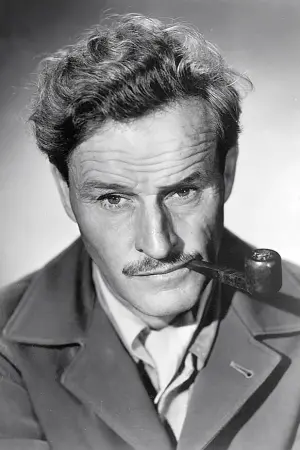
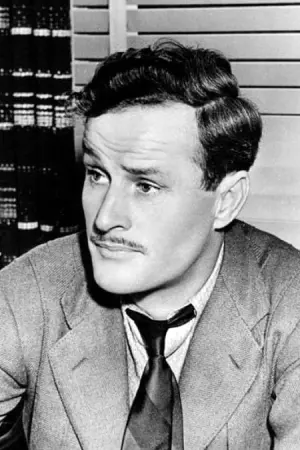
Producer
Benjamin P. Schulberg
Producer
Writer
Julian Johnson
Writer
Editor
E. Lloyd Sheldon
Editor
Art Direction
Costume Design
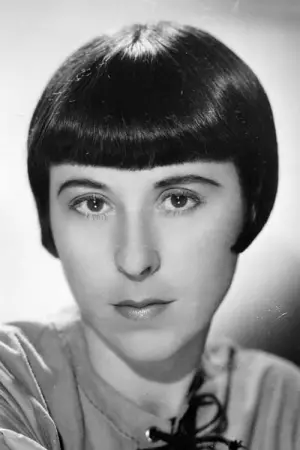
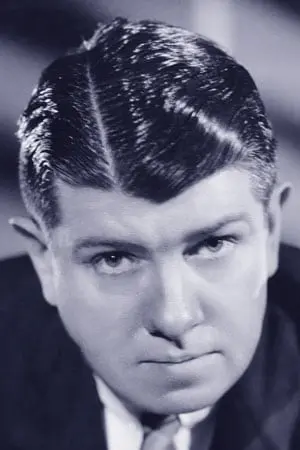
Stunts
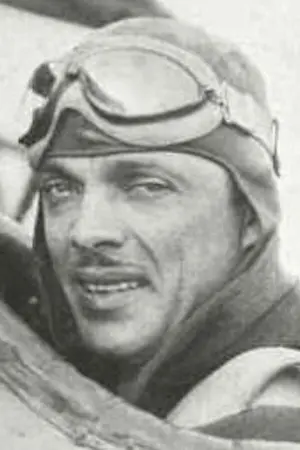
Denis Kavanagh
Stunts
Frank Tomick
Stunts
Dick Grace
Stunts
Earl H. Robinson
Stunts
Rod Rogers
Stunts
Hal George
Stunts
Frank Andrews
Stunts
Pierce L. Butler
Stunts
Clarence Irvine
Stunts
Earle E. Partridge
Stunts
Sterling R. Stribling
Stunts
Bill Taylor
Stunts
Hoyt Vandenberg
Stunts
Original Music Composer
Associate Producer
Benjamin P. Schulberg
Associate Producer
Stunt Double
Cherie May
Stunt Double
Director of Photography
Harry Perry
Director of Photography
Still Photographer
Otto Dyar
Still Photographer
Screenplay

Hope Loring
Screenplay
Special Effects
Roy Pomeroy
Special Effects
Story
John Monk Saunders
Story
Byron Morgan
Story
Assistant Director

James Ewens
Assistant Director
Richard Johnston
Assistant Director
E.K. Merritt
Assistant Director
Presenter


Adolph Zukor
Presenter
What's left behind the scenes
- The only silent film to win an Academy Award for Best Picture. In 2011, the film 'The Artist,' shot in the style of silent cinema but including some spoken dialogue and a musical score, received the award.
- For its 2012 Blu-Ray release, the film underwent remastering. The footage was restored, the original black-and-white image was converted to sepia with color added to the aerial combat scenes. The soundtrack features the original score by J.S. Zamecnik, recorded specifically for the release and supplemented with sound effects by Ben Burtt ('Star Wars,' 'Indiana Jones').
- For decades, the film was considered lost until a miraculously preserved copy in terrible condition was accidentally discovered in the Parisian archives.
- During filming – when thousands of extras fought on the ground, dozens of aircraft flew through the sky, and hundreds of explosions sounded everywhere – there were only two injuries. Stunt pilot Dick Grace (1898-1965) was injured when an airplane, whose crash was scripted to fully flip, only partially flipped, and the pilot was sent to the hospital with a neck injury, where he spent 6 weeks. In the second case, one of the military pilots assisting with the filming was injured. Unfortunately, he died. Director William A. Wellman (1896-1975) feared filming would be halted, but fortunately, this did not happen because the army command chose to blame the deceased pilot, rather than the filmmakers.
- Unlike his co-star Richard Allen (1899-1976), Charles “Buddy” Rogers (1904-1999) could not fly at the beginning of filming, but learned to do so closer to its end. During filming, Hoyt Vandenberg (1899-1954) served as his instructor and mentor (and sometimes as a second pilot). In close-up scenes where the characters are shown flying airplanes, the actors actually piloted the planes. To shoot such scenes, the camera was attached to the engine cowling, and the actors had to take off, maintain course so that the audience could see clouds or enemy planes in the background, turn on the camera, and land. During Rogers' initial training, Vandenberg sometimes hid in the back seat and flew the plane himself.
- The U.S. Army contributed to the making of the film. The filmmakers had access to thousands of servicemen, millions of dollars worth of military equipment, and, of course, airplanes.
- The filming of the Saint-Mihiel operation was carefully rehearsed for 10 days. It involved 60 aircraft and 3,500 extras (members of the U.S. National Guard were used in this role).
- Chocolate syrup was used instead of fake blood during filming.
- After its release, the film remained in theaters for 63 weeks. One of the reasons for this success is considered to be the public's interest in aviation, fueled by Charles A. Lindbergh’s (1902-1974) transatlantic flight (May 20-21, 1927).
- The only silent film to win the Academy Award for Best Picture. In 2011, the award was given to "The Artist", filmed in the style of silent cinema, but including several spoken lines and a musical score.
- The film underwent a remastering for its 2012 Blu-Ray release. The footage was restored, the original black-and-white image was converted to sepia, with color added to the aerial combat scenes. The soundtrack features the original score by Zh. S. Zamechnik, recorded specifically for the release and supplemented with sound effects by Ben Burtt (“Star Wars,” “Indiana Jones”).
Did you like the film?
 Auditions in India
 Casting calls in USA
 Castingi w Polsce
 Кастинги в Україні
