Waterloo - crew, film crew
The entire team, the film crew of the film "Waterloo"
Waterloo (1970)
Timing:
2:14 (134 min)

7.1/10
187
187

7.724/10
5166
5166

7.3/10
14000
14000
Film crew
Director


Producer
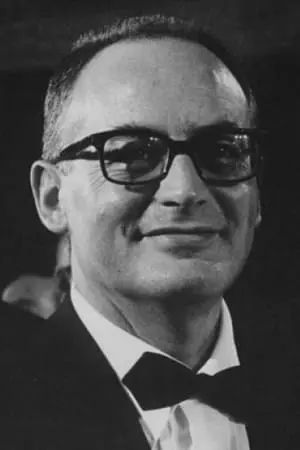
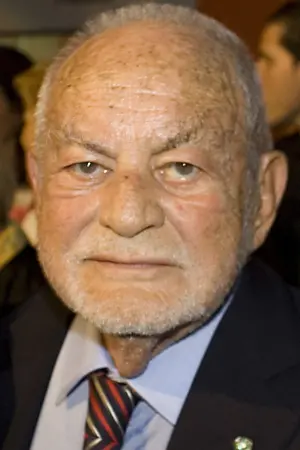
Editor
Richard C. Meyer
Editor
Art Direction
Ferdinando Giovannoni
Art Direction
A. Menyalshchikov
Art Direction
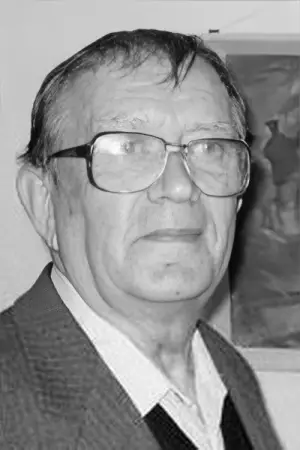
Semyon Valyushok
Art Direction
Costume Design
Maria De Matteis
Costume Design
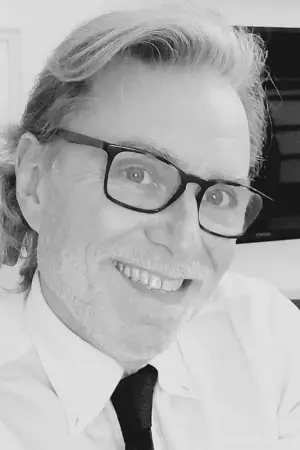
Ugo Pericoli
Costume Design
Production Design
Stunt Coordinator
Franco Fantasia
Stunt Coordinator
Set Decoration
Emilio D'Andria
Set Decoration
Ken Muggleston
Set Decoration
Makeup Artist
Mikhail Chikiryov
Makeup Artist
Original Music Composer
Production Supervisor
Guy Luongo
Production Supervisor
Piotor M. Sviridov
Production Supervisor
Associate Producer
Richard C. Meyer
Associate Producer
Director of Photography
Armando Nannuzzi
Director of Photography
Camera Operator
Giuseppe Bernardini
Camera Operator
J.N. Carpuchin
Camera Operator
Supervising Sound Editor
Les Wiggins
Supervising Sound Editor
Hairstylist
Paolo Borselli
Hairstylist
Still Photographer
Alfonso Avincola
Still Photographer
Paul Ronald
Still Photographer
First Assistant Director
Vladimir Dostal
First Assistant Director
Production Manager
Guglielmo Ambrosi
Production Manager
Boom Operator
Kevin Gurry
Boom Operator
Screenplay

H.A.L. Craig
Screenplay
First Assistant Editor
Vanio Amici
First Assistant Editor
Special Effects
Vladimir Likhachyov
Special Effects
Makeup Supervisor
Alberto De Rossi
Makeup Supervisor
Music
Conductor
Bruno Nicolai
Conductor
Choreographer
Gino Landi
Choreographer
Sound Editor
Alban Streeter
Sound Editor
Christopher Lancaster
Sound Editor
Continuity
Elvira D'Amico
Continuity
Second Unit Cinematographer
Nino Cristiani
Second Unit Cinematographer
Scenario Writer
Vittorio Bonicelli
Scenario Writer
H.A.L. Craig
Scenario Writer
What's left behind the scenes
- Fifteen thousand Soviet soldiers were used in the mass scenes of the film, portraying infantry units.
- Rod Steiger went to the hospital before filming to find out why his side might hurt the way it hurt the legendary commander during an attack that occurred on the eve of the Battle of Waterloo.
- In 1967, on the initiative of Semyon Budyonny, the Eleventh Separate Cavalry Guard Film Regiment was recreated. Soldiers serving in this regiment participated in the filming of battle scenes. They had to be able not only to ride horses, but also to jump onto them at a gallop, overcome obstacles, and perform various stunts. Naturally, those who had experience in equestrian schools and participated in races were more skilled in all of this.
- The filming of the movie was mainly done in Ukraine, Herzegovina, and Czechoslovakia.
- The crossing of the Seine River near Paris was filmed on the Chop River (Western Ukraine), on one of the banks of which sets depicting Paris were erected.
- In the scene depicting 'the dead field after Napoleon's battle,' horses were given alcohol and lay as if dead, cotton wool soaked in red paint was scattered everywhere, and mannequins depicting dead soldiers were lying around.
- For the film's author, lighting was of great importance, and often the same scene was shot in multiple takes until the director was satisfied with the result.
- The film's consultant was Army General Ivan Evgenievich Oslikovsky.
- Disagreements often arose between Bondarchuk and Oslikovsky, for example, when the director wanted to shoot a scene at two o'clock in the afternoon – the lighting was perfect, but the horses refused to cooperate – they knew it was feeding time and wouldn't move until they'd eaten. This irritated Bondarchuk, to which Oslikovsky responded with suffering: “I can command people, soldiers, but how do I command animals?” In addition, each squadron was assigned horses of a specific color; for example, the first squadron had bay horses, the second had dappled gray horses, the third had chestnut horses, and so on. And, depending on the changing lighting, Bondarchuk would order horses of a certain color to perform at a specific moment.
- After filming “Waterloo,” which lasted three months, the Cavalry Regiment also appeared in other films, including “The Chase” as members of the Black Hundreds.
- On the first day of filming in Rome, a scene of a ball given by the Duchess of Richmond in honor of the commanders of the allied armies was shot at the studio.
- Almost all location shooting took place in western Ukraine.
- A museum now stands on the site of the actual Battle of Waterloo. Therefore, the battle scenes were filmed near the village of Nizhne Solotvino in Transcarpathia, in a location with terrain very similar to the real battlefield.
- Sergei Bondarchuk was well acquainted with locations in Transcarpathia from filming the 1967-68 film 'War and Peace'.
Did you like the film?
 Auditions in India
 Casting calls in USA
 Castingi w Polsce
 Кастинги в Україні
