The Goldfinch - crew, film crew
The entire team, the film crew of the film "The Goldfinch"
The Goldfinch (2019)
Timing:
2:29 (149 min)

7.14/10
927
927

6.562/10
64777
64777

6.4/10
30000
30000
Film crew
Director

Producer
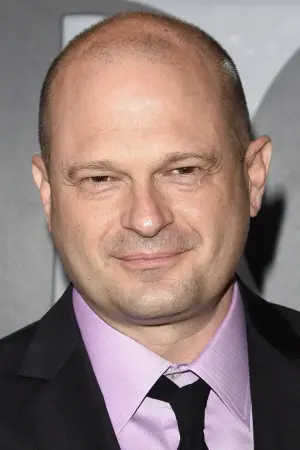

Nina Jacobson
Producer
Executive Producer
Mari-Jo Winkler
Executive Producer
Kevin McCormick
Executive Producer

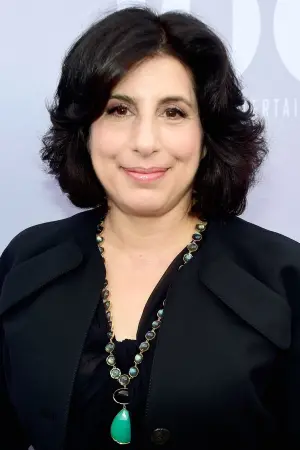
Sue Kroll
Executive Producer
Casting
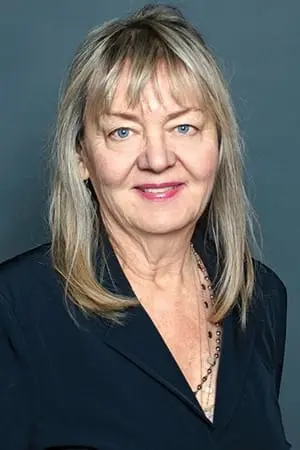
Ellen Chenoweth
Casting
Editor
Supervising Art Director
Deborah Jensen
Supervising Art Director
Costume Design
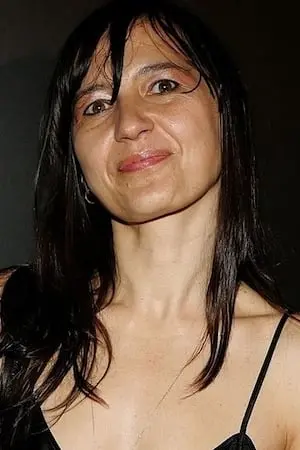
Kasia Walicka Maimone
Costume Design
Stunts
Samantha MacIvor
Stunts

Jodi Pynn
Stunts
Production Design

K.K. Barrett
Production Design
Stunt Coordinator
G. A. Aguilar
Stunt Coordinator

Set Decoration
Rena DeAngelo
Set Decoration
Makeup Artist
Karla Muenze
Makeup Artist
Jackie Risotto
Makeup Artist
Erica Whelan
Makeup Artist
Kim Taylor
Makeup Artist
Yasmina Smith-Tyson
Makeup Artist
Sound Re-Recording Mixer
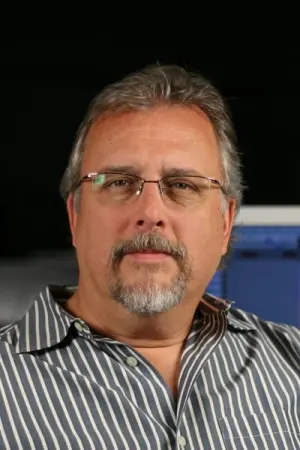
Skip Lievsay
Sound Re-Recording Mixer
Original Music Composer
Trevor Gureckis
Original Music Composer
Co-Producer
Margaret Chernin
Co-Producer
Associate Producer
Maarten Swart
Associate Producer
Director of Photography
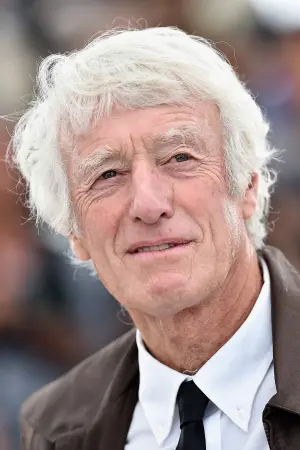
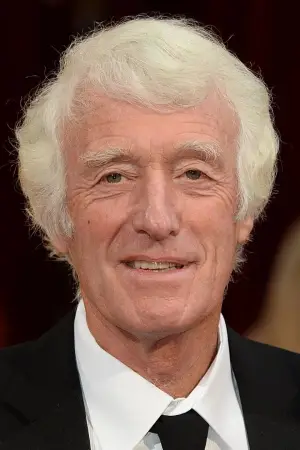
Steadicam Operator
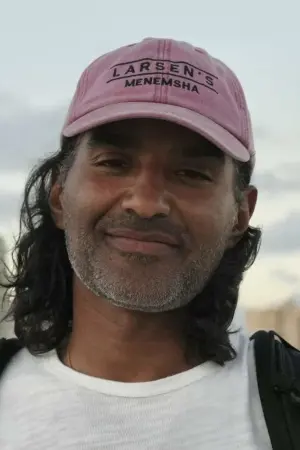
Maceo Bishop
Steadicam Operator
Makeup Department Head
Evelyne Noraz
Makeup Department Head
Visual Effects Supervisor
Lesley Robson-Foster
Visual Effects Supervisor
Ruben Rodas
Visual Effects Supervisor
Supervising Sound Editor
Skip Lievsay
Supervising Sound Editor
Hair Department Head
Mandy Lyons
Hair Department Head
Hairstylist
Jamie Amadio
Hairstylist
Visual Effects Producer
Parker Chehak
Visual Effects Producer
Screenplay
Peter Straughan
Screenplay
Novel
Donna Tartt
Novel
Sound Designer
Blake Leyh
Sound Designer
Lawrence Zipf
Sound Designer
Construction Coordinator
Key Hair Stylist
Gina Leone
Key Hair Stylist
Makeup Designer
Kyra Panchenko
Makeup Designer
Hair Supervisor
Izzi Galindo
Hair Supervisor
Special Effects Makeup Artist
Casting Associate
Susanne Scheel
Casting Associate
Second Unit Director of Photography
Maceo Bishop
Second Unit Director of Photography
Visual Effects Editor
Perri B. Frank
Visual Effects Editor
Rachel Ambelang
Visual Effects Editor
Grant Anderson
Visual Effects Editor
Mark DiStefano
Visual Effects Editor
Eric Lorenz
Visual Effects Editor
Erin Sullivan
Visual Effects Editor
Paul Daniel
Visual Effects Editor
Visual Effects
Matthew T. Griffin
Visual Effects
Aaron Raff
Visual Effects
Shannen Miceli
Visual Effects
Marc Goldfine
Visual Effects
Line Producer
Erwin Godschalk
Line Producer
What's left behind the scenes
- The film is based on the novel of the same name (2013) by American writer Donna Tartt, who received the Pulitzer Prize for it.
- The film features a painting of "The Goldfinch" (1654) by Carel Fabritius (1622-1654), which is housed in the Mauritshuis Royal Gallery in The Hague, Netherlands. For the film's production, the museum was able to provide filmmakers with a very realistic "double" of the painting. K.K. Barrett, the film's production designer, says: "The museum used a 3D scanner to scan the surface of the painting, and then recreated the canvas layer by layer at full size. For some shots, we enlarged the painting digitally, and then the prop artist applied a layer of paint on top to make the brushstrokes and texture look the same as on the original canvas."
- Most of the scenes set in Las Vegas were actually filmed on the outskirts of Albuquerque. To further emphasize the contrast between the city and the desert, according to the cinematographer, "most of the Las Vegas scenes were intentionally shot in bright daylight to achieve a feeling of scorching air and sun-bleached colors." In addition to lighting, a wider lens was also used "to make the space look more open, desolate, and hostile to Theo" – recalls Roger Deakins.
- The Metropolitan Museum of Art also assisted the film crew in preparing the exhibition for the film. Copies of the exhibits hanging on the walls of the museum in the film were created based on high-resolution images for which the filmmakers obtained licenses from the Metropolitan Museum of Art, the Mauritshuis, the Rijksmuseum, and other galleries. Teams of graphic artists and set designers printed the images on photographic paper and then worked on their texture to make them look like old canvases. More than 80 reproductions were created for the "museum" episode of the film, the most famous of which is Rembrandt's "The Anatomy Lesson of Dr. Nicolaes Tulp." Given the degree of destruction that would occur as a result of the explosion, it was impossible to film such museum interiors in the Metropolitan itself. Therefore, the filmmakers recreated several adjacent museum halls in a large warehouse in Yonkers, which is often used for film shoots.
- The location for the spacious home of the Barbour family, to whom the boy comes after the tragedy at the museum, was found by Barrett and his team in Haven, New York.
- Director John Crowley initially wanted to cast someone from the Russian theater in New York for the role of young Boris, but Finn Wolfhard amazed both the director and the pronunciation coach during the audition with his impeccable Russian accent.
- The film features a depiction of Carel Fabritius’s painting “The Goldfinch” (1654), which is housed in the Mauritshuis Royal Gallery in The Hague, Netherlands. For the film’s production, the museum was able to provide the filmmakers with a very realistic “double” of the painting. K.K. Barrett, the film’s production designer, recounts: “The museum used a 3D scanner to scan the surface of the painting, and then reproduced the canvas layer by layer at full size. For some shots, we enlarged the painting digitally, and then the prop artist applied a layer of paint on top to ensure the brushstrokes and texture looked just like the original canvas.”
- Most of the scenes set in Las Vegas were actually filmed on the outskirts of Albuquerque. To further enhance the contrast between the city and the desert, according to the cinematographer, “most of the Las Vegas scenes were intentionally shot in bright daylight to achieve a feeling of scorching air and sun-bleached colors.” In addition to the lighting, a wider lens was also used “to make the space look more open, desolate, and hostile to Theo” – recalls Roger Deakins.
Did you like the film?
 Auditions in India
 Casting calls in USA
 Castingi w Polsce
 Кастинги в Україні
