Big Trouble in Little China - crew, film crew
The entire team, the film crew of the film "Big Trouble in Little China"
Big Trouble in Little China (1986)
Timing:
1:40 (100 min)

7.2/10
3294
3294

7.126/10
20915
20915

7.2/10
166000
166000
Film crew
Director
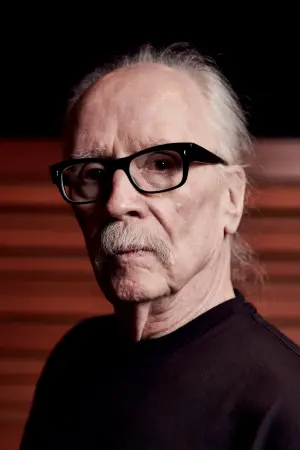
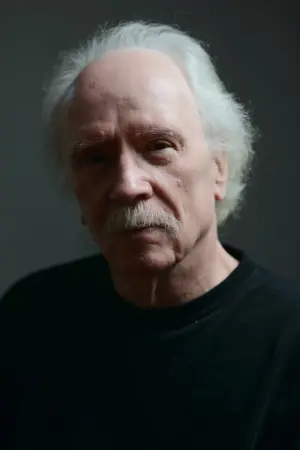
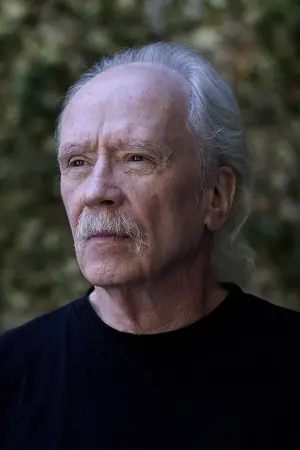
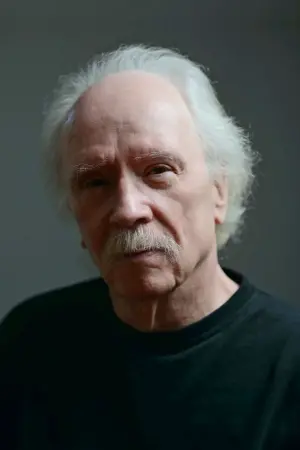
Producer
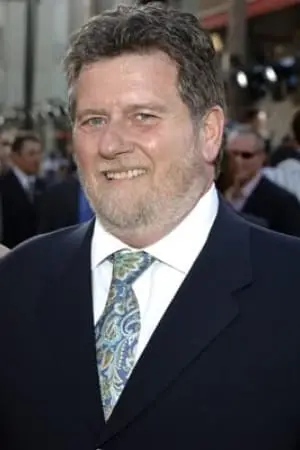
Larry J. Franco
Producer
Executive Producer
Paul Monash
Executive Producer
Keith Barish
Executive Producer
Casting

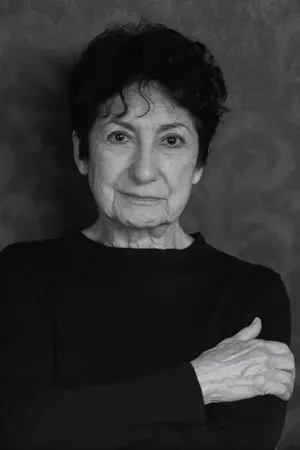
Editor
Mark Warner
Editor

Edward A. Warschilka
Editor
Art Direction
Les Gobruegge
Art Direction
Costume Design
April Ferry
Costume Design
Stunts
Mike Washlake
Stunts
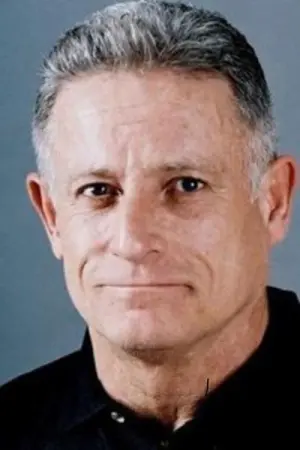
Jimmy Nickerson
Stunts
Simone Boisseree
Stunts
Phil Chong
Stunts

Dennis Scott
Stunts

Joe Tornatore
Stunts
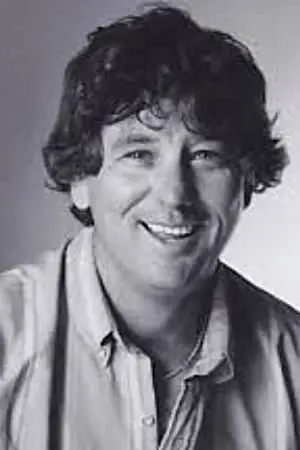

Dean Wein
Stunts
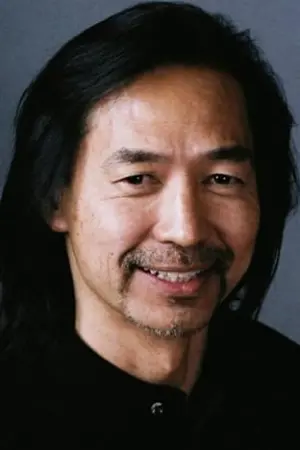

Ken Fritz
Stunts
Chuck Clarke
Stunts
Kent Hays
Stunts
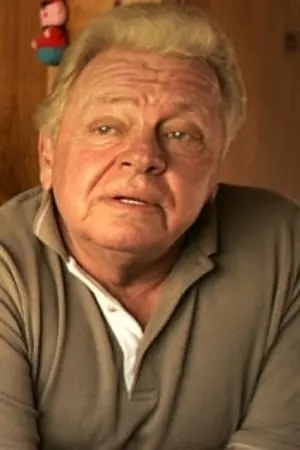
Eddy Donno
Stunts
Leland Sun
Stunts
Hayward Soo Hoo
Stunts
Tom Bergman
Stunts
David Cadiente
Stunts
Janet Brady
Stunts
Jack West
Stunts
Mark Giardino
Stunts
George Endoso
Stunts
Debbi A. Davison
Stunts
Beth Nufer
Stunts
Bob K. Cummings
Stunts
Harry Wong
Stunts
T.K. Anthony
Stunts
Bobby Itaya
Stunts
Sherri Nickerson
Stunts
Production Design
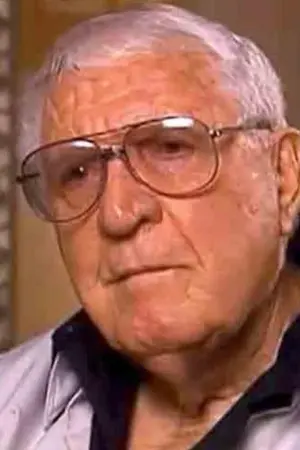
John J. Lloyd
Production Design
Stunt Coordinator
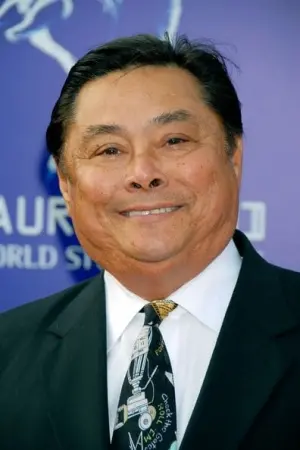
Second Unit Director
Set Decoration
George R. Nelson
Set Decoration
Makeup Artist
Ken Chase
Makeup Artist
Sound Re-Recording Mixer
Don J. Bassman
Sound Re-Recording Mixer
Richard Overton
Sound Re-Recording Mixer
Kevin F. Cleary
Sound Re-Recording Mixer
Original Music Composer

Alan Howarth
Original Music Composer
Unit Production Manager
James Herbert
Unit Production Manager
Associate Producer


Second Assistant Director
Stunt Double
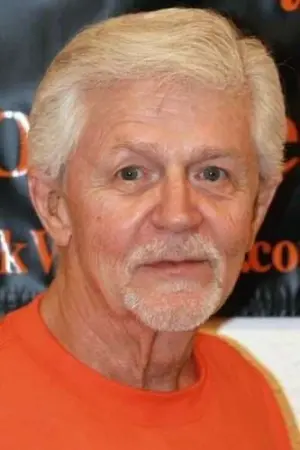
Director of Photography
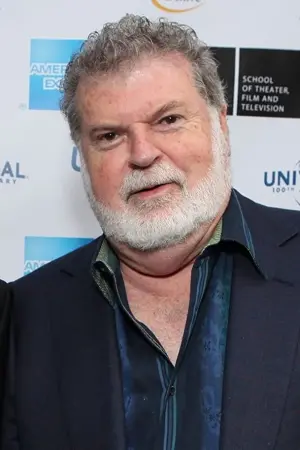
Sound Effects Editor
David Williams
Sound Effects Editor
Monika Dorfman-Lightstone
Sound Effects Editor
Eric Lindemann
Sound Effects Editor
David M. Ice
Sound Effects Editor
Hal Sanders
Sound Effects Editor
Martin Dreffke
Sound Effects Editor
Lenny Jennings
Sound Effects Editor
Laja Holland
Sound Effects Editor
Peter Hubbard
Sound Effects Editor
David A. Fechtor
Sound Effects Editor
Hairstylist
Susan V. Kalinowski
Hairstylist
Sound Mixer
Thomas Causey
Sound Mixer
Visual Effects Producer
First Assistant Director
Larry J. Franco
First Assistant Director
Screenplay
David Z. Weinstein
Screenplay
Set Designer
Steven Schwartz
Set Designer
Craig Edgar
Set Designer
Sound Recordist
Robert Renga
Sound Recordist
Second Assistant Camera
Larry D. Davis
Second Assistant Camera
Sound Effects
William Hartman
Sound Effects
Anthony Milch
Sound Effects
Adaptation


Martial Arts Choreographer
Art Designer
Drew Struzan
Art Designer
What's left behind the scenes
- The final song was written and performed by "The Coupe De Ville," featuring John Carpenter, Nick Castle, and Tommy Lee Wallace.
- According to John Carpenter, post-production took four months.
- A literal translation of the Chinese characters in the opening credits is "Evil spirits are causing a great commotion in a small spiritual place."
- The characters on Shen's bus read: "Uncle Egg's Tours guarantee a good time."
- Although Kurt Russell was John Carpenter's first and only choice for the lead role, the studio considered Jack Nicholson and Clint Eastwood.
- According to commentary on the John Carpenter and Kurt Russell DVD, the film's script was originally written in the style of a Western, but Carpenter later decided to move the setting to the present day.
- During filming, Kurt Russell was ill with the flu, so the sweat on his body in some scenes is genuine, caused by a high temperature.
- In the scene where Jack (Kurt Russell) attempts to enter the brothel, he is wearing the same clothes as Russell's character in the film "Used Cars" (1980).
- A martial arts expert who developed kickboxing technique for the famous Bruce Lee participated in the choreography of the stunts and fight scenes.
- Originally, the film was planned to be shot under the title "Buckaroo Banzai vs. The World Crime League," which was to be a continuation of "The Adventures of Buckaroo Banzai Across the 8th Dimension." But after a complete rewrite of the script, the film turned out to have a completely different plot.
- The character in a triangular hat who hurled lightning served as the prototype for Raiden – a character from the «Mortal Kombat» series of games.
- «Big Trouble in Little China» marked the debut of Cary-Hiroyuki Tagawa, who played one of the many minor villainous characters in the film.
- «20th Century Fox» studio wanted to remove the names of screenwriters Gary Goldman and David Weinstein, who wrote the first draft of the screenplay, from the credits and press releases. The studio wanted Richter to be credited as the screenwriter. In March 1986, the «Writers Guild of America» ruled that Goldman and Weinstein should be credited as the screenplay authors. Nevertheless, Richter was included in the credits as the author of the screenplay adaptation. John Carpenter was disappointed with the Guild's decision, as he wanted Richter to be credited as the sole screenwriter.
- Producers Barish and Monash first offered the project to Carpenter in July 1985.
- Initially, Russell was not interested in the project, as he didn't know if he could play Jack in a way that would be interesting to the audience. But after talking to Carpenter and reading the script several times, he liked the idea of playing a character with so many flaws.
- Russell believed the film would face distribution challenges, as it featured only a handful of non-Asian actors, while the plot was based on Chinese legends, tales, and the history of "Chinatown".
- Dennis Dun's character in "Year of the Dragon" made a pleasant impression on John Carpenter. Therefore, the director met with the actor twice before offering him the role of Wang Chi, just a few days before the start of pre-production. Dun, who had been studying martial arts since childhood, had no difficulty with the martial arts that permeated the film.
- Jackie Chan was considered for the role of Wang Chi, but he decided to decline after the box office failure of several of his films and focus on his career in Hong Kong and the film "Police Story".
- The studio pressured Carpenter to cast rock star Grace Lau as Jack's love interest, but Carpenter chose Kim Cattrall. The studio was not thrilled with this idea, as Kim Cattrall was known as a comedic actress thanks to "Police Academy".
- Before filming began, Kurt Russell ran for two months to lose weight.
- The studio was in a hurry and feared that filming might lead to a serious budget overrun, so they hired John Carpenter, giving him only 10 weeks for preparation. The filming crew, led by Carpenter, rehearsed hand-to-hand combat scenes for about a week.
- John Carpenter learned that Eddie Murphy’s new project, titled “The Golden Child,” with similar themes, was scheduled for release around the same time as “Big Trouble in Little China.” The director demanded an explanation from the film’s director and Paramount Pictures. He considered the appearance of a film with the same setting and themes to be no coincidence, as no major studios had released a film on this topic for 20 years. And certainly not at the same time. To beat the competition, production of the film began in October 1985, to be ready by July 1986, five months before the premiere of “The Golden Child.”
- Production designer John J. Lloyd recreated parts of “Chinatown,” three-story buildings, roads, lanterns, and sewers. This was necessary to create visual effects and stage complex fight scenes that would have been difficult to film on location. This forced the director to shoot the film in 15 weeks and spend 25 million dollars. Carpenter said that in order to save money, he used very cheap materials for filming, such as trampolines, ropes, and wires.
- A moment before his death, Lightning forms a Chinese character that means “carpenter.” John Carpenter is the director of this film.
- During the wedding ceremony, when Lo Pan plunges the Love Needle into Miao Yin’s hand, James Hong actually pricked Susie Pai quite badly. In the film, you can notice that she even jumps during this scene.
- John Carpenter was dissatisfied with the company responsible for the visual effects, believing they had taken on too many projects, which led to some of the film's material being cut. Richard Edlund, head of the visual effects studio "Boss Film Studios," stated that there were no problems working on the film and that it was one of his favorites of the time, with the exception of "Ghostbusters." The visual effects cost $2 million, which Edlund considered a small amount. One of the most challenging effects for the film was creating the flying eyeball spying for Lo Pan. The structure was controlled by several puppeteers with dozens of cables to control its expressions. It was filmed using a special system built specifically for it.
- The film was originally planned to be shot under the title 'Buckaroo Banzai vs. The World Crime League', which was intended to be a sequel to 'The Adventures of Buckaroo Banzai Across the 8th Dimension'. However, after a complete rewrite of the screenplay, the resulting film had a completely different plot.
- The character in the triangular hat who throws lightning served as the prototype for Raiden – a character from the 'Mortal Kombat' game series.
- 'Big Trouble in Little China' was a debut for Cary-Hiroyuki Tagawa, who played one of the numerous minor villainous characters in the film.
- 20th Century Fox studio wanted to exclude the names of screenwriters Gary Goldman and David Weinstein, who wrote the first draft of the script, from the credits and press releases. The studio wanted Richter to be credited as the screenwriter. In March 1986, the Writers Guild of America ruled that Goldman and Weinstein should be credited as the scriptwriters. However, Richter was included in the credits as the author of the screenplay adaptation. John Carpenter was disappointed with the Guild’s decision, as he wanted Richter to be credited as the sole screenwriter.
- Russell believed that the film would face distribution difficulties, as it featured only a handful of non-Asian actors, and the plot was based on Chinese legends, folklore, and the history of Chinatown.
- Dennis Dun’s character in the film Year of the Dragon impressed John Carpenter. Therefore, the director met with the actor twice before offering him the role of Wang Chi, just a few days before the start of pre-production. The martial arts that permeated the film were not difficult for Dun, who had been studying them since childhood.
- Jackie Chan was considered for the role of Wang Chi, but decided to decline after the box office failure of several of his films and focus on his career in Hong Kong and the film Police Story.
- The studio pressured Carpenter to cast rock star Grace Lau as Jack’s lover, but Carpenter chose Kim Cattrall. The studio was not thrilled with this idea, as Kim Cattrall was known as a comedic actress thanks to the film Police Academy.
- John Carpenter learned that Eddie Murphy's new project, titled "Golden Child," which featured similar themes, was scheduled for release around the same time as "Big Trouble in Little China." The director demanded explanations from the film's director and Paramount Pictures. He didn't believe the simultaneous appearance of a film with the same setting and subject matter was a coincidence, as no major studio had released a film on this topic in the past 20 years. And certainly not at the same time. To beat the competition, production on the film began in October 1985, to be ready by July 1986, five months before the premiere of "Golden Child."
- Production designer John J. Lloyd recreated parts of "Chinatown," including three-story buildings, roads, lanterns, and sewers. This was necessary to create visual effects and stage complex fight scenes that would have been difficult to film on location. This forced the director to shoot the film in 15 weeks and spend $25 million. Carpenter said that in order to save money, he used very cheap materials for the shooting, such as trampolines, ropes, and wires.
- Just before his death, Lightning forms a Chinese character that means "carpenter." John Carpenter is the director of this film.
- John Carpenter was dissatisfied with the company responsible for the visual effects, believing they had taken on too many projects, which led to some material being cut from the film. Richard Edlund, head of Boss Film Studios, which handled the visual effects, said there were no problems working on the film, and it was one of his favorites of the time, with the exception of "Ghostbusters." The visual effects cost $2 million, which Edlund considered quite low. One of the most challenging effects for the film was creating the flying eyeball that spied for Lo Pan. The structure was operated by several puppeteers with dozens of cables to control its expressions. It was filmed using a special system built specifically for it.
Did you like the film?
 Auditions in India
 Casting calls in USA
 Castingi w Polsce
 Кастинги в Україні
