Annie Hall - crew, film crew
The entire team, the film crew of the film "Annie Hall"
Annie Hall (1977)
Timing:
1:33 (93 min)

7.737/10
4199
4199

7.774/10
37572
37572

7.9/10
290000
290000
Film crew
Director
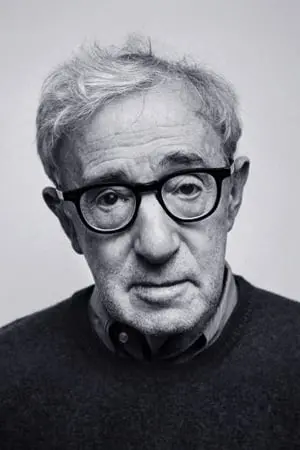
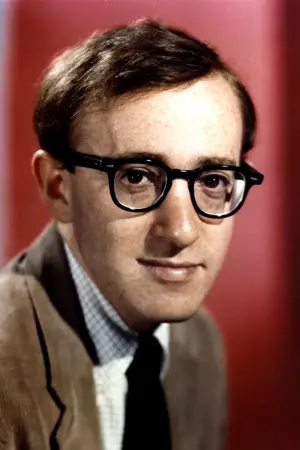

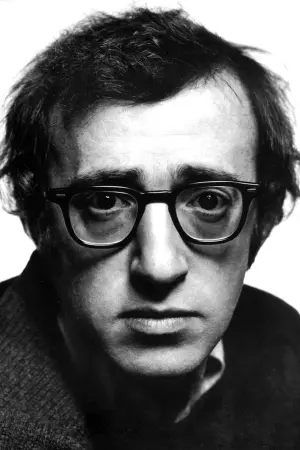
Producer
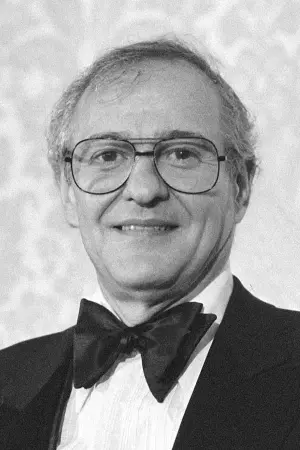
Executive Producer
Robert Greenhut
Executive Producer
Writer
Casting

Juliet Taylor
Casting
Editor
Ralph Rosenblum
Editor
Wendy Greene Bricmont
Editor
Art Direction
Mel Bourne
Art Direction
Costume Design
Ruth Morley
Costume Design
Set Decoration
Robert Drumheller
Set Decoration
Justin Scoppa Jr.
Set Decoration
Barbara Krieger
Set Decoration
Makeup Artist
Fern Buchner
Makeup Artist
John Inzerella
Makeup Artist
Sound Re-Recording Mixer
Jack Higgins
Sound Re-Recording Mixer
Associate Producer
Fred T. Gallo
Associate Producer
Second Assistant Director
Frederic B. Blankfein
Second Assistant Director
Director of Photography
Camera Operator
Fred Schuler
Camera Operator
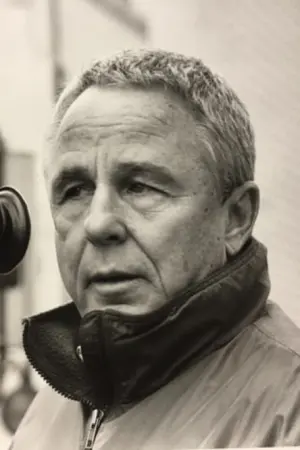
Donald E. Thorin
Camera Operator
Costume Supervisor
George Newman
Costume Supervisor
Marilyn Putnam
Costume Supervisor
Property Master
Pat O'Connor
Property Master
Thomas Saccio
Property Master
Script Supervisor
Kay Chapin
Script Supervisor
Hairstylist
Romaine Greene
Hairstylist
Vivienne Walker
Hairstylist
Still Photographer
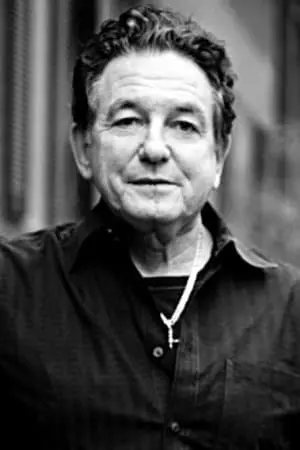
Brian Hamill
Still Photographer
Sound Mixer
James Sabat
Sound Mixer
James Pilcher
Sound Mixer
First Assistant Director
Fred T. Gallo
First Assistant Director
Animation
Chris K. Ishii
Animation
Thanks

Donald S. Rugoff
Thanks
Production Manager
Robert Greenhut
Production Manager
Assistant Editor
Susan E. Morse
Assistant Editor
Sonya Polonsky
Assistant Editor
Key Grip
Robert Ward
Key Grip
Carl Gibson
Key Grip
Location Manager
Martin Danzig
Location Manager
Daisy Gerber
Location Manager
Grip
Robert Ward
Grip
Carpenter
Joseph Badalucco Jr.
Carpenter
Gaffer
Larry D. Howard
Gaffer
Dusty Wallace
Gaffer
Music
Artie Butler
Music
Production Sound Mixer
First Assistant Camera
Tom Priestley Jr.
First Assistant Camera
Production Assistant
Christopher Cronyn
Production Assistant
Beth Rudin
Production Assistant
Stuart Smiley
Production Assistant
Unit Publicist
Scott MacDonough
Unit Publicist
Construction Grip
Joe Williams Sr.
Construction Grip
Scenic Artist
Cosmo Sorice
Scenic Artist
Extras Casting
Aaron Beckwith
Extras Casting
Wardrobe Supervisor
George Newman
Wardrobe Supervisor
Marilyn Putnam
Wardrobe Supervisor
Nancy McArdle
Wardrobe Supervisor
Transportation Captain
William Curry
Transportation Captain
James E. Foote
Transportation Captain
Sound Editor
Dan Sable
Sound Editor
William S. Scharf
Sound Editor
Color Timer
Steve Johnson
Color Timer
Production Office Coordinator
Lois Kramer Hartwick
Production Office Coordinator
What's left behind the scenes
- Co-writer Marshall Brickman wrote gags for Woody Allen in the 1960s when he performed in a comedy show.
- Allen and Brickman, who considered about a hundred possible titles for the future film, initially settled on "Angedonia" (this word in a psychoanalysis dictionary means the inability to experience pleasure). The executives at United Artists were against this option, as they couldn’t imagine how to explain the meaning of the word to audiences. Ultimately, Allen compromised and named the film after the main character just three weeks before the premiere.
- Many elements of the script are based on reality. For example, Diane Keaton's real last name is Hall, and her nickname is Annie.
- In 1992, the film was added to the National Film Registry.
- In the film, Diane Keaton performs the songs “Seems Like Old Times” (1945, music by Carmen Lombardo, lyrics by John Jacob Loeb) and “It Had To Be You” (1924, music by Isham Jones, lyrics by Gus Kahn).
- In addition to being starred in by Woody Allen and his girlfriend Diane Keaton, some of the hero’s minor love interests are also played by Woody Allen’s lovers.
- The main characters watch Marcel Ophüls’s four-hour documentary “The Sorrow and the Pity” (1969), dedicated to the French Resistance, in a cinema.
- In one scene of the film, Woody Allen says to Diane Keaton, "Did you get here via the Panama Canal? I'm surrounded by characters from 'The Godfather'." Keaton played the wife of the main character in 'The Godfather' trilogy. Rick Petrucelli, who played Ralph, also appeared as an extra in 'The Godfather' (1972), but was not credited.
- The sneezing from cocaine by Woody Allen's character (Alvy) was accidental. During a preview, the entire audience laughed so loudly at this scene that Allen decided to keep it. He also had to add an extra beat after it, because people were laughing so much they missed the next few jokes.
- Initially, Woody Allen envisioned this film as a mystery murder story with a romantic subplot. After reviewing the script, Allen decided to abandon the murder plot. He later used it in 'Manhattan Murder Mystery' (1993).
- During the lobster cooking scene, Annie runs after the camera to photograph Alvy with the crustacean. Later, when Alvy runs to Annie's house to kill a spider, the photos Annie took can be seen in the background on the wall.
- The first on-screen appearance of actress Sigourney Weaver (in the date scene with Alvy towards the end of the film).
- The jokes Woody Allen tells to audiences at the University of Wisconsin and on Dick Cavett's show are taken from his performances as a stand-up comedian.
- Annie's outfits were Diane Keaton's own clothes.
- In the scene where Alvy interviews people on the street, a large crowd of people watching the filming can be seen in the background.
- The phrase "It was the most amusing thing that ever happened to me without my knowing it" is a reference to a 1942 quote by G. L. Mencken.
- Before Marshall McLuhan was cast in this film, the role was offered to Federico Fellini and Luis Buñuel.
- Elvi never says the phrase "I love you" to Annie. He only once said that "love" is not a strong enough word to describe his feelings.
- In the scene recalling the class, one of the teachers writes on the board: "Tuesday, December 1st." December 1st is Woody Allen's birthday, and it was his seventh birthday on a Tuesday (December 1, 1942).
- On "Late Night with Conan O'Brien" (1993–2009), Harvey Feinstein revealed that he and Danny Aiello had cameo roles in this film, but they were cut during editing.
- Woody Allen originally shot a scene where a road sign strongly urged Elvi to go to Annie in California. Editor Ralph Rosenblum recounted that while watching Allen’s footage, he became so enraged by the scene's cuteness that he grabbed the film and threw it into the East River. A similar device with a road sign was later used in the film "L.A. Story" (1991) by screenwriter Steve Martin.
- The man who appears in the film as the winner of the Truman Capote look-alike contest is actually Truman Capote himself (he is not credited in the film).
- In June 2008, the film ranked second on the American Film Institute's list of the ten greatest films in the romantic comedy genre.
- The line “Masturbation is sex with someone you love!” ranked 78th on Premiere magazine's list of “100 Greatest Movie Lines” in 2007.
- In 2006, Premiere magazine included this film in its list of “50 Greatest Comedies of All Time.”
- The house near the roller coaster where Alvy grew up is actually the Kensington Hotel in Coney Island (Brooklyn). Allen discovered it while scouting locations during filming. The hotel and roller coaster were demolished in 2000.
- Kay Lenz was offered the lead role in this film, but her then-boyfriend, David Cassidy, turned it down.
- Shelly Hack's first screen appearance.
- All scenes with Shelly Duvall were filmed in two days.
- Elvy jokes about the political magazines Dissent and Commentary, combining their names into one – Dysentery. The former is a well-known liberal magazine, and the latter is a conservative one.
- The phrase “La-di-da,” frequently used by Annie Hall, is the title of a 1958 song by Billy and Lillie.
- Although the film is primarily based on the real-life relationship between Woody Allen and Diane Keaton, the fact that Annie Hall is from Chippewa Falls, Wisconsin, likely stems from Allen's past relationship with singer Judy Henske, who was born in Chippewa Falls, while Keaton was born in Los Angeles.
- Filming began with a scene featuring a lobster.
- The Golden Crest Hotel, visible across the street from the restaurant where Alvy and Annie meet for lunch, is now a luxury Standard Hotel on Sunset Strip.
- The animated scenes with Alvy and Annie were drawn by Stu Hample, who at the time was drawing the “Inside Woody Allen” comic strips, which were based on the period when Woody was a stand-up comedian.
- Brooke Shields filmed a scene playing a high school girl that young Alvy falls in love with. However, this scene did not make it into the final cut of the film.
- The role of Annie Hall was written specifically for Keaton.
- In AFI's 100 Years... 100 Movies: America's Greatest Movies (1998), Ben Stiller shared that he particularly enjoyed the scene where Alvy has to meet Annie's family. He said it reminded him of himself, as he was always afraid of meeting his girlfriend's parents. Later, Stiller starred in a film based on a very similar situation ("Meet the Parents," 2000).
- The first rough cut of the film was 2 hours and 20 minutes long. Among the scenes that were subsequently cut were scenes showing Alvy and his former classmates in the present day, footage of Alvy as a teenager, a scene in a fast-food restaurant (featuring Danny Aiello), a large number of additional scenes with Carol Kane, Janet Margolin, Colleen Dewhurst, and Shelley Duvall, and a scene in which the New York Knicks compete against a team of five great philosophers at Madison Square Garden. A driving scene with Christopher Walken was also cut, but it was decided to restore it a week before the film was completed. Material for the ending was shot in three different versions, but most of it was discarded. The most recent scene additions were made during editing.
- In one of the deleted scenes, Annie and Alvy visit hell. This scene was rewritten twenty years later for the film "Deconstructing Harry" (1997).
- The scene where Alvy and Annie are with their psychiatrists was filmed simultaneously on one set with an adjoining wall.
- According to Tony Roberts, in the scene where Rob picks up Alvy from jail, Woody Allen was unaware that Roberts was going to throw a green visor onto his coat, prompting him to improvise: “Are we going through plutonium?” They shot a second take in which Allen changed his line to “Are we going through a bee field?”, but the first take ultimately made it into the film.
- In the scene where Elvi and Annie are dividing their belongings, Annie gives Elvi a pin with the inscription “Impeach Ronald Reagan.” Reagan was not yet president at that time.
- When Annie drives Elvi home after tennis, she quickly parks behind a red car. In the next shot, as they get out of the car, it is clearly visible that they parked behind a blue car.
- When Elvi, Annie, and Rob are driving to Brooklyn, a police car can be seen in the background slowing down traffic on the road to not interfere with filming.
- The flag of the University of Wisconsin visible in the audience reveals that this scene was actually filmed at the Fashion Institute of Technology in Manhattan.
- Christopher Walken’s surname is misspelled in the end credits (Christopher Wlaken).
- During the lobster scene in the beach house, it's noticeable that the refrigerator is so close to the oven that the latter cannot be opened.
- The lobsters that Annie and Elvi struggle with in the kitchen are dead. It's unclear why Elvi acted as if they were trying to escape from him. Furthermore, when Elvi puts the lobster in the pot, which Annie says she has already brought to a boil, the sound clearly indicates that the pot is empty.
- The road Annie drives on after the tennis game is not actually a two-way street. The markings were applied specifically for filming.
- When Rob is driving his Mercedes, several cars can be seen behind him constantly trying to get into the frame.
- The man who appears in the film as the winner of a Truman Capote look-alike contest is actually Truman Capote.
Did you like the film?
 Auditions in India
 Casting calls in USA
 Castingi w Polsce
 Кастинги в Україні
