Grand Illusion - crew, film crew
The entire team, the film crew of the film "Grand Illusion"
La Grande Illusion (1937)
Timing:
1:54 (114 min)

7.862/10
766
766

7.784/10
5498
5498

8.1/10
41000
41000
Film crew
Director
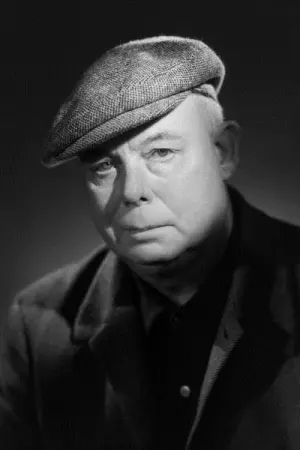
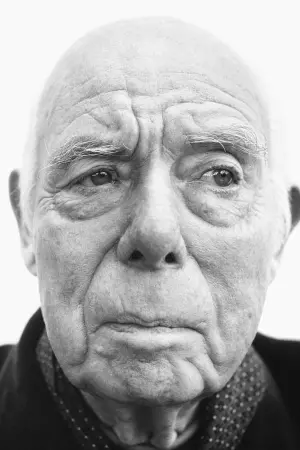
Producer
Albert Pinkovitch
Producer
Frank Rollmer
Producer
Editor
Marthe Huguet
Editor
Costume Design
René Decrais
Costume Design
Production Design
Set Decoration
Makeup Artist
Raffels
Makeup Artist
Original Music Composer


Second Assistant Director
Robert Rips
Second Assistant Director
Director of Photography
Camera Operator
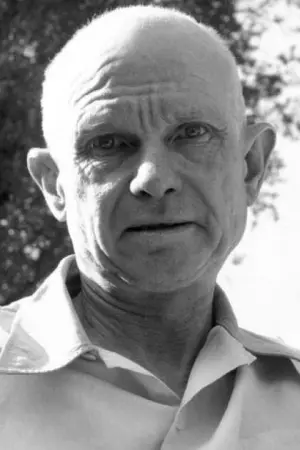
Ernest Bourreaud
Camera Operator
First Assistant Director

Production Manager
Raymond Blondy
Production Manager
Screenplay
Sound Designer
Joseph de Bretagne
Sound Designer
Location Manager
Maurice Barnathan
Location Manager
First Assistant Camera
Jean Bourgoin
First Assistant Camera
Conductor
Emile Vuillermoz
Conductor
Prop Maker
Alexandre Laurié
Prop Maker
Raymond Pillon
Prop Maker
Wardrobe Supervisor
Suzy Berton
Wardrobe Supervisor
Dialogue

Charles Spaak
Dialogue
Technical Supervisor
Carl Koch
Technical Supervisor
Script

Manager of Operations
Pierre Blondy
Manager of Operations
What's left behind the scenes
- The film was banned in Germany by the Nazi propaganda minister Joseph Goebbels, who called it "cinematic enemy No. 1" and urged his Italian counterpart to do the same.
- The film received an Academy Award nomination for Best Picture, despite the fact that the award was only given to films in the English language, while 'The Great Illusion' was filmed in French.
- According to Renoir himself, he unsuccessfully sought support for his project for three years, and eventually had to present 'The Great Illusion' as an adventure film about escaping captivity. But even the sponsors Renoir managed to find did not believe in the film's success, which affected its funding.
- The role of Rauffenstein was originally intended for theater actor and director Louis Jouvet, but, due to other commitments, Jouvet was forced to decline. As a result, Renoir invited his favorite filmmaker Erich von Stroheim, who found himself in France at the end of 1936 after being out of demand in Hollywood.
- Despite its success with audiences, the jury of the 1937 Venice Film Festival nevertheless did not dare to award the film the Grand Prix (although, according to some reports, the film pleased Mussolini) and invented a special consolation prize for it – for the best acting ensemble.
- For many years it was believed that the original negative was lost in 1942 during an Allied air raid. Copies of the film were discovered in 1958, and in the 1960s the film was re-released. Later it turned out that the negative had been sent back to Berlin for storage in the Reich Film Archive. In 1945, during the occupation of Berlin, the Reich Film Archive ended up in a zone controlled by the Russians and was sent to Moscow to the State Film Fund. The negative returned to France in the 1960s, but lay unidentified in the storage of the Toulouse Cinematheque for over 30 years, as no one suspected it had been preserved. In the early 1990s, when the relocation of the Cinematheque to the French Film Archive began, the negative was finally identified. The film, restored from it by Rialto Pictures, was released in August 1999.
- For many years it was believed that the original negative was lost in 1942 during an Allied air raid. Later it turned out that the negative had been sent back to Berlin for storage in the Reich Film Archive. In 1945, during the occupation of Berlin, the Reich Film Archive ended up in a zone controlled by the Russians and was sent to Moscow to the State Film Fund. The negative returned to France in the 1960s, but lay unidentified in the storage of the Toulouse Cinematheque for over 30 years, as no one suspected it had survived. In the early 1990s, when the Cinematheque began to move to the French Film Archive, the negative was finally identified. The film, restored from it by Rialto Pictures, was released in August 1999.
- According to Renoir himself, he unsuccessfully sought support for his project for three years, and eventually had to present 'The Grand Illusion' as an adventure film about escaping from captivity. But even the sponsors Renoir managed to find did not believe in the film's success, which affected its funding.
Did you like the film?
 Auditions in India
 Casting calls in USA
 Castingi w Polsce
 Кастинги в Україні
