The War of the Worlds - crew, film crew
The entire team, the film crew of the film "The War of the Worlds"
The War of the Worlds (1953)
Timing:
1:25 (85 min)

6.8/10
594
594

6.453/10
3381
3381

7/10
37863
37863
Film crew
Director
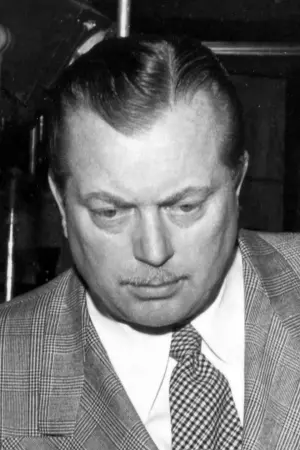
Producer

Executive Producer
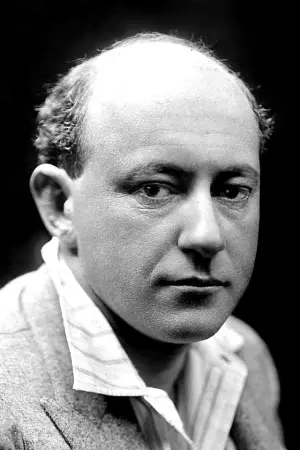
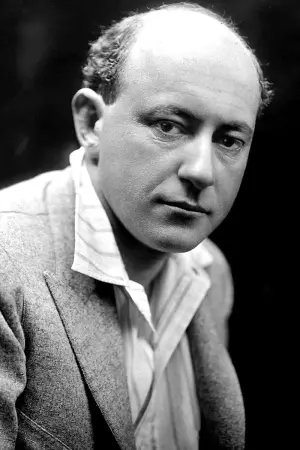
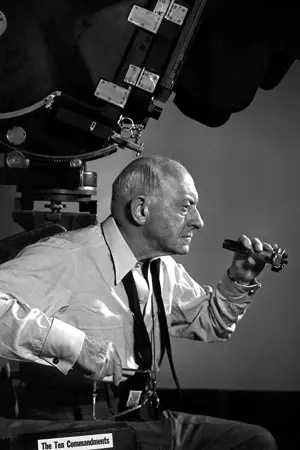
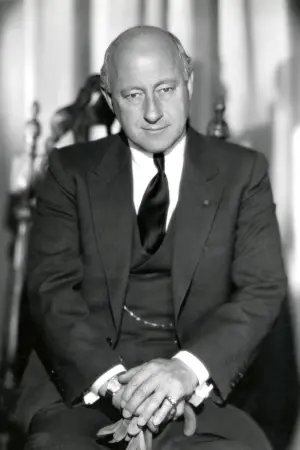
Editor
Everett Douglas
Editor
Art Direction
Albert Nozaki
Art Direction
Costume Design
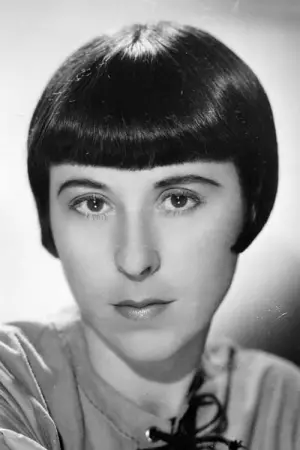
Stunts
Mushy Callahan
Stunts
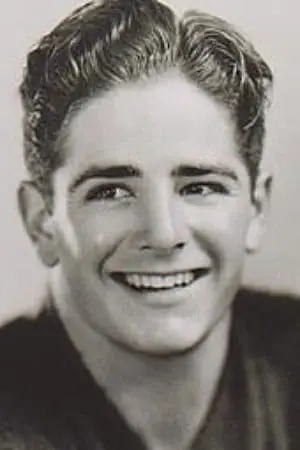
David Sharpe
Stunts
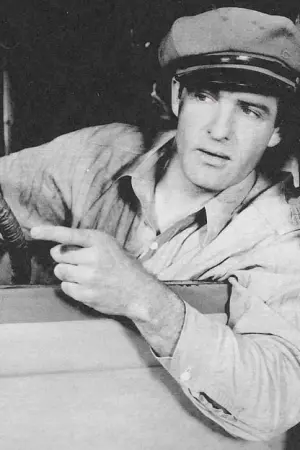
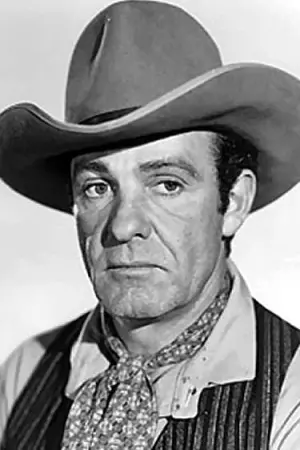
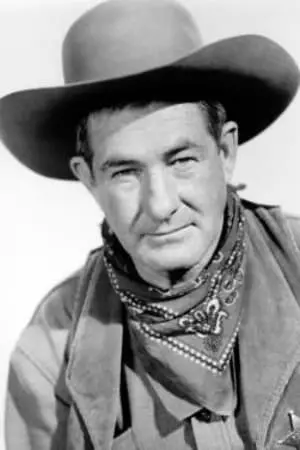
Bud Wolfe
Stunts
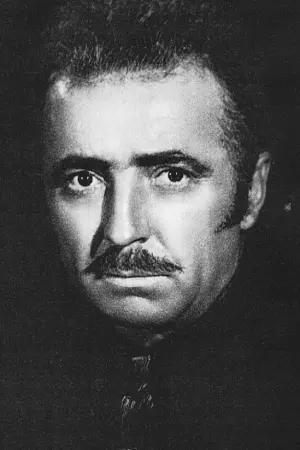
Herman Hack
Stunts
Fred Zendar
Stunts

George Magrill
Stunts
Charles Morton
Stunts
Jack Stoney
Stunts
Slim Gaut
Stunts
George Bruggeman
Stunts
Chalky Williams
Stunts
Tex Holden
Stunts
Set Decoration
Emile Kuri
Set Decoration
Albert Nozaki
Set Decoration
Original Music Composer
Leith Stevens
Original Music Composer
Associate Producer
Frank Freeman Jr.
Associate Producer
Orchestrator
George Parrish
Orchestrator
Director of Photography
Costumer

Charles Gemora
Costumer
Diana Gemora
Costumer
Property Master
Gordon Cole
Property Master
Production Manager
Frank Caffey
Production Manager
Screenplay
Barré Lyndon
Screenplay
Novel
Construction Coordinator
Gene Lauritzen
Construction Coordinator
Props
Ivyl Burks
Props
Lee Vasque
Props
Milt Olson
Props
Charles Davies
Props
Romaine Birkmeyer
Props
Key Grip
Murray Young
Key Grip
Painter
Chesley Bonestell
Painter
Special Effects
A. Edward Sutherland
Special Effects
Ken Strickfaden
Special Effects
Barney Wolff
Special Effects
Bob Springfield
Special Effects
Chester Pate
Special Effects
Makeup Supervisor
Gaffer
Soldier Graham
Gaffer
Assistant Director
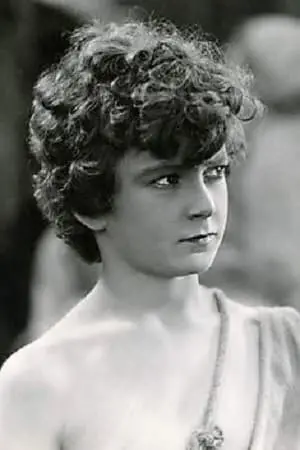
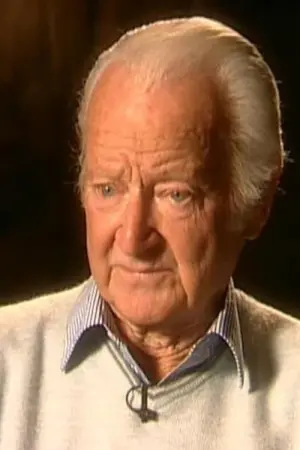
Visual Effects
Walter Hoffman
Visual Effects
Gordon Jennings
Visual Effects
W. Wallace Kelley
Visual Effects
Paul K. Lerpae
Visual Effects
Ivyl Burks
Visual Effects
Jan Domela
Visual Effects
Irmin Roberts
Visual Effects
Jack Caldwell
Visual Effects
Aubrey Law
Visual Effects
Sound Recordist
Harry Lindgren
Sound Recordist
Gene Garvin
Sound Recordist
Modeling
Marcel Delgado
Modeling
Sound Editor
William M. Andrews
Sound Editor
Lovell Norman
Sound Editor
Sound Effects
Howard Beals
Sound Effects
Walter Oberst
Sound Effects
Tommy Middleton
Sound Effects
Dan Johnson
Sound Effects
Sound Director
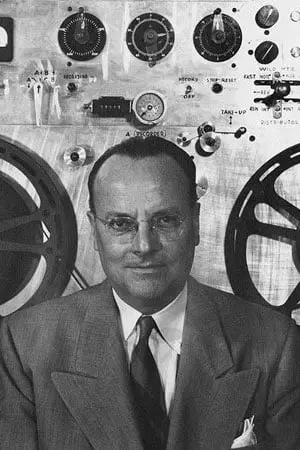
Loren L. Ryder
Sound Director
Producer's Assistant
Gae Griffith
Producer's Assistant
Color Grading
Monroe W. Burbank
Color Grading
Visual Effects Camera
Cliff Shirpser
Visual Effects Camera
Technical Advisor
Chesley Bonestell
Technical Advisor
Robert S. Richardson
Technical Advisor
What's left behind the scenes
- The film is based on Herbert Wells' novel "The War of the Worlds" (1897).
- As early as 1925, producer Cecil B. DeMille became concerned with acquiring the rights to stage "The War of the Worlds" for the Paramount studio from the novel's author, and the first screenplay draft was written at that time. In 1926, preparations began for filming a silent black-and-white film, but DeMille was dissatisfied with the script, and the plans did not progress further. The manuscript lay in the studio's archives for a long time. Ivore Montagu attempted to start filming in the United Kingdom and wrote his own version of the "War of the Worlds" script, but did not get beyond a draft. Offers were made to many well-known filmmakers. Jesse Lasky discussed the possibility of directing the film with Sergei Eisenstein, who visited Hollywood in 1930. He offered the Soviet director a choice of scripts for "The War of the Worlds" or "The Devil's Apprentice," but Eisenstein preferred to begin filming "¡Que viva México!" Negotiations also failed with Alfred Hitchcock.
- In 1950, Paramount signed a contract with George Pal for two films. Pal began collaborating on a film based on the novel "When Worlds Collide." While working on this film, Pal discovered the abandoned script for "The War of the Worlds" in the film company's archives and immediately saw its good potential. George Pal proposed "The War of the Worlds" to the company's management as the next project and received preliminary approval. By this time, Pal had already chosen a director: Byron Haskin had established himself as an experienced professional familiar with the production of films with special effects. In early 1951, Pal, along with screenwriter Barry Lindon and Byron Haskin, began rewriting the script. They mainly tried to preserve the spirit of Herbert Wells' book, but as much as possible, bring the script closer to the realities of the 1950s: the atomic threat, technology, and modern warfare tactics. At that time, the co-authors decided to move the action to the outskirts of Los Angeles, which would greatly simplify filming. The main character (who was nameless in Wells's novel) was initially named Bradley and made a major in the US Army, but later became a scientist. Due to technical difficulties in implementation, the creators of the film already at the script stage abandoned the image of Martian tripods and limited themselves to flying saucers. A rough draft of the script was ready on June 7, 1951.
- In the first draft, Forrester was married (as was the main character in the novel) and, having lost his wife during the catastrophe, searched for her. Vice President of the company Don Hartman, after reading the script, called it "complete nonsense" and threw it in the trash. Hartman disliked the lack of a "love interest" for the main character and the excessive violence, in his opinion. The screenwriters took the corrections into account and decided to introduce a much more noticeable romantic line into the film, compared to the original source, adding the main female character - Sylvia. George Pal rewrote the script and, with the support of Cecil DeMille, made a second attempt, submitting the text for review immediately to the head of the film studio, Frank Freeman. Having reviewed the work, he approved the start of the film's production.
- Initially, Lee Marvin was tested for the main male role. However, after reviewing the auditions, the producer decided that a face less familiar to the American audience would look better. Actor Gene Barry, from Broadway, was noticed in the low-budget science fiction film "Atomic City" and was approved for the role of Clayton Forrester.
- Cecil B. DeMille declined an offer to be the voiceover narrator, and Cedric Hardwicke took on the role. The producer believed his voice was more suited to the "English" intonation, which was very fitting for a film based on Wells' novel.
- Cinematographer George Barnes was hired because he was familiar with the technology of stereoscopic filmmaking. The producer initially envisioned the entire future film, or at least a significant portion of it, in this format. Haskins even considered filming the ending, depicting the atomic bombing of the Martians, in 3D. At the moment when the heroes on screen were meant to put on black protective glasses, the audience would do the same. This idea did not receive support from Paramount executives.
- The initial storyboard for the film was created by production designer Albert Nozaki. Chesley Bonestell, specializing in astronomical themes, painted the sets and backdrops used to film landscapes of the planets in the solar system. Artists Hal Pereira and Albert Nozaki were tasked with creating the concept for the appearance of the Martians and their fantastic technology. The director supported their desire to move away from the established stereotypes of "flying saucers" and "little green men." It was Nozaki, in collaboration with Bonestell, who devised the design of the alien spacecraft, inspired by the manta ray, adding a characteristic "emitter" on top. The models of the flying saucers were made of copper and painted in a reddish hue. They were about a meter in diameter and suspended on thin cables (clearly visible in the frame), through which they were controlled like puppets by the operators. Electricity was supplied through the cables, and remote control of the saucer was carried out: lights were turned on, and the "emitter" was extended and rotated.
- Nozaki created the appearance of the aliens. Makeup artist Charles Gemora constructed a Martian dummy from papier-mâché and rubber. Haskins liked the model, but he demanded for a long time that the team come up with a solution—how to make the Martians move. He was not satisfied with the option of a person disguised as a Martian, but no other way could be devised. Charles Gemora, who was suitable for the "role" due to his short stature, again became the disguised Martian. The director was never completely satisfied with the appearance of the alien invaders and tried, whenever possible, to keep them in the frame from the side or in shadow. The Martians, whose costume Gemora worked on for over 6 months, appear in the film for a total of no more than 20 seconds.
- Gordon Jennings headed the special effects team. All of them were depicted in accordance with the capabilities of the 1950s. Significant difficulties arose with the illusion of people and equipment "evaporating" under the blasts of Martian heat rays. This effect was achieved by combining animated frames with live-action footage. For just one scene, 144 images of a gradually disappearing body had to be drawn sequentially on celluloid film. The terrifying "death rays" of the invaders appeared on film using the double exposure technique. The fall of the Martian ship-meteorite was created using animation and painted backdrops. The artists attempted to create an unusual effect of the movement of alien saucers using three beams emanating from beneath their hull (the creators did not want to abandon the image of a tripod), but this was too complex for that time. The idea remained only in preliminary sketches. Jennings tried to add electrical discharges emanating from below the saucer's hull for an additional effect, but this proved too difficult and fire-hazardous. Electrical discharges can be seen in the first scene, where cars are pulled out of the crater formed after the ship's crash.
- Miniature models were used to depict the scene of the city's destruction. A block of Los Angeles was constructed in Pavilion #18. The block was then destroyed with a small amount of explosives and captured by four cameras in time-lapse photography. The 'nuclear explosion' was simulated with flammable colored powder mixed with flammable gas and detonated with an electric discharge. The combination produced an impressive mushroom cloud about 20 meters high. Documentary and archival footage was incorporated into the film for scenes involving the Northrop YB-49 bomber and scenes of city destruction. Of the film's $2 million budget, approximately $1.4 million was spent on special effects.
- Filming of the picture began on December 1, 1951, and took approximately 6 weeks.
- The picture was mainly filmed in pavilions or in the vicinity of the studio. The streets of Linda Rosa and Los Angeles were largely recreated using sets. A separate camera crew was sent to the desert area of Arizona to capture the battle between the American army and the Martians. Haskins, with the full support of army units stationed in the state, filmed scenes related to military operations and the movement of equipment. Individual scenes were filmed on the streets of Los Angeles. The final scene was filmed in the First Methodist Church of Los Angeles. Episodes involving panic and evacuation were also partially filmed on the city streets. Location and studio filming was completed in mid-February 1952.
- A week before the end of filming, the company's lawyers unexpectedly ordered production to be halted. It turned out that Paramount's rights to the adaptation were limited to a silent version of the picture. They had to quickly contact the writer's son, Frank Wells, and buy the rights to the sound version for an additional $7,000.
- The stage of preliminary editing and refinement of visual effects continued until November 1952. The sound effects in the picture, prepared by sound engineer Loren Ryder's team, took a lot of time and resources. They synthesized the strange noises made by the Martian flying saucers and their weapons, reproduced in the studio by mixing the voices of three electric guitars, which became one of the first examples of electronic sound processing in cinema. These same sound effects were later used in Tim Burton's 1996 film 'Mars Attacks!' to accompany the Martian attack.
Did you like the film?
 Auditions in India
 Casting calls in USA
 Castingi w Polsce
 Кастинги в Україні
