The Longest Day - crew, film crew
The entire team, the film crew of the film "The Longest Day"
The Longest Day (1962)
Timing:
2:58 (178 min)

7.6/10
998
998

7.207/10
2661
2661

7.7/10
63000
63000
Film crew
Director
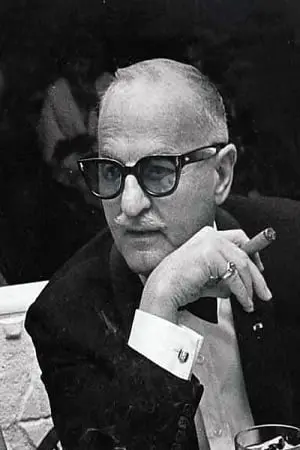

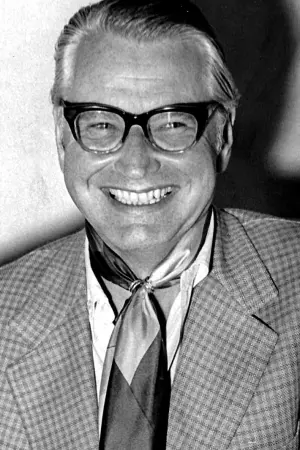

Producer
Writer
David Pursall
Writer
Jack Seddon
Writer
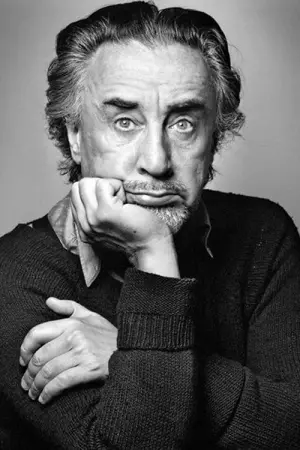
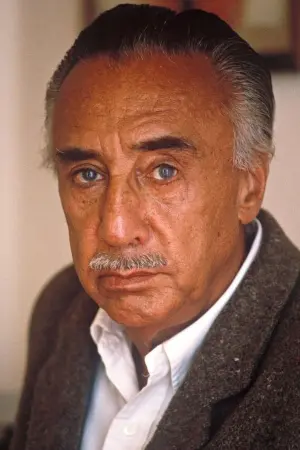
Casting
Maude Spector
Casting
Editor
Samuel E. Beetley
Editor
Art Direction
Ted Haworth
Art Direction
Stunts

Gil Delamare
Stunts
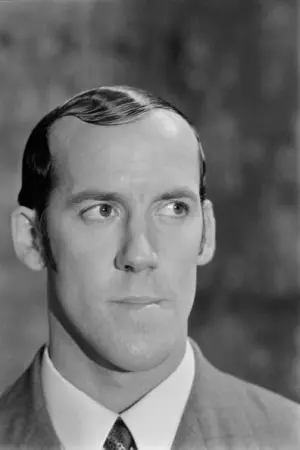
Lionel Vitrant
Stunts
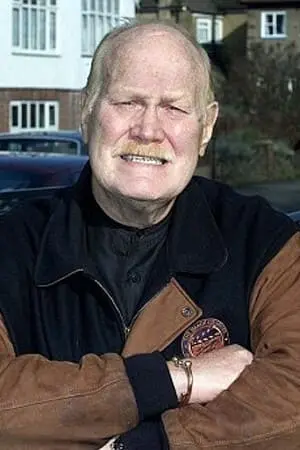
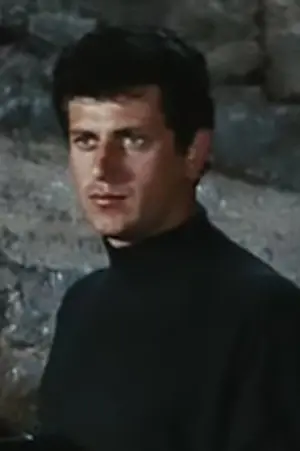


Ken Buckle
Stunts
Joe Powell
Stunts
Jean-Pierre Janic
Stunts
Jack Cooper
Stunts

Gérard Moisan
Stunts
Alexandre Renaud
Stunts
Second Unit Director
Elmo Williams
Second Unit Director
Original Music Composer
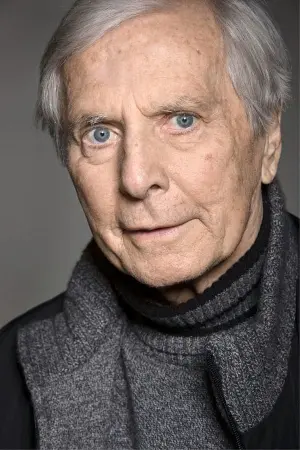
Associate Producer
Elmo Williams
Associate Producer
Second Assistant Director
Henry Wise
Second Assistant Director
Director of Photography
Jean Bourgoin
Director of Photography
Walter Wottitz
Director of Photography
Script Supervisor
Still Photographer
Vincent Rossell
Still Photographer
Driver
Frank Khoury
Driver
Cinematography
Pierre Levent
Cinematography
Henri Persin
Cinematography
Screenplay
Cornelius Ryan
Screenplay
Novel
Cornelius Ryan
Novel
Set Designer
Gabriel Béchir
Set Designer
Special Effects
Joseph de Bretagne
Special Effects


Karl Baumgartner
Special Effects
Johnny Borgese
Special Effects
Augie Lohman
Special Effects
R.A. MacDonald
Special Effects
Paul Wurtzel
Special Effects
Jean Fouchet
Special Effects
Gerald Endler
Special Effects
Karl Helmer
Special Effects
Assistant Director
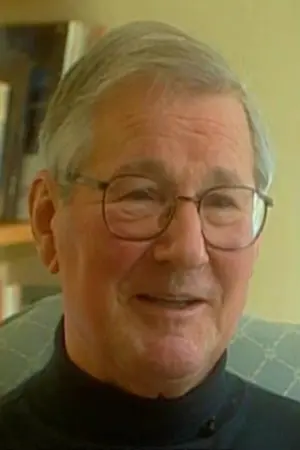
Tom Pevsner
Assistant Director
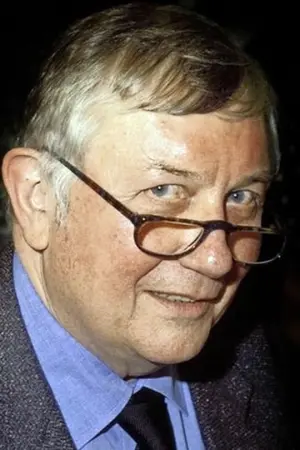
Louis Pitzele
Assistant Director
Bernard Farrel
Assistant Director
Gérard Renateau
Assistant Director
Henry Sokal Jr.
Assistant Director
Additional Music

Script Consultant
David Pursall
Script Consultant
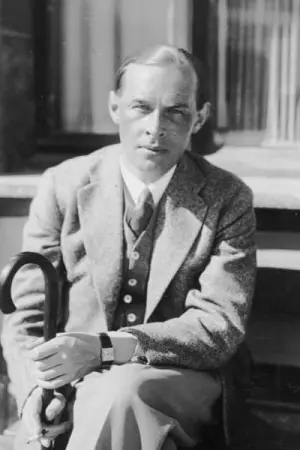
Jack Seddon
Script Consultant
Sound
Joseph de Bretagne
Sound

William Robert Sivel
Sound
Visual Effects
Wally Veevers
Visual Effects
Jean Fouchet
Visual Effects
Matte Painter
Bob Cuff
Matte Painter
Aerial Camera
Guy Tabary
Aerial Camera
Wardrobe Coordinator
John McCorry
Wardrobe Coordinator
Music Arranger
Continuity
Lucie Lichtig
Continuity
Additional Visual Effects
David S. Horsley
Additional Visual Effects
Technical Advisor
Pierre Koenig
Technical Advisor
John Howard
Technical Advisor
Günther Blumentritt
Technical Advisor
James Gavin
Technical Advisor
Philippe Kieffer
Technical Advisor
Helmuth Lang
Technical Advisor
The Earl of Lovat
Technical Advisor
Frederick Morgan
Technical Advisor
Max Pemsel
Technical Advisor
Werner Pluskat
Technical Advisor
Josef Priller
Technical Advisor
Lucie Maria Rommel
Technical Advisor
Friedrich Ruge
Technical Advisor
Jean Barral
Technical Advisor
Roger Bligh
Technical Advisor
Willard L. Bushy
Technical Advisor
Hubert Deschard
Technical Advisor
A. J. Hillebrand
Technical Advisor
James R. Johnson
Technical Advisor
Fernand Prevost
Technical Advisor
E. C. Peake
Technical Advisor
Albert Saby
Technical Advisor
Joseph B. Seay
Technical Advisor
What's left behind the scenes
- The film was based on the historical novel "The Longest Day" from 1959. The author of the book, Cornelius Ryan, collected extensive documentary material in the form of interviews with eyewitnesses.
- Darryl F. Zanuck, producer of 20th Century Fox Studios, purchased the film rights to the novel from the author for $175,000.
- Zanuck's task was to create a large-scale and authentic film. Whenever possible, filming was done in real historical locations and in weather conditions as close as possible to those described in the book.
- The novel was adapted into a screenplay by the writer and World War II veteran Romain Gary.
- To save time and due to the fact that different segments of the film were shot in the original languages, several directors worked on the film: Ken Annakin filmed the British and French scenes, Andrew Morton – the American ones, Gerd Oswald and Bernhard Wicki – the German ones.
- To save time and because different segments of the film were shot in their original languages, several directors worked on the film: Ken Annakin shot the British and French scenes, Andrew Morton shot the American scenes, and Gerd Oswald and Bernhard Wicki shot the German scenes.
- While clearing a section of beach in Normandy for filming, workers found a tank in the sand that had directly participated in the landing in June 1944. It was cleaned and repaired, and then used in the filming.
- The role of General Dwight Eisenhower was played by Henry Grace. He was not an actor, but was given the role due to his physical resemblance to Eisenhower.
- During the filming of the beach landing, the actors playing American soldiers initially refused to jump from the landing craft into the water, believing it would be cold. This angered Robert Mitchum, who played Brigadier General Norman Cota, so much that he jumped into the water first, after which the extras had no choice and followed him.
- Richard Todd himself participated in the Normandy landings. He was offered to play himself, but he refused, jokingly stating that “such minor roles” were no longer for him. As a result, Todd was given the role of Major John Howard. According to the script, at one point a soldier ran up to Todd, playing Howard, and began to report on the situation on the front lines. In other words, a soldier playing Todd ran up to Todd himself, playing Major Howard, and informed him of information that the real Todd once reported to the real Howard.
- Joseph Lowe, in his youth (he was a private and was 22 years old), participated in the landing operation and climbed the cliff. Seventeen years later, he had to climb the same cliffs again, but this time for the camera.
- The USA, Great Britain, and France provided approximately 23,000 military personnel for the filming (Germans appeared on screen only in roles of officers with lines). The French were at war in Algeria at the time, but sent 1,000 commandos.
- Just before filming began in Corsica, a man approached producer Darryl F. Zanuck, claiming to represent the beach owners. He demanded $15,000, stating that otherwise modern cars would drive across the beach and disrupt filming. Zanuck paid the requested amount, but it later turned out to be a hoax, as there were no private beaches on Corsica at all. Zanuck filed a lawsuit seeking damages, and eight years later the court ruled in his favor.
- Roddy McDowall was in Italy filming the historical drama “Cleopatra” (Joseph L. Mankiewicz and Reuben Mamoulian, 1963), and he was so tired of the endless problems and delays in filming that he literally begged Darryl F. Zanuck to give him any role at all in “The Longest Day.” As a result, he got a bit part as an American soldier. Richard Burton, busy filming “Cleopatra” as Mark Antony, also appeared in the film directed by Ken Annakin, Andrew Marton, Gerd Oswald, Bernhard Wicki and Darryl F. Zanuck. He played a small role as a British pilot.
- Filming of the landing itself was nearing completion, but Darryl F. Zanuck still couldn't find working aircraft. He needed German “Messerschmitts” and British “Spitfires.” Almost at the last moment, he found the former in Spain and the latter with the Belgian Air Force, and rented them for filming.
- This is one of the first American films about World War II in which actors from different countries spoke almost all of their lines in their native language (i.e., Germans speak German, French speak French, and Americans and British speak English). Subtitles with the translation were shown at the bottom of the screen. The film was released in two versions. In one, everyone spoke English, in the other (the more famous one) actors from Germany and France spoke in their national languages.
- By making this film, the “20th Century Fox” film company took a significant risk. The film’s budget was $10 million, so the risk was truly substantial, but an even greater risk was posed by the concurrent filming of “Cleopatra.” “Cleopatra” was undeniably a box office success, but the film did not recoup the money spent on filming, and the studio almost went bankrupt. Fortunately, “The Longest Day” turned out to be one of the most commercially successful projects of “20th Century Fox,” which somewhat mitigated the financial situation created by “Cleopatra.”
- During filming in Sainte-Mère-Église, traffic was blocked, shops were closed, and the power supply to the town was cut off to make it easier for the paratroopers, who had never before made night jumps in densely populated areas. In any case, only two paratroopers managed to land in the square, and several people received injuries upon landing (one, for example, broke both legs). After that, the filmmakers decided to replace the drops from passing aircraft with jumps from a crane.
Did you like the film?
 Auditions in India
 Casting calls in USA
 Castingi w Polsce
 Кастинги в Україні
