For a Few Dollars More - crew, film crew
The entire team, the film crew of the film "For a Few Dollars More"
Per qualche dollaro in più (1965)
Timing:
2:12 (132 min)

8.017/10
4384
4384

8.143/10
64010
64010

8.2/10
299000
299000
Film crew
Director


Producer
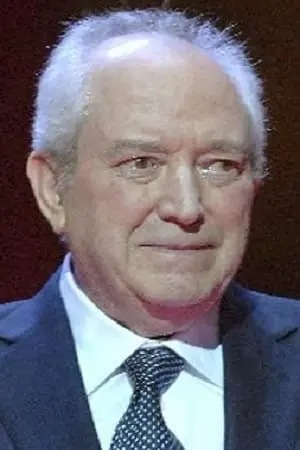
Arturo González
Producer
Executive Producer
Alfredo Fraile
Executive Producer
Editor
Eugenio Alabiso
Editor
Giorgio Serrallonga
Editor
Costume Design
Carlo Simi
Costume Design
Stunts
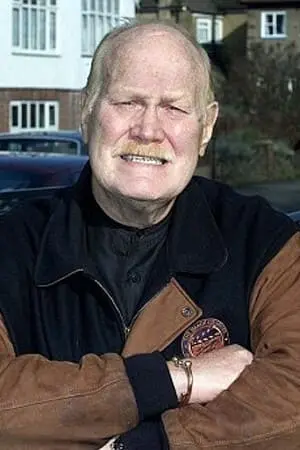
Rick Lester
Stunts
Luis Beltrán
Stunts
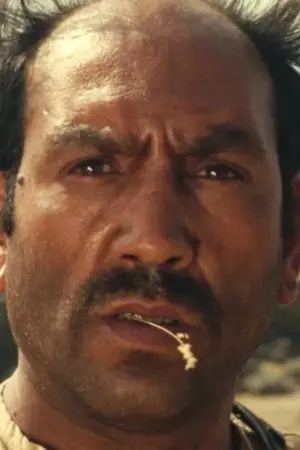
Antonio Montoya
Stunts
Stunt Coordinator
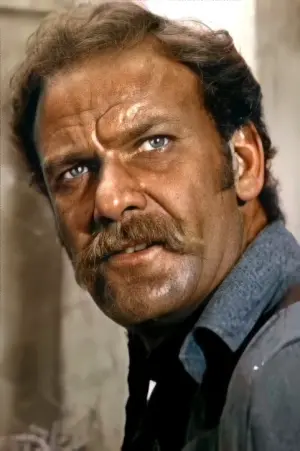
Second Unit Director
Julio Ortas
Second Unit Director
Makeup Artist
Amedeo Alessi
Makeup Artist
Juan Farsac
Makeup Artist
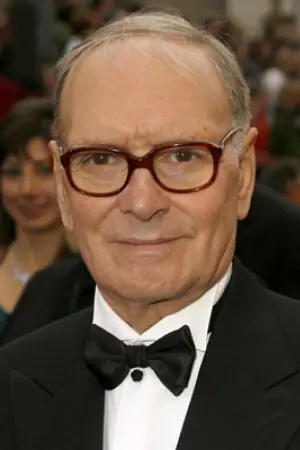
Original Music Composer
Production Supervisor
Fernando Rossi
Production Supervisor
Norberto Solino
Production Supervisor
Manuel Castedo
Production Supervisor
Director of Photography
Massimo Dallamano
Director of Photography
Musician
Michele Lacerenza
Musician
Nino Culasso
Musician
Cantori Moderni Di Alessandroni
Musician
Bruno Battisti D'Amario
Musician
Maurizio Graf
Musician
Camera Operator
Aldo Ricci
Camera Operator
Eduardo Noé
Camera Operator
Makeup Department Head
Rino Carboni
Makeup Department Head
Assistant Art Director
Script Supervisor
Mariano Canales
Script Supervisor
Still Photographer
Lothar Winkler
Still Photographer
Production Manager
Ottavio Oppo
Production Manager
Screenplay
Grip
Domenico Parrello
Grip
Special Effects
Giovanni Corridori
Special Effects
Eros Bacciucchi
Special Effects
Manuel Baquero
Special Effects
Story
Fulvio Morsella
Story
Assistant Director

Julio Sempere
Assistant Director
Second Unit Director of Photography
Julio Ortas
Second Unit Director of Photography
First Assistant Camera
Isidro Muro
First Assistant Camera
Additional Writing
Conductor
Assistant Makeup Artist
Isabel Mellado
Assistant Makeup Artist
Sound
Oscar De Arcangelis
Sound
Guido Ortenzi
Sound
Production Secretary
Antonio Palombi
Production Secretary
Local Casting
Luis Beltrán
Local Casting
Supervising Editor
Adriana Novelli
Supervising Editor
Title Designer
Assistant Camera
Mario Lommi
Assistant Camera
Continuity
Maria Luisa Rosen
Continuity
Music Director
Bruno Nicolai
Music Director
Assistant Decorator
Rafael Ferri
Assistant Decorator
Presenter
Arturo González
Presenter
Settings
Carlo Simi
Settings
Ángel Cabero
Settings
Montoro
Settings
What's left behind the scenes
- Originally, Sergio Leone wanted Lee Marvin to play Douglas Mortimer.
- The character Aldo Sambrella is named Coheilio. This is an English transcription of the Spanish word “cuchillo,” which means “knife”.
- According to Lee Van Cleef, he drew his revolver from its holster faster than Clint Eastwood.
- The Man with No Name calls himself Monco. From Italian, “Monco” translates to “one-handed,” which is quite logical considering the character’s habit of fighting, drinking, smoking, etc., with his left hand, while his right hand is always on the pistol hidden under his poncho.
- The phrase “Alive or dead, you’re coming with me!” and the trick of putting a pistol in a holster were used in the RoboCop film.
- Henry Fonda and Jack Palance both auditioned for the role of Colonel Douglas Mortimer.
- This film is the second in the “Dollars Trilogy” and features a second main antagonist – the “bad” guy.
- Despite the fact that Eastwood's poncho was never washed during the production of the Dollar Trilogy, it was periodically darned and patched. In the final scene of this film, Eastwood's character is shot several times with a Winchester, and consequently, several holes remain in the poncho. In this film, Clint wears the poncho backwards, and the patches covering the bullet holes are clearly visible in some scenes.
- At the beginning of the film, in the scene on the platform, the character of Lee Van Cleef tears down a poster of Guy, on which two zeros have been added. However, when the same poster is slipped under the door of the saloon, the drawn zeros are no longer present.
- Gian Maria Volonté did not speak English, and he required an interpreter on set.
- For the film, the set designer Carlo Simi built the town of El Paso in Spain. Director and screenwriter Sergio Leone later filmed it in his 1966 Western, "The Good, the Bad and the Ugly." The town still stands today and is now known as "Mini-Hollywood."
- Lee Van Cleef was going through a not very easy and successful period in his life due to his excessive fondness for alcohol. He earned a living by painting and was very grateful for the offer to star in this film, after which his acting career began to improve again.
- The entire film was shot without sound, so Clint Eastwood and Lee Van Cleef returned to Italy after filming to record their lines, and sound effects were added to the film.
- Screenwriter and director Sergio Leone offered the role of Colonel Mortimer to actor Henry Fonda, but he declined the offer. Leone approached Charles Bronson with the same offer, which did not interest him, and Lee Marvin, who also refused because he had just agreed to participate in Elliot Silverstein's Western "Cat Ballou" (1965). Only after that did Leone turn to Lee Van Cleef, who had not appeared in films since the Western "How the West Was Won" (John Ford, Henry Hathaway, George Marshall, Richard Thorpe, 1962), although he had been working on television. The actor initially thought he was being offered a role in a few scenes and was very surprised to find that this was not the case.
- Ennio Morricone began working on the film's music even before filming began, receiving detailed instructions from Sergio Leone, who often shot his films directly to the music.
- Screenwriter and director Sergio Leone did not want to film a sequel to the Western "A Fistful of Dollars" (1964), but the "Jolly Film" studio refused to pay for the filming of "A Fistful of Dollars" until he agreed to make a sequel.
- During filming, Sergio Leone constantly felt that Gian Maria Volonté was acting too "theatrically," and he repeatedly filmed numerous takes of the same scene simply to tire out the actor and exhaust him. Once, Volonté even left the set in anger, but filming was taking place in the middle of the desert, he couldn't leave, so he returned to filming, but vowed never to appear in Westerns again.
Did you like the film?
 Auditions in India
 Casting calls in USA
 Castingi w Polsce
 Кастинги в Україні
