The Phantom of the Opera - crew, film crew
The entire team, the film crew of the film "The Phantom of the Opera"
The Phantom of the Opera (2004)
Timing:
2:21 (141 min)

7.257/10
1742
1742

7.819/10
70110
70110

7.2/10
138000
138000
Film crew
Director

Producer
Executive Producer
Jeff Abberley
Executive Producer
Julia Blackman
Executive Producer
Ralph Kamp
Executive Producer
Louise Goodsill
Executive Producer
Paul Hitchcock
Executive Producer
Austin Shaw
Executive Producer
Keith Cousins
Executive Producer
Writer
Charles Hart
Writer


Casting
David Grindrod
Casting
Editor

Terry Rawlings
Editor
Special Effects Supervisor
Peter Hutchinson
Special Effects Supervisor
Art Direction
Paul Kirby
Art Direction
Supervising Art Director
John Fenner
Supervising Art Director
Costume Design
Alexandra Byrne
Costume Design
Stunts

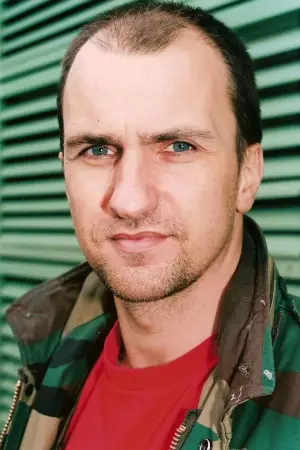
Production Design
Anthony Pratt
Production Design
Stunt Coordinator
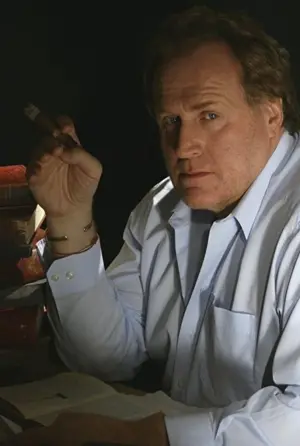
Set Decoration
Celia Bobak
Set Decoration
Makeup Artist
Faye Aydin
Makeup Artist
Sound Re-Recording Mixer
Andy Nelson
Sound Re-Recording Mixer

Anna Behlmer
Sound Re-Recording Mixer
Original Music Composer
Unit Production Manager
Dusty Symonds
Unit Production Manager
Co-Producer
Eli Richbourg
Co-Producer
Orchestrator
David Cullen
Orchestrator
Second Assistant Director
Mark Layton
Second Assistant Director
Stunt Double
Rowley Irlam
Stunt Double
Director of Photography
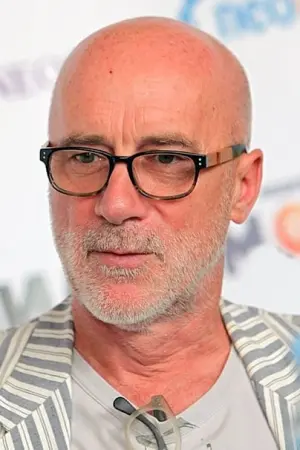
Camera Operator
Paul Edwards
Camera Operator
Clive Jackson
Camera Operator
Peter Taylor
Camera Operator
Costume Supervisor
Suzi Turnbull
Costume Supervisor
Assistant Art Director
Anthony Caron-Delion
Assistant Art Director
Property Master
Arthur Wicks
Property Master
Visual Effects Supervisor
Nathan McGuinness
Visual Effects Supervisor
Nathan McGuinness
Visual Effects Supervisor
Supervising Sound Editor
Martin Evans
Supervising Sound Editor
Script Supervisor
Sally Jones
Script Supervisor
Still Photographer
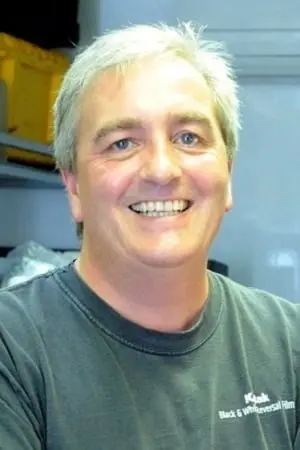
Sound Mixer
Tony Dawe
Sound Mixer
First Assistant Director
Tommy Gormley
First Assistant Director
Production Manager
Lorraine Fennell
Production Manager
Boom Operator
Jaya Bishop
Boom Operator
Screenplay
Novel

Art Department Coordinator
Lavinia Waters
Art Department Coordinator
Dialogue Editor
Tim Hands
Dialogue Editor
Hair Designer
Jenny Shircore
Hair Designer
Makeup Designer
Jenny Shircore
Makeup Designer
Foley Mixer
Ed Colyer
Foley Mixer
Songs
Music Editor
Yann McCullough
Music Editor
Michael Parnin
Music Editor
Storyboard Artist
Jim Cornish
Storyboard Artist
Other
Ben Collins
Other
Conductor
Simon Lee
Conductor
Post Production Supervisor
Tim Grover
Post Production Supervisor
Stand In
Caridad Angus
Stand In
Visual Effects Editor
Tony Tromp
Visual Effects Editor
ADR Voice Casting
Brendan Donnison
ADR Voice Casting
Choreographer
Peter Darling
Choreographer

Lisa Stevens
Choreographer
Assistant Sound Editor
Paul Apted
Assistant Sound Editor
Dialect Coach
Jill McCullough
Dialect Coach
Unit Manager
Fraser Fennell-Ball
Unit Manager
Color Timer
John Stanborough
Color Timer
Producer's Assistant
Cate Arbeid
Producer's Assistant
Lyricist
Charles Hart
Lyricist
Associate Choreographer
Lynne Page
Associate Choreographer
What's left behind the scenes
- The film is based on Gaston Leroux’s novel “The Phantom of the Opera” (Le Fantome de l'Opera, 1910).
- John Travolta and Antonio Banderas both auditioned for the role of the Phantom. The latter even took vocal lessons specifically for the part.
- Keira Knightley was one of the contenders for the role of Christine Daaé. Among the other applicants were Charlotte Church, Catherine Zeta-Jones, Martina McCahon, Jessica Simpson, Andrea Corr, and Anne Hathaway. Katie Holmes almost landed the role of Christine, but the director considered her too "old" for it.
- The project was ready to launch as early as 1990, and at that time, Michael Crawford and Sarah Brightman were to be its main stars (they were the ones who played the lead roles on stage). However, shortly before work began on the project, Andrew Lloyd Webber divorced Sarah Brightman, and the project was shelved.
- Among the candidates for the director's chair were Indian filmmaker Shekhar Kapur and John Woo.
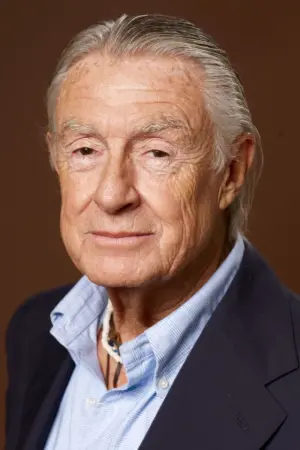
- Over the long thirteen years that the film was in development, quite a few notable figures felt involved in the project, albeit not for a long period. Only one candidate was approved from the very beginning – director Joel Schumacher. The author of 'The Phantom of the Opera', Andrew Lloyd Webber, invited Joel after seeing the film 'The Lost Boys'.
- It took around 4 hours each day to apply makeup to Gerard Butler, the lead actor.
- The final scene of the film took a whole week to shoot.
- In April 2004, the audience attending the play of the same name in London was asked to stay after the performance and record sound effects for the film.
- Joel Schumacher invited Gerard Butler to the project after seeing the actor in "Dracula 2000".
- Neither Gerard Butler nor Emmy Rossum had seen the musical before receiving their roles. Joel Schumacher also hadn't seen the theatrical version.
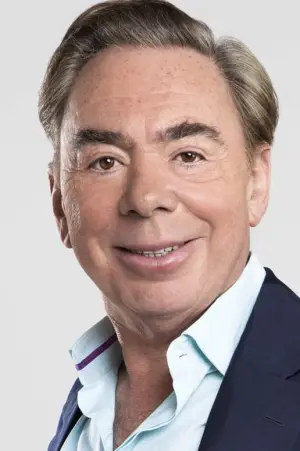
- Specifically for the film, Weber wrote about 15 minutes of new music. He also invested $6 million of his own funds into the film's production.
- Weber did not participate in the casting, his only condition being that the actors sing in their own voices.
- Minnie Driver (Carlotta) performed only one song in her own voice — "Learn to be lonely".
- A chandelier (weighing 2.2 tons) was specially made for the filming of this movie.
- During the main aria, “The Phantom of the Opera,” the boat moved along special rails located underwater.
- Sets were specially built to audition actors for roles in the upcoming film. The actors even had to wear costumes.
- Hugh Jackman auditioned for the role of the Phantom.
- Schumacher suggested considering Colin Farrell, but abandoned the idea after becoming convinced of the actor's complete inability to sing.
- Filming took place in the United Kingdom from September 2003 to January 2004.
- All the actors sing in the film themselves—with the exception of Minnie Driver. She is a professional jazz singer, but to have Carlotta sing soprano, Margaret Preece, a professional opera singer, was brought in. Incidentally, she also appeared in the film—as the companion in the Il Muto scene.
- Carlotta speaks with an Italian accent – Minnie Driver lived in Venice as a child and borrowed the accent from an Italian neighbor.
- The film's makeup artist, Jenny Shircore, developed the Phantom's disfigurement design based on a case of congenital pathology she once witnessed.
- The white half-mask worn by Gerard Butler as the Phantom was sold at an eBay auction for £6,350.
- At the beginning of the film, in the auction scene (as in the musical), the chandelier's lot number is 666, the biblical "number of the beast" mentioned in the "Book of Revelation."
- The beginning of the film, the photograph of old Paris that then transforms into black-and-white film footage, is a reference to Baz Luhrmann's film musical "Moulin Rouge!" (2001).
- Director Joel Schumacher wanted to achieve realism, so in the fire scene, the theater's sets were actually burned to the ground.
- Throughout the film, the Phantom utters only 14 lines. The rest is vocals.
- In the musical, the chandelier falls at the end of the first act. But in the film adaptation, this event is moved to the end of the movie. This plot device was later incorporated into the Las Vegas version of the musical. Because the chandelier now falls in the 'wrong place,' the lyrics had to be slightly altered: Monsieur Firmin in the musical at the Masquerade raises a toast 'to the new chandelier,' while in the film this line was replaced with 'to the friends that are here.'
- When the Phantom first leads Christine to his lair, they walk through a corridor where human hands protrude from the walls, holding burning candelabras. This is a quote from Jean Cocteau's film 'Beauty and the Beast' (1946).
- In the episode when Christine makes her debut on the theater stage, her costume is different from the original musical—that is, it is not a costume for the opera 'Hannibal.' Her dress, jewelry, and hairstyle are copies of the portrait of Empress Elizabeth by Franz Xaver Winterhalter (1865).
- During the masquerade, Raoul chases the Phantom and ends up in a mirror room. It's not in the original musical, but the mirror room is present in Leroux's original novel.
- The film is based on Gaston Leroux's novel "The Phantom of the Opera" (Le Fantôme de l'Opéra, 1910).
- Minnie Driver (Carlotta) performed only one song in her own voice – "Learn to be lonely".
- At the beginning of the film, in the auction scene (as in the musical), the lot number for the chandelier is 666, the biblical "number of the beast" mentioned in the "Book of Revelation" (the "Apocalypse").
Did you like the film?
 Auditions in India
 Casting calls in USA
 Castingi w Polsce
 Кастинги в Україні
