Double Indemnity - crew, film crew
The entire team, the film crew of the film "Double Indemnity"
Double Indemnity (1944)
Timing:
1:47 (107 min)

8.093/10
1999
1999

7.93/10
14884
14884

8.3/10
181000
181000
Film crew
Director
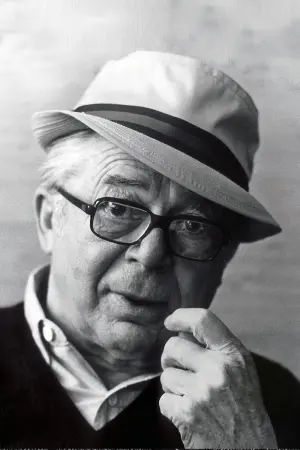
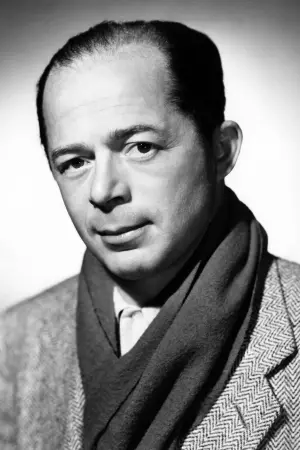
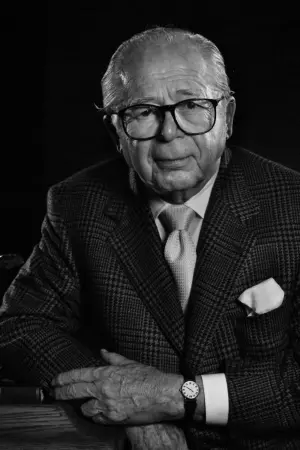
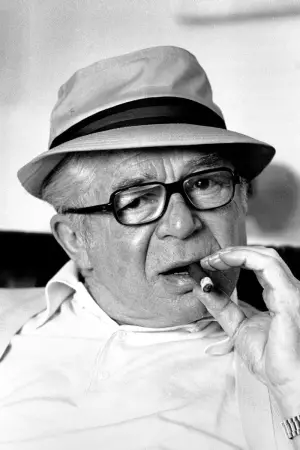
Producer
Joseph Sistrom
Producer
Executive Producer
Casting
Harvey Clermont
Casting
Editor
Art Direction
David S. Hall
Art Direction
Costume Design
Production Design
David S. Hall
Production Design
Set Decoration
Bertram C. Granger
Set Decoration
Makeup Artist
Robert Ewing
Makeup Artist

Charles Gemora
Makeup Artist
Sound Re-Recording Mixer
Walter Oberst
Sound Re-Recording Mixer
Original Music Composer
Orchestrator
Eugene Zador
Orchestrator
Director of Photography
Musician
Louis Kaufman
Musician
Camera Operator
Harlow Stengel
Camera Operator
Otto Pierce
Camera Operator
Electrician
Chet Stafford
Electrician
Hairstylist
Hollis Barnes
Hairstylist
Still Photographer
Ed Henderson
Still Photographer
Screenplay


Novel
Assistant Editor
Lee Hall
Assistant Editor
Props
Jack Colconda
Props
Jim Cottrell
Props
Key Grip
Walter McLeod
Key Grip
Assistant Director
Charles C. Coleman
Assistant Director
Other
Stand In
Dorothy Staton
Stand In
Visual Effects
Farciot Edouart
Visual Effects
Sound Recordist
Stanley Cooley
Sound Recordist
Loren L. Ryder
Sound Recordist
Walter Oberst
Sound Recordist
Dialect Coach
Jack Gage
Dialect Coach
Assistant Production Manager
Al Trosin
Assistant Production Manager
Wardrobe Master
Bill Rabb
Wardrobe Master
Neva Bourne
Wardrobe Master
Supervising Film Editor
What's left behind the scenes
- Production period: September 27 – November 24, 1943.
- The protagonist was originally named Walter Ness in the script. However, Wilder learned in time that a real insurance agent named Walter Ness lived in Beverly Hills. To avoid accusations of libel, the character's name was changed to Walter Neff.
- Billy Wilder had very little time to find someone for the lead role. But one after another, many Hollywood actors (such as George Raft) turned him down. Only Fred MacMurray agreed – partly because he had long wanted to get rid of the tiresome image of a comedic performer.
- Of all the actors Wilder approached, only Dick Powell wanted to play the role of Walter. But he was under contract with another company, which refused to release him. An angered Powell broke his contract, but it was too late – the role had already gone to MacMurray.
- For the role of Phyllis, the director wanted only Barbara Stanwyck. However, she strongly doubted whether she should play such a ruthless villainess. Wilder then asked her: “Are you a mouse or an actress?”
- Billy Wilder made Barbara Stanwyck wear a white wig throughout the entire film. Later, he decided that the wig looked bad and unnatural, but it was too late to redo anything. And in interviews, Wilder stated that he deliberately made the wig look bad on Stanwyck. Producer Buddy J. DeSilva, hinting at the wig, quipped: “We hired Barbara Stanwyck and got George Washington.”
- In the scene where Neff kisses Phyllis, a wedding ring can be noticed on his finger. The fact is that MacMurray was married and had long been accustomed to not paying attention to the ring.
- Wilder wrote the screenplay together with the famous detective author Raymond Chandler. They had a hard time getting along with each other, often argued, and once Chandler slammed the door and left, stating that he would only return when his demands were met. His demands were met, and he returned.
- Wilder invited Chandler to co-write, as he was impressed by his novel "The Big Sleep." He was disappointed when it turned out that Chandler was withdrawn, perpetually drunk, smoked like a locomotive, unable to come up with snappy dialogue, and, moreover, as Wilder claimed, kept trying to sneak his sexual frustration into the script. This was Chandler’s first attempt to work for the cinema.
- Mr. Dietrichson, Phyllis’s husband, works for an oil company. This was a fabrication by Chandler, who himself worked as an "oilman" for a time.
- George Raft was willing to play the role of Neff only on one condition – if it suddenly turned out in the finale that his character was an FBI agent who was trapping Phyllis Dietrichson. The demand was absurd; Wilder had to reject Raft’s candidacy.
- The film is based on the novel of the same name by James M. Cain. Cain’s work is based on a real crime from 1927 that shook all of America.
- In 1992, the Library of Congress included "Double Indemnity" in the National Film Registry.
- The first script drafts appeared in 1935, but were blocked by censors of the Hays Code, who deemed the story immoral.
- One shot captures screenwriter Raymond Chandler, who accidentally wandered into the camera's frame.
- After the murder, Walter and Phyllis struggle to start the car for a long time. Wilder added this scene after his own car failed to start all day.
- In one scene, Neff and Keyes walk into the foyer and continue their conversation in the hallway. Neff holds open a door slightly ajar, behind which Phyllis is hiding at that moment. However, according to all fire safety regulations, in such a building, the door cannot open outwards – only inwards.
- Initially, Billy Wilder planned to end the film with a scene where Keyes watches Neff being sent to the gas chamber.
- Another potential finale could have been a scene where Case desperately watches as Neff is arrested by the police. However, Wilder decided that Case's desperation could only be explained if Neff died in his arms.
- In the 3rd episode of the 5th season of the series "House of Cards," the main characters Francis and Claire Underwood watch this film on election day.
- Billy Wilder had very little time to find an actor for the lead role. But one after another, many Hollywood actors (such as George Raft) refused him. Only Fred MacMurray agreed – partly because he had long wanted to get rid of the tiresome comedic role he was known for.
- Of all the actors Wilder approached, only Dick Powell wanted to play the role of Walter. But he was under contract with another company, which refused to release him. An enraged Powell broke his contract, but it was too late – the role had already gone to MacMurray.
- In the scene where Neff kisses Phyllis, a wedding ring can be noticed on his finger. The fact is that MacMurray was married and had long been accustomed to not paying attention to the ring.
- Billy Wilder had very little time to find an actor for the lead role. But one after another, many Hollywood actors (such as George Raft) refused him. Only Fred MacMurray agreed – partly because he had long wanted to shed the tiresome image of a comedic performer.
- Of all the actors Wilder approached, only Dick Powell wanted to play the role of Walter. But he was under contract with another company, which refused to release him. An enraged Powell broke his contract, but it was too late – the role had already gone to MacMurray.
- For the role of Phyllis, the director wanted only Barbara Stanwyck. However, she seriously doubted whether she should play such a ruthless vixen. Then Wilder asked her: “Are you a mouse or an actress?”
- Billy Wilder made Barbara Stanwyck wear a white wig throughout the film. Later, he decided that the wig looked bad, unnatural, but it was too late to redo anything. And in interviews, Wilder stated that he deliberately made the wig look bad on Stanwyck. Producer Buddy J. DeSilva, alluding to the wig, quipped: “We hired Barbara Stanwyck and got George Washington.”
- Wilder invited Chandler as a co-author, as he was impressed by his novel 'The Big Sleep'. He was disappointed to find that Chandler was withdrawn, perpetually drunk, smoked like a locomotive, incapable of coming up with snappy dialogue and, moreover, as Wilder claimed, constantly tried to inject his sexual frustration into the script. This was Chandler's first attempt to work for the cinema.
- Mr. Dietrichson, Phyllis's husband, works in an oil company. This was Chandler's invention, as he himself worked as an 'oilman' for a while.
- George Raft was willing to play the role of Neff only on one condition – if it turned out in the finale that his character was an FBI agent trapping Phyllis Dietrichson. The demand was absurd; Wilder had to abandon Raft's candidacy.
- In the third episode of the fifth season of the series 'House of Cards', the main characters, Francis and Claire Underwood, watch this film on election day.
Did you like the film?
 Auditions in India
 Casting calls in USA
 Castingi w Polsce
 Кастинги в Україні
