Fear and Desire - actors, characters and roles
All actors and their roles in the film "Fear and Desire"
Fear and Desire (1953)
Timing:
1:2 (62 min)

5.456/10
475
475

5.988/10
2820
2820

5.3/10
15000
15000
Actors and characters


Kenneth Harp
Character Lt. Corby / The General
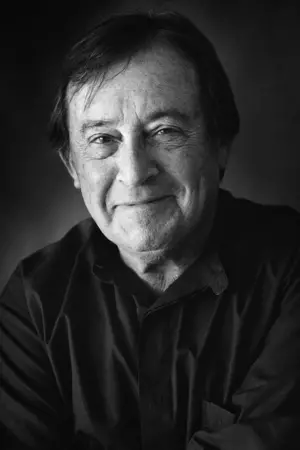
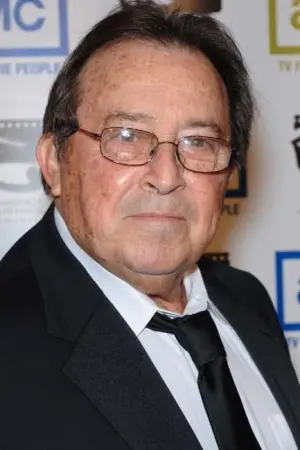
Stephen Coit
Character Fletcher / The Captain


David Allen
Character Narrator (voice)
What's left behind the scenes
- The film was the directorial debut of Stanley Kubrick and was considered lost for a long time.
- By the time filming of “Fear and Desire” began, Kubrick was a staff photographer for “Look” magazine, having shot several newsreels in the early 1950s. Early films were made on commission for RKO Radio Pictures and were often shown before screenings in cinemas. Drawing on his experience with documentaries, Kubrick decided to try his hand at feature films. He reduced his working hours at “Look” magazine for the sake of filming.
- The screenplay for the film was written by Kubrick's schoolmate (from William Taft High School) Howard Sackler.
- The film's production was funded from the personal funds of the Kubrick family and their friends. The largest contribution came from Kubrick's uncle, Martin Plover, who owned a profitable pharmacy.
- The film crew consisted of only 15 people: Stanley Kubrick, five actors (Virginia Leight, Paul Mazursky, Frank Silvera, Kenneth Harp, and Stephen Coit), five cinematographers (including Kubrick's first wife, Toba Metz), and four Mexican laborers who transported the filming equipment through the San Gabriel Mountains of California, where the film was shot.
- Due to the film’s limited budget, Kubrick had to improvise with the filming equipment. For example, to create a fog effect, he used an agricultural sprayer. The use of the sprayer nearly suffocated the crew, as the device dispersed an insecticide used only for agricultural purposes. According to Paul Mazursky, Kubrick used rail replacements for smooth camera movements and transitions: “He didn’t have a dolly, just a baby carriage to move the camera,” Mazursky mentioned in one interview.
- During post-production, Kubrick encountered a number of further problems. He shot the film completely without sound, hoping to add dubbing and accompanying sound effects later. However, adding sound increased the cost of processing the film. To cover the unexpected expenses, Kubrick volunteered to shoot a film about the life of Abraham Lincoln for television. Difficulties also arose during the editing of a key scene, when a soldier throws a plate of beans on the floor and enters the frame from the wrong side. Kubrick did not notice either the failure of the scene or the fact that the actors were stepping over the conditional 'director's line,' which was necessary to flip the negative during editing (to maintain continuity); all of this required additional expenses.
- Years after its release, the film was considered lost. Kubrick made considerable efforts to withdraw all known copies of the film so that no one would ever see it again. However, some copies of the film were preserved in private collections. In later years, Kubrick himself was embarrassed when the film was mentioned, referring to it as an amateur work.
- The original copy of the film was discovered in a Puerto Rican film laboratory. The film's first retrospective screening took place at the Telluride Film Festival in 1993. In January 1994, the «Film Forum» cinema, a non-profit cinema in Lower Manhattan, announced plans for a double feature of the film with «Kiss Me Deadly». Although the copyright on the film had expired and it had entered the public domain, allowing screenings without fear of legal action, Kubrick still tried to convince the public that the film had no value. Through Warner Brothers, he issued a statement that sharply downplayed the film's worth, calling «Fear and Desire» an «awkward amateur imitation of a film».
- By the time filming of 'Fear and Desire' began, Kubrick was a staff photographer for 'Look' magazine, having shot several newsreels in the early 1950s. His early films were made to order by RKO Radio Pictures and were often shown before screenings in cinemas. Drawing on his experience with documentary films, Kubrick decided to try his hand at feature films. To facilitate filming, he reduced his working hours at 'Look' magazine.
- Due to the limited budget of the film, Kubrick had to improvise with the filming equipment. For example, to create the effect of fog, he used an agricultural sprayer. Its use almost suffocated the crew, as the device dispersed insecticide used solely for agricultural work. According to Paul Mazursky’s recollections, Kubrick used rail replacement for smooth camera movements and dissolves: “He didn’t have a dolly, just a baby carriage for moving the camera,” Mazursky mentioned in one interview.
- During post-production, Kubrick encountered a number of further problems. He shot the film completely without sound, hoping to add dubbing and accompanying sound effects later. However, adding sound increased the cost of processing the film. To cover the unforeseen expenses, Kubrick volunteered to shoot a film about the life of Abraham Lincoln for television. Difficulties also arose during the editing of a key scene, when a soldier throws a plate of beans on the floor and enters the frame from the wrong side. Kubrick did not pay attention either to the failure of the scene or to the fact that the actors stepped over the conditional “director’s line,” which was necessary to flip the negative during editing (to maintain continuity); all of this required additional expenses.
- The original copy of the film was discovered in a Puerto Rican film laboratory. The film’s first retrospective screening took place at the Telluride Film Festival in 1993. In January 1994, the 'Film Forum' cinema, a non-profit cinema in Lower Manhattan, announced plans to show a double feature of the film with 'Kiss Me Deadly'. Although the copyright on the film had expired and it had entered the public domain, allowing screenings without the threat of a lawsuit, Kubrick still tried to convince the public that the film had no value. Through Warner Brothers, he made a statement that sharply downplayed the film's worth, calling 'Fear and Desire' an 'awkward amateurish semblance of a film'.
Did you like the film?
 Auditions in India
 Casting calls in USA
 Castingi w Polsce
 Кастинги в Україні
