Searching for Bobby Fischer - videos, teasers and stills from filming
All videos, teasers and footage from the filming of the film "Searching for Bobby Fischer"
Searching for Bobby Fischer (1993)
Timing:
1:50 (110 min)

7.109/10
542
542
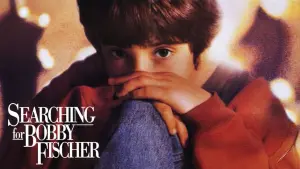
What's left behind the scenes
- The screenplay is based on Fred Waitzkin's book “Searching for Bobby Fischer: The Father of a Prodigy Observes the World of Chess” ( “In Search of Bobby Fischer: A Father of a Chess Prodigy Talks About the World of Chess”), published in 1988.
- Josh Waitzkin, whose story the film tells, was born on December 4, 1976. At the age of 13, he became a National Master and repeatedly won the US Junior Championships in various age groups. In the year the film was released (1993), he became an International Master at the age of 16 and won the US Cadet Championship (under 21) twice in a row. However, he never became a Grandmaster and, starting in 2001-2002, largely abandoned chess, dedicating himself to Eastern philosophy and martial arts.
- The National Junior Championship, which served as the basis for the film's finale, was held in May 1986 in Charlotte, North Carolina, not in Chicago, as shown on screen. The character of Michael Nirenberg (Jonathan Poe) is based on the talented young chess player Jeff Sarwer, who was Josh's opponent in the decisive game at that tournament. As in the film, Jeff initially had a winning position, Josh offered a draw, and his opponent refused. However, in reality, their game ended in a draw when both chess players were left with only kings, and Josh Waitzkin became the champion on tiebreakers. Two months later, Jeff Sarwer became the world champion among boys under 10, but shortly thereafter, he and his father and sister practically disappeared from view for many years. All that was known was that the family lived a nomadic life around the world for a long time without a permanent residence.
- Filming of the national junior championship took place indoors at the University of Toronto in Canada.
- The film features several well-known American chess players: Grandmasters Roman Dzhindjikhashvili and Joel Benjamin, and International Master Kamran Shirazi. Grandmaster Pal Benko and renowned chess coach, FIDE Master Svetozar Jovanovic were also scheduled to appear, but their scenes did not make it into the final cut.
- FIDE Master Asa Hoffmann refused to play himself in the film because he was dissatisfied with his portrayal in the script. Austin Pendleton was ultimately cast in his role.
- Tom Hanks was originally cast to play the role of Fred Waitzkin.
- Max Pomeranc, the film's lead actor, was the only one of the cast who could actually play chess, and at the time he was among the top 100 chess players in the country for his age group. For this reason, producers preferred him over many other candidates for the role, believing it would be easier if the actor playing it could play chess correctly and without strain.
- The character of Lawrence Fishburne (Vinnie) is primarily based on Vincent Livermore, a professional chess player who regularly played in Washington Square Park throughout the 1980s. Livermore, who was admittedly a chess master strength player, died of AIDS in 1993 at the age of 34. The real Vincent Livermore appears in one scene in the film, though his name is not mentioned in the credits.
- The role of Josh's first opponent at the national championship was played by Katya Waitzkin, the younger sister of the real Josh Waitzkin.
- In reality, Bruce Pandolfini is quite different from how he is portrayed in the film. He has curly dark brown hair and wears glasses, and also has a very friendly character and a calm, courteous manner.
- Josh Waitzkin's mother, Bonnie Waitzkin, appears in a cameo as one of the parents near the school when Joan Allen (playing her in the film) picks up Josh (Max Pomeranc) after school. This is a woman with dark hair who stands very close to Joan Allen.
- In one scene, Vinnie (Laurence Fishburne) refers to his opponent as Grandmaster Kamran Shirazi. Kamran Shirazi was an International Master and has not become a Grandmaster to this day.
- The character of a Russian chess player standing in a park with a sign reading “$5 for a photo or a game with a man who defeated Tal” is based on Israel Zilber, a Latvian chess player who emigrated from the Soviet Union. He was the Latvian champion in 1958 and is known for his victories over the future world champion Mikhail Tal. Throughout the 1980s, he was homeless and earned a living playing in Madison Square Park, where he was considered the strongest player. In the film, his role was played by Vasek Simek.
- D. Benjamin and R. Jinchihashvili, as well as P. Benko, made cameo appearances in the film, but the episode with his participation was cut.
- The directorial debut of screenwriter Steven Zeillian.
- In one scene of the film, when Josh plays in the park with Vinny, and his father watches them from a nearby bench, the real Josh Waitzkin can be seen in the frame, who was, naturally, much older at the time than he is portrayed in the film. This is the dark-haired teenager in a black hoodie who is playing chess with the white pieces behind Vinny. In the first half of the film, the real Bruce Pandolfini, a famous American chess figure and coach, appears in the frame, a role played in the film by Ben Kingsley. This is the man in glasses and a blue vest who, seeing Josh play, says “young Fischer” addressing Ben Kingsley.
- The chess piece (knight) that Josh finds in the park at the very beginning of the film is a copy of the Lewis Chessmen (Hebrides Islands), the oldest surviving chess pieces in Europe. The same pieces are used by Harry and Ron in the film “Harry Potter and the Sorcerer’s Stone” (2001).
- The decisive chess game between Josh Waitzkin (Max Pomeranc) and Jonathan Poe was composed by Josh Waitzkin and Bruce Pandolfini themselves. The key position in it is as follows (Black to move): White: Ke6, Re5, Bg5, Nf4, pawns f6, h4 Black: Kd2, Rc7, Bd8, Nb6, pawns a7, g7 The game in the film ended like this: 1...gxf6 2.Bxf6 Bxf6 3.Nf6 Rc6+ 4.Kf7 Rxf6+ 5.Kxf6 Nd7+ 6.Ke6 Nxe5 7.Kxe5 a5 8.h5 a4 9.h6 a3 10.h7 a2 11.h8Q a1Q+ and after 12...Qxh8, Black won. Almost three years later, well-known American grandmaster Larry Evans, in his article in Chess Life magazine, pointed out that Black's combination (Josh Waitzkin) was incorrect and White (Jonathan Poe) could have drawn if they had not made a gross mistake.
Did you like the film?
 Auditions in India
 Casting calls in USA
 Castingi w Polsce
 Кастинги в Україні
