Gunga Din
Gunga Din (1939)
Timing:
1:57 (117 min)

6.48/10
147
147

6.426/10
610
610

7.2/10
14000
14000
Country
Production
Genre
Adventure, War, Action, Comedy
Budget
$1 910 000
Revenue
$2 807 000
Director
Actors
Scenario
Producer
Operator
Composer
Artist
Perry Ferguson
Audition
Editing
Short description
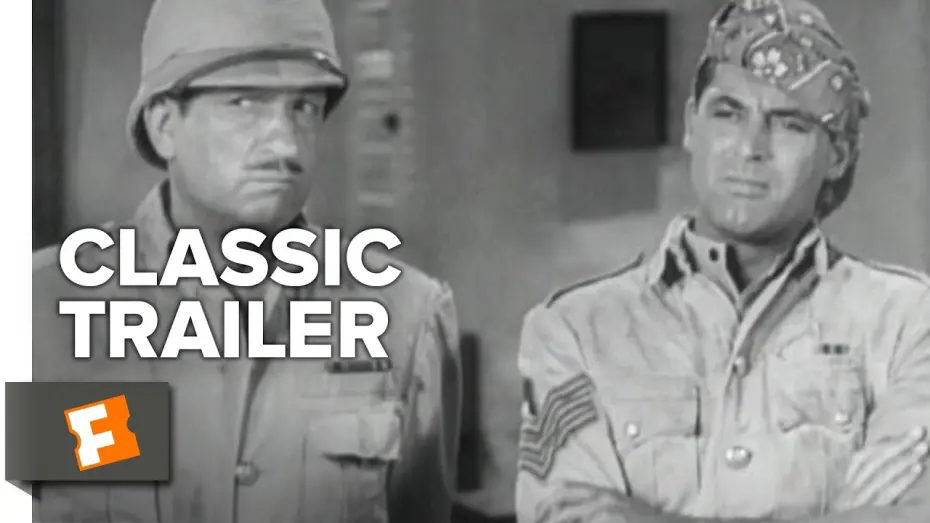
British army sergeants Ballantine, Cutter and MacChesney serve in India during the 1880s, along with their native water-bearer, Gunga Din. While completing a dangerous telegraph-repair mission, they unearth evidence of the suppressed Thuggee cult. When Gunga Din tells the sergeants about a secret temple made of gold, the fortune-hunting Cutter is captured by the Thuggees, and it's up to his friends to rescue him.
What's left behind the scenes
- According to the script, Kipling himself was supposed to appear at the end of the film as a chronicler of the exploits of British soldiers. The writer's widow strongly opposed his portrayal in the film, and scenes involving actor R. Sheffield (playing Kipling) had to be cut. Only in the 1980s, during the restoration of the film, did Ted Turner (who owned the rights to the old RKO films) order these scenes to be restored.
- Five screenwriters, including future Nobel laureate William Faulkner, worked to turn a hundred lines of verse into a dynamic 120-minute film. The main screenwriters, Ben Hecht and Charles MacArthur, based the plot not so much on Kipling's poem as on his story "Three Soldiers".
- The filmmakers managed to find a landscape resembling northern India in the Sierra Nevada. The role of Ballantyne was originally intended for Cary Grant, but he was more attracted to the figure of a treasure hunter, for which Douglas Fairbanks Jr. was invited. The final casting was decided by a coin toss thrown into the air by director Stevens.
- In 1999, "Ganga Din" was included in the National Registry of the most significant films. Despite the imperialistic prejudices of the colonial era inherent in the original material and some drawn-out scenes of military maneuvers, this film had a huge impact on the further development of the adventure genre.
- Five screenwriters, including future Nobel laureate William Faulkner, worked to turn a hundred lines of poetry into a dynamic 120-minute film. The main screenwriters, Ben Hecht and Charles MacArthur, based the plot not so much on Kipling's poem as on his story "The Three Soldiers."
Did you like the film?
 Auditions in India
 Casting calls in USA
 Castingi w Polsce
 Кастинги в Україні
