The Big Parade - videos, teasers and stills from filming
All videos, teasers and footage from the filming of the film "The Big Parade"
The Big Parade (1925)
Timing:
2:31 (151 min)

7.6/10
101
101

6.96/10
965
965

7.9/10
7800
7800
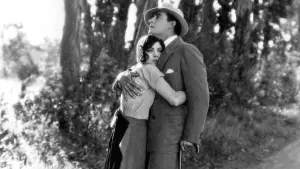
What's left behind the scenes
- Once, director King Vidor (1894-1982) complained to Irving Thalberg (1899-1936) of "MGM" that he was tired of making films that lasted only a week in theaters before losing audience interest. He then told Thalberg about his vision for a realistic war film. Thalberg was thrilled and tried to acquire the rights to Maxwell Anderson (1888-1959) and World War I veteran Laurence Stallings' (1894-1968) Broadway play "What Price Glory?". The rights to the play had already been purchased, so Thalberg hired Stallings to come to Hollywood and write a script for a new, realistic war film that Vidor dreamed of making. Stallings wrote "The Big Parade," an anti-war story that eschewed traditional notions of heroism and focused on the love story between an American soldier and a French woman. When Vidor finished filming (the shoot cost $200,000, or approximately $2.1 million in 2003 prices), Thalberg showed this version to an audience in Colorado. The audience reaction was positive, and Thalberg decided to expand the scope of the film, resulting in Vidor's war film without numerous battle scenes. Thalberg and Vidor reshot the famous scene of the marching troops, adding 3,000 extras, 200 trucks, and 100 airplanes. Soon, Vidor moved on to other projects, and at Thalberg's direction, George W. Hill (1895-1934) filmed other scenes. The result was a hit, becoming "MGM's" most famous (and commercially successful) silent war film.
- The U.S. War Department (precursor to the Department of Defense) provided the film's producers with over 200 army trucks, approximately 4,000 soldiers, and over 100 aircraft for filming.
- Once, director King Vidor (1894-1982) complained to Irving Thalberg (1899-1936) of "MGM" that he was tired of making films that lasted only a week in theaters before losing audience interest. He then told Thalberg about his vision for a realistic war film. Thalberg was enthusiastic and tried to acquire the rights to Maxwell Anderson (1888-1959) and World War I veteran Laurence Stallings' (1894-1968) Broadway play "What Price Glory?" The rights to the play had already been purchased, so Thalberg hired Stallings to come to Hollywood and write a screenplay for a new, realistic war film that Vidor dreamed of making. Stallings wrote "The Big Parade," an anti-war story that eschewed traditional notions of heroism, focusing instead on a love story between an American soldier and a French woman. After Vidor finished filming (which cost $200,000, or approximately $2.1 million in 2003 dollars), Thalberg showed this version to an audience in Colorado. The audience reaction was positive, and Thalberg decided to make the film more epic, resulting in Vidor directing a war film without many battle scenes. Thalberg and Vidor reshot the famous scene of troops marching in formation, adding 3,000 extras, 200 trucks, and 100 airplanes. Soon, Vidor moved on to other projects, and at Thalberg's direction, George W. Hill (1895-1934) completed filming the remaining scenes. The result was a hit, becoming "MGM's" most famous (and highest-grossing) silent war film.
Did you like the film?
 Auditions in India
 Casting calls in USA
 Castingi w Polsce
 Кастинги в Україні
