Mary Poppins Returns - videos, teasers and stills from filming
All videos, teasers and footage from the filming of the film "Mary Poppins Returns"
Mary Poppins Returns (2018)
Timing:
2:11 (131 min)

6.511/10
3428
3428

6.723/10
50345
50345

6.6/10
101000
101000


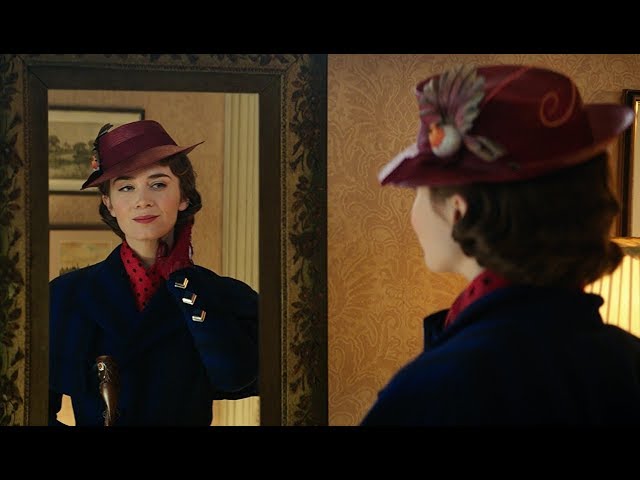
What's left behind the scenes
- The plot is based on the works of Pamela Lyndon Travers (1899-1996).
- When the script was being written for the very first "Mary Poppins" film (Robert Stevenson, 1964), Walt Disney personally offered the lead role to actress Julie Andrews. She replied that she was pregnant and would be unable to participate in filming. Disney (1901-1966) so wanted Andrews to play Mary Poppins that he postponed the start of filming until she was able to return to the set. A similar story happened with this film. When the project was announced, filming had to be postponed due to Emily Blunt's pregnancy, who had been approved for the lead role.
- In the 1964 film "Mary Poppins", actor Dick Van Dyke played the roles of chimney sweep Bert and Mr. Dawes Sr. In "Mary Poppins Returns", he plays Mr. Dawes Jr.
- Dick Van Dyke was offered four versions of the dance scene, varying in difficulty. The actor chose the most challenging version and refused any assistance during filming. He performed it magnificently; it was even said that audiences applauded during preview screenings when they saw the actor dancing so well for his age.
- The film's screenwriter, producer, and director, Rob Marshall, had always dreamed of using traditional hand-drawn animation in the film – simply because he liked traditional animation and as a tribute to his first film. Disney executives, on the other hand, insisted on computer animation, which infuriated Marshall. He argued extensively with studio management on this topic, but eventually convinced his opponents of the need for traditional hand-drawn animation.
- Over 70 animators worked on the animation scenes for 16 months, some of whom were already retired (some were in their 70s or 80s, and one animator was 90 years old).
- The screenwriter and creator of Mary Poppins, Pamela Lyndon Travers, strongly disliked the 1964 musical “Mary Poppins” by Robert Stevenson – particularly the musical numbers and animated sequences. Later in life, she gave her approval for a stage musical (produced by Cameron Mackintosh and the Walt Disney Company, based on the film and her books), but with the condition that no one from the creative team of the 1964 film, and especially not the Sherman Brothers, Richard M. and Robert B., would be involved in the production. Travers passed away in 1996, and the stage production premiered in 2004. Subsequently, the Walt Disney Company negotiated with the owners of Travers’s creative legacy, and these negotiations led to the creation of this film.
- For filming the bathtub scene, a hole was made in the floor beneath the tub, leading to the basement.
- Shortly before filming began, Joel Dawson lost his baby teeth and had to wear fake ones.
- It took 7 months to build the shop belonging to Meryl Streep’s character. The shop was the most complex set in the film. Production designer Gordon Sim and his team scoured antique shops and flea markets throughout Britain in search of items to use in the sets. They found 538 items in this way, some were designed and created by the decorators themselves, and others were acquired through various means. Creating the sets for the abandoned park took 26 weeks. A total of 8 sound stages at Shepperton Studios were used.
- Filming the “Trip a Little Light Fantastic” sequence and the corresponding dance took 2 weeks, sometimes with up to 50 dancers in the frame. The street scenes for the eight-minute clip were filmed in London. The sound stage had 5 levels, including a fountain, a bridge, a greenhouse, and 25 lamps (gas and electric). The scene was filmed with five cameras, including a fixed camera, two cameras on cranes, an aerial camera, and a camera on rails. 28 rotating street lamps and 18 ladders were created. 100 bicycles were also purchased and aged.
- Mary Poppins' talking parrot was an animatronic puppet controlled by two technicians: one was responsible for the beak's movements, and the other for the eyes and head.
- When the screenplay for the very first "Mary Poppins" film (Robert Stevenson, 1964) was being written, Walt Disney personally offered the lead role to actress Julie Andrews. She replied that she was pregnant and would not be able to participate in filming. Disney (1901-1966) so wanted Andrews to play Mary Poppins that he postponed the start of filming until the actress was able to return to the set. A similar story happened with this film. When the project was announced, filming had to be postponed due to Emily Blunt's pregnancy, who had been approved for the lead role.
Did you like the film?
 Auditions in India
 Casting calls in USA
 Castingi w Polsce
 Кастинги в Україні
