The Good, the Bad and the Ugly - actors, characters and roles
All actors and their roles in the film "The Good, the Bad and the Ugly"
Il buono, il brutto, il cattivo (1966)
Timing:
2:41 (161 min)

8.467/10
9636
9636

8.518/10
174293
174293

8.8/10
887000
887000
Actors and characters
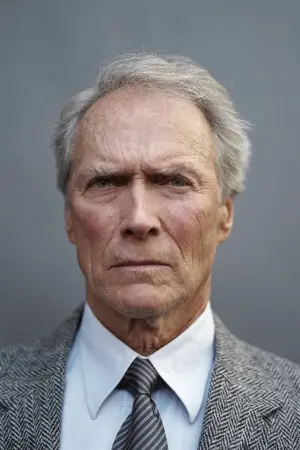
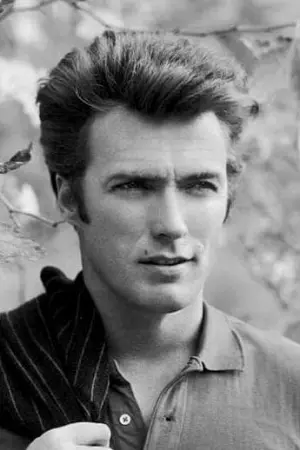
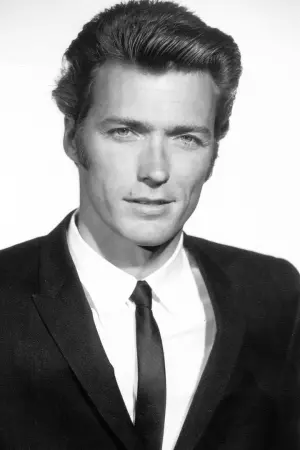
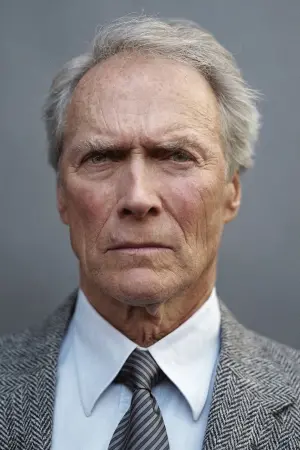
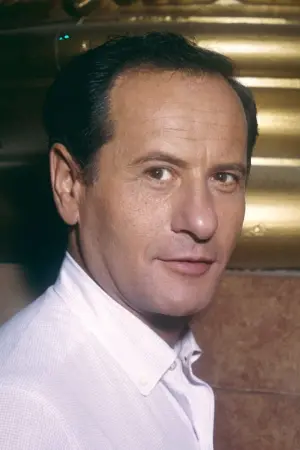
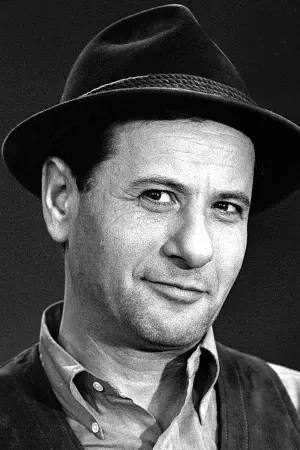
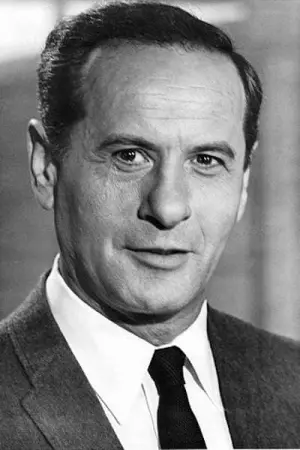
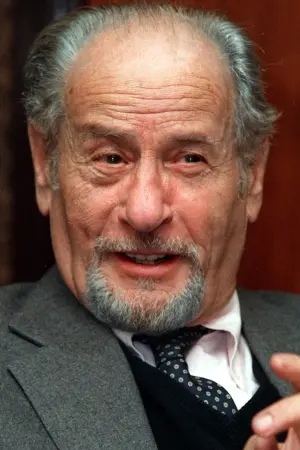
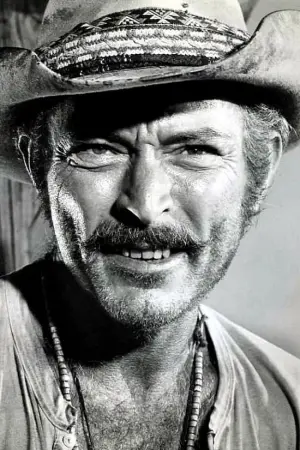
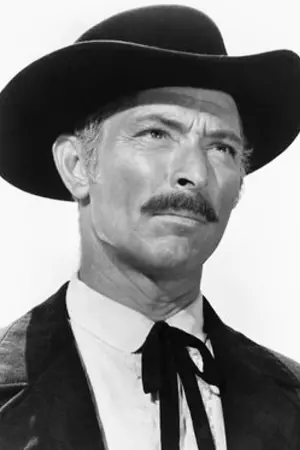
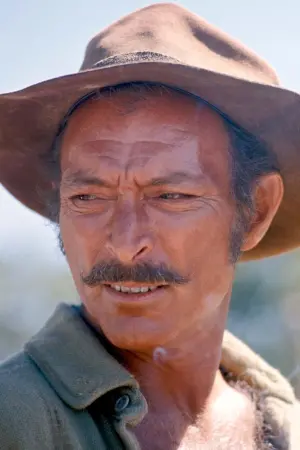
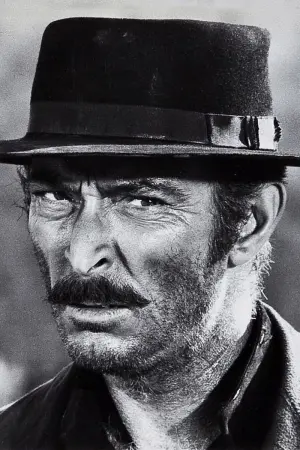
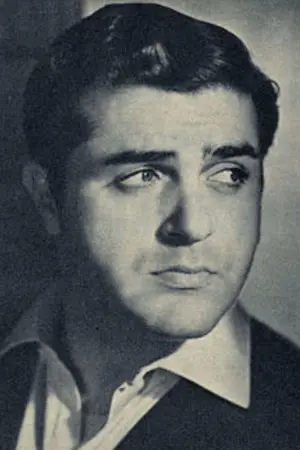
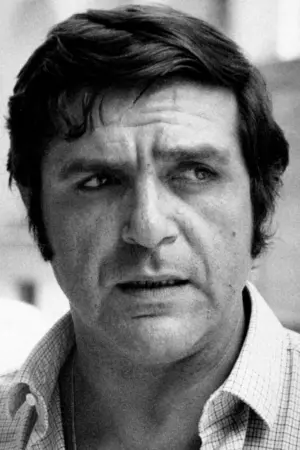
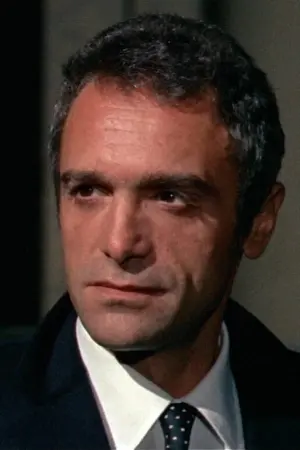


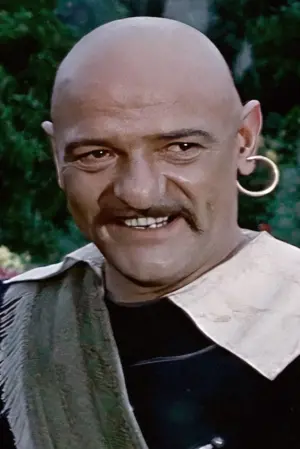

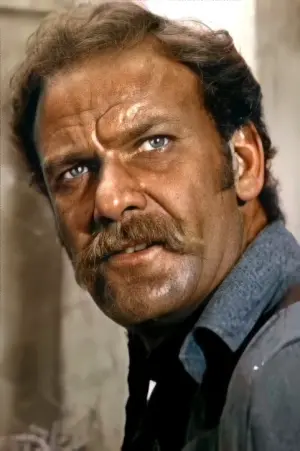
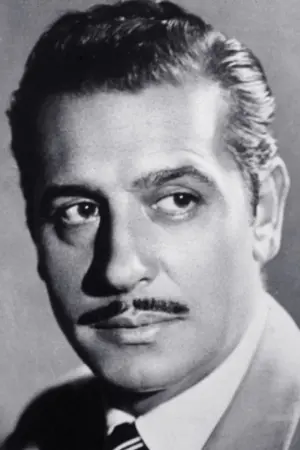
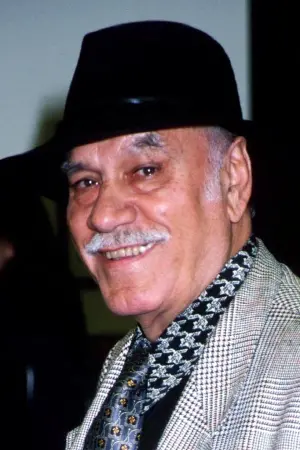


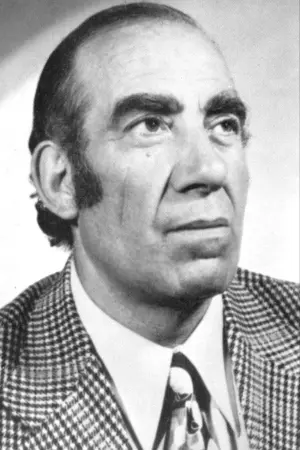
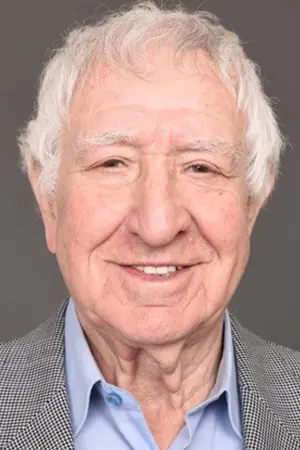
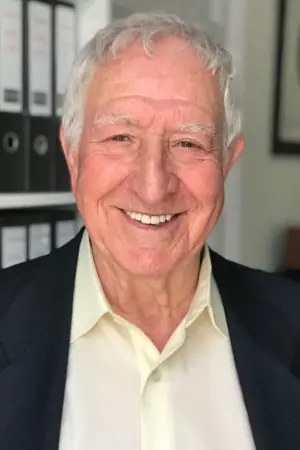
Sergio Mendizábal
Character Blonde Bounty Hunter

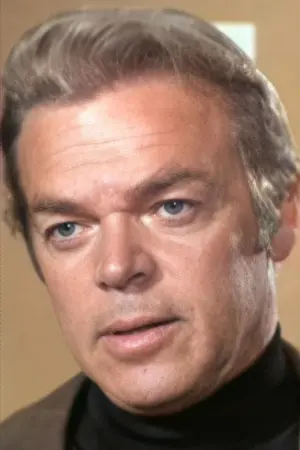




Silvana Bacci
Character Mexican Woman with Blondie (uncredited)
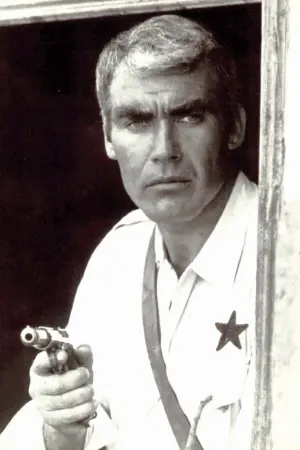
Joseph Bradley
Character Old Soldier (uncredited)
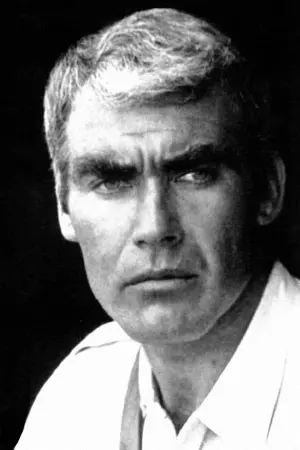

Amerigo Castrighella
Character 2nd Sombrero Onlooker at Tuco's 1st Hanging (uncredited)
Saturno Cerra
Character Bounty Hunter (uncredited)
William Conroy
Character Confederate Soldier (uncredited)
Axel Darna
Character Dying Confederate Soldier (uncredited)
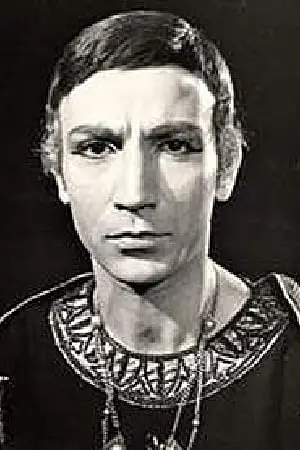
Gianni Di Segni
Character Deputy at 1st Hanging (uncredited)
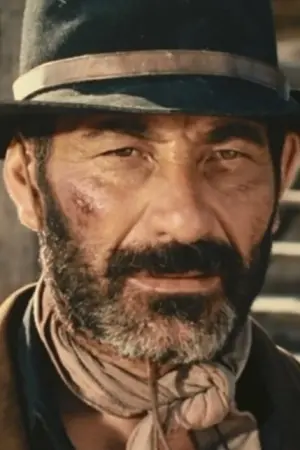
Alberigo Donadeo
Character Spectator Before Hanging (uncredited)

Attilio Dottesio
Attilio DottesioCharacter 3rd Sombrero Onlooker at Tuco's 1st Hanging (uncredited)

Luis Fernández de Eribe
Character Soldier Coat (uncredited)
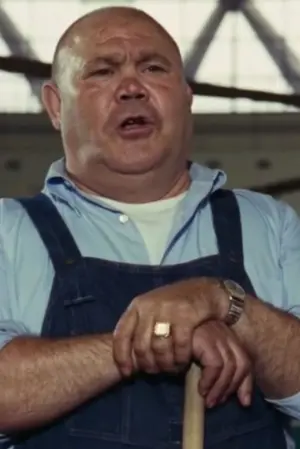
Veriano Ginesi
Character Bald Onlooker at Tuco's 1st Hanging (uncredited)
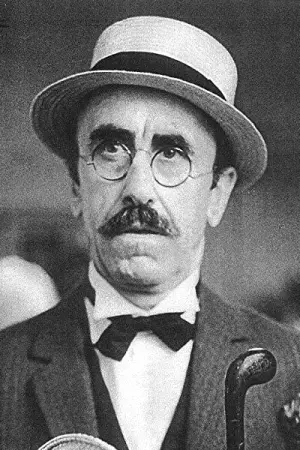
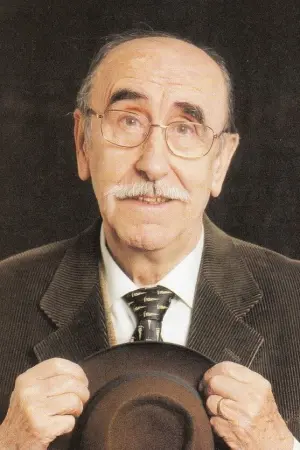
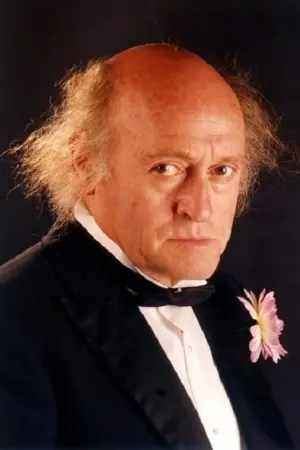
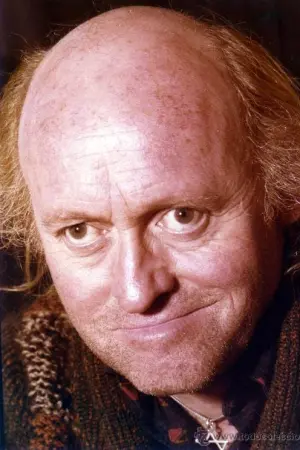
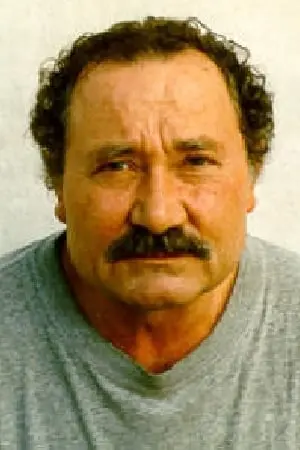
Nazzareno Natale
Character Mexican Bounty Hunter (uncredited)
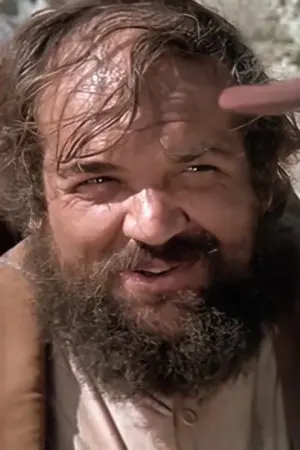
Antonio Palombi
Character Old Sergeant (uncredited)
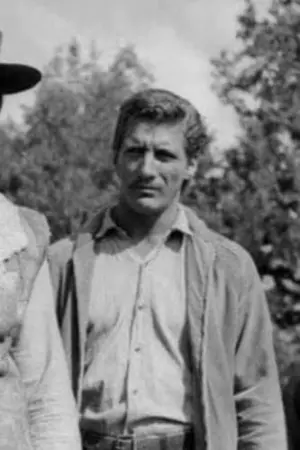
Antoñito Ruiz
Character Stevens' Youngest Son (uncredited)

Aysanoa Runachagua
Aysanoa RunachaguaCharacter Pistolero Recruited by Tuco in the Cave (uncredited)
Enrique Santiago
Character Mexican Bounty Hunter (uncredited)
Franco Tocci
Character Union Soldier with Cigar (uncredited)
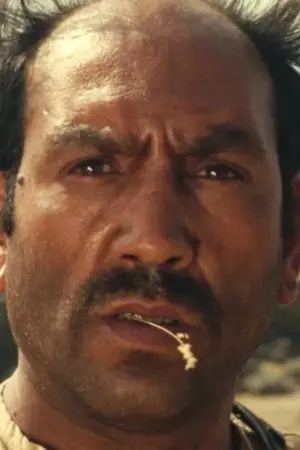
Antonio Montoya
Character Mexican Bounty Hunter (uncredited)
What's left behind the scenes
- The aphorism “When I get paid, I always do the job” is from Jan Potocki.
- In “A Fistful of Dynamite,” the protagonist wears his “signature” poncho for only 17 minutes throughout the entire film, becoming iconic in the first two Westerns.
- The film stars Antonio Casas, who previously appeared in “Colossus of Rhodes” (1961) as the Phoenician ambassador.
- The character “Angel Eyes,” played by Lee Van Cleef, is borrowed from Sergio Sollima's “Day of Anger” (1966). In that film, his character is named Jonathan Corbett.
- “The Good, the Bad and the Ugly” is the third film in Sergio Leone’s so-called “Dollars” trilogy. Each installment of this trilogy adds one more main character, meaning that the first part, “A Fistful of Dollars” (1964), had only one main character (Clint Eastwood’s character), “For a Few Dollars More” (1965) had two, and “The Good, the Bad and the Ugly” has three.
- Individual episodes from the film were used in the Soviet films “The Elusive Avengers” (1966) (the episode with the carriage and the corpse falling from it) and “His Own Among Strangers, a Stranger Among His Own” (1974) (“You won’t kill me. You will protect me – only I know our man in the Cheka”).
- The film was shot in the Tabernas Desert in Spain.
- The first word in the film is spoken only at the 10-minute mark.
- In the film's promotional trailer, Angel Eyes was labeled “The Ugly” and Tuco was “The Bad”. In the film, the characteristic “The Bad” belongs to Angel Eyes, and “The Ugly” to Tuco. The reason for this is that the film's title was translated into English as “The Good, the Bad and the Ugly”, and not “The Good, the Ugly and the Bad”. This nuance was not taken into account during the creation of the American trailer.
- Initially, Eli Wallach and Sergio Leone decided that Tuco should carry a pistol on a rope tied around his neck, and at the appropriate moment, insert the pistol into his hand with a deft twist of his neck. However, after numerous unsuccessful attempts by Eli to perform this trick, he turned to Sergio Leone to demonstrate the movement. Leone was unable to grab the pistol with his hand, and it hit him in the groin. After that, Leone said that Tuco would carry his weapon on his belt.
- Since Sergio Leone spoke practically no English, and Eli Wallach spoke practically no Italian, they communicated in French.
- Initially, Sergio Leone wanted to cast Gian Maria Volonté in the role of the Bad.
- The roles of Tuco and Angel Eyes were offered to Charles Bronson.
- Approximately 1500 Spanish soldiers were used as extras.
- Four scenes were cut from the original English-language release of the film. These scenes were later restored and dubbed from Italian into English. Clint Eastwood and Eli Wallach dubbed their characters into English, however, another actor had to be brought in to dub Angel Eyes, as Lee Van Cleef passed away in 1989.
- In the film, only five actors speak English: Clint Eastwood, Lee Van Cleef, Eli Wallach, Al Mulock, and John Bartha. All other actors spoke their native languages, and were dubbed into English during post-production.
- The 'Betterville' prison was built based on the real 'Andersonville' prison.
- Ennio Morricone specifically composed the music to imitate the sound of a howling hyena in certain moments.
- Clint Eastwood wore the same poncho in all three films of the 'Man with No Name' trilogy. The poncho was never washed.
- Before filming began, Orson Welles advised Sergio Leone to abandon the project, as almost all films on the subject of the Civil War invariably failed at the box office.
- According to Eli Wallach's autobiography "Good, Bad and Me", Sergio Leone cast him as Tuco not because of his role in "The Magnificent Seven" (1960), but after seeing him in a small role in "War on the Wild West" (1962).
- The patches on Confederate soldiers' uniforms indicated their unit assignment: blue signified infantry, gold – cavalry, and red – artillery.
- The full version of the film has a runtime of 179 minutes.
- Originally, Leone envisioned the trio as Clint Eastwood – Charles Bronson – Gian Maria Volonté (Good, Bad, and Ugly respectively). But Bronson was busy filming "The Dirty Dozen" (1967) at the time, and Volonté, according to the director, lacked "natural comedic talent" – he was more of a tragic actor.
- During the script preparation stage, Vincenzoni read many books at the Library of Congress and consulted archives. Some of his requests baffled the archivists – few people had previously requested documents related to Civil War operations in which the North suffered defeat.
- The initial script was written in 11 days (in Italian), primarily by Vincenzoni. Leone was not entirely satisfied with the work and suggested that Vincenzoni collaborate with a duo of co-authors, Agenore Incrocci and Furio Scarpelli. They were tasked with refining the text and adding more humor to the lines and dialogue, but Leone characterized their contribution as "a failure." Almost nothing of their work remained in the final text, although they were credited in the titles. Once completed, the script was roughly translated into English so that the American actors would have text for dialogue on set.
- Before filming began, the relationship between Luciano Vincenzoni and Leone deteriorated, and the screenwriter no longer participated in the work on the film, although he occasionally visited the set. The authorship of the script idea remained a contentious issue. In his memoirs, Vincenzoni mentions that he came up with the basic plotline about three criminals hunting for gold. Sergio Leone did not mention Vincenzoni’s contribution in interviews, only stating that he was inspired by the opportunity to film a story set against the backdrop of the Civil War.
- While in Los Angeles, Leone contacted the agent of Eli Wallach and offered him a role in the film. Wallach was having family problems at the time and did not want to leave his wife and fly to Europe. Moreover, he had never encountered Leone’s work. He also disliked the очередная role of a "Latin villain," as it appeared upon a quick reading of the script. However, after watching a clip from "For a Few Dollars More," Wallach immediately agreed and signed a contract.
- The film did not employ professional stunt performers. Their tasks were partially performed by supporting actors Benito Stefanelli and Romano Puppo.
- In the initial version of the script, the film was to feature two main characters, as reflected in the working title "Two Magnificent Tramps" (Italian: I due magnifici straccioni, English: The Two Magnificent Tramps). Subsequently, Tuco's role was expanded to a leading one, and the title was changed.
- United Artists initially planned to give the film a new title for its American release. Options considered were “River of Dollars” (to provide a similar “dollar” title) and “A Man with No Name,” but after discussion, they decided to retain the Italian translation.
- The film was released in Germany as “Zwei glorreiche Halunken” (“Two Glorious Rogues” – the film’s working title).
- According to the first Italian screenplay, Clint Eastwood’s character was named Joy, then he was left unnamed. Tuco calls him “Blondie.” In English-language literature, he is most often referred to as “The Gunslinger” or “The Man with No Name.” Initially, the “bad” character in the screenplay was called Banjo, was renamed Sentenza during filming, and became “Angel Eyes” in the English dub.
- Location and studio filming for the picture took place from May to July 1966 in Italy and Spain and lasted approximately 13 weeks.
- The Spanish Army Museum provided an extensive collection of weapons for the filming.
- The Sedhill Cemetery was built by 250 soldiers of the Spanish army with 8,000 graves, according to preliminary sketches.
- The small Arlansa River, near Burgos, played the “role” of the Rio Grande. When filming began, it turned out that the river had completely dried up, and the soldiers had to build a dam to raise the water level slightly.
- During the second construction of the bridge near León, the idea arose to film Blondin and Tuco’s escape from the bridge and the explosion itself with a single montage. It turned out that the actors had to be in dangerously close proximity to the explosion for the dramatic scene. After several rehearsals, the assistants found a more distant position. The actors were indeed filmed against the backdrop of the explosion as the director had envisioned, and they were even slightly affected by the blast wave.
- Leone’s first widescreen film.
- Clint Eastwood often tried to interfere with the production process and made comments. He believed that the schedule for location shooting was excessively long and, by American standards, should have taken less than three months. Tonino Valerii recalled that Eastwood’s behavior already indicated at that time that he would become a director in the future. Leone was very jealous of such liberties on the part of the actors and did not want to share power on set.
- Eastwood never smoked in his life, was a vegetarian, and was known for his commitment to a healthy lifestyle. Nevertheless, the director insisted on his own, and Clint sometimes had to hold a lit cigar. Van Cleef, in contrast, was then severely suffering from his addiction to alcohol, but, according to eyewitnesses, this did not interfere with the work in any way.
- Although the film's budget was significant by European standards, there was sometimes a thriftiness that was incomprehensible to Hollywood. The actors were limited in their choice of costumes. Eastwood recalled that he had only one cowboy hat and that if it were lost, it was unknown where a replacement could be found. Therefore, he was very careful with his belongings and took his costume with him at the end of filming.
- Eli Wallach and Sergio Leone became very close during filming and subsequently remained good friends.
- The editing of the film began in the summer, even during filming, and continued until Christmas 1966. The creators were in a hurry to finish the work by the holidays. Sergio Donati recalled how Leone was nervous. On set, the director was relaxed, full of energy and ideas. When it came to editing, his condition changed. After another change, Leone complained: “I'll never finish this film...” He was very afraid of failure – it was the most expensive film of his career. Leone demanded complete concentration from the crew and worked them to exhaustion. The last week before the premiere, the creators of the film slept in the editing room. Donati himself reluctantly recalled how he put six months of his life into editing 'The Good, the Bad and the Ugly', although his name did not even make it into the credits.
- The final editing significantly changed the plot of the film. More attention was paid to the character of Tuco. Just before completion, Leone removed another 20 minutes or so: in particular, a love scene involving Blondie. A logical inconsistency was noticed in the scene at the beginning, where Sentenza talks to the invalid (a half-soldier): it did not correspond in meaning to subsequent events. It was necessary to change its text and re-dub it.
- The United Artists management wanted a film no longer than 2 hours, while the director aimed for a final cut of around three hours. Leone tried to insist on his vision – the previous films in the trilogy had not been cut – but he had to compromise. The Italian release version of the film was 175 minutes long. The American release version was cut down to 161 minutes, significantly reducing the lengthy scenes without dialogue.
- The film premiered in Italy on December 23, 1966. Its US release followed a year later, on December 29, 1967. The delay was due to United Artists' decision to release all films in the trilogy in the American market one after another in 1967. Additional editing and dubbing were also required for the preceding films in the trilogy, and a common advertising campaign was commissioned for all of them.
- During the English dubbing process, Eastwood began reciting his lines from the first draft of the script. He refused to use the revised, updated text. Chris Mankiewicz, Vice President of United Artists, had to intervene and literally force him to do so. This irrevocably damaged the relationship between Leone and Eastwood, and they never collaborated again.
- After finishing work on the film, Sergio Leone confessed in an interview that he was finished with Westerns and would move on. He planned to shoot a gangster saga, but Paramount Pictures insisted that his next film also be a Western.
- Vincenzoni later conceived of a sequel to 'The Good, the Bad and the Ugly,' even reaching an agreement with Van Cleef, but he did not receive Leone's approval.
- Leone was quite skeptical about Eastwood's portrayal of his character. When he looked at him, he didn't see the Man with No Name, but only the actor. Leone is even credited with the ironic remark that Clint had two facial expressions: with a hat and without a hat.
- Lee Van Cleef did not consider himself an actor suitable for villainous roles. He said about himself that he had never hit a person or an animal in his life. In the film, when he needed to hit a girl in a scene, a stunt double did it for him.
- The work of 19th-century photographers Matthew Brady and Alexander Gardner had a significant influence on the visual solution, whose photographs were later used in preparing the battle scenes and film sets.
- The director's meticulous attention to the visual side of the film was sometimes not shared by cinematographer Tonino Delli Colli, who believed that Leone was overcomplicating things. When it was necessary to capture only close-ups of the characters' faces for the final duel scene, the shooting took a whole day. Eli Wallach recalled that the director wanted to end the final scene in the cemetery, using a camera rising high into the sky, but could not afford a helicopter. He had to settle for shooting with a crane.
- “The Good, the Bad and the Ugly” repeats events from Jan Potocki's Gothic novel “The Manuscript Found in Saragossa”: it’s a micro-plot involving a hired killer who takes money from two enemies and kills them both in turn.
- In the scene where Tuco runs through the cemetery, a dog unexpectedly appears on the right side of the frame. Sergio Leone came up with this idea to avoid melodrama. Eli Wallach was not warned about the animal's appearance. Therefore, his astonishment was perfectly natural.
- According to Eli Wallach, when it was time to blow up the bridge, Sergio Leone asked the captain of the Spanish army to activate the detonator as a sign of gratitude for the cooperation between the film crew and the Spanish army. It was agreed that the explosion would occur on Leone's command, which he was to give over the radio by saying "Vai!". However, one of the crew members said the same thing over the radio. Hearing the signal, the captain pressed the detonator button. The bridge was blown up while no cameras were running. Leone was so upset by what happened that he immediately fired the person who had given the explosion command. The Spanish captain was also upset, as the explosion had occurred partly due to his fault. Therefore, he offered to rebuild the bridge with the Spanish army, but on one condition: the fired crew member must be reinstated. Leone agreed, the "culprit" was rehired, the bridge was rebuilt, and the scene was successfully filmed.
- In the scene where Al Mulock's character tries to kill Tuco while he's taking a bath, Al couldn't memorize his lines. Eventually, Sergio Leone grew so tired of shooting unsuccessful takes that he asked Al to count from one to ten with a fierce expression. During post-production, Al's words were dubbed over with the correct lines.
- Jack Elam refused the role of the one-armed gunman trying to kill Tuco in the bathtub.
- The involvement of stunt performers in the production was minimal, and many dangerous scenes were performed by the actors themselves. While preparing the hanging scene, during which Tuco sat in the saddle with a noose around his neck, he asked the director to tie up the horse. This was not done. After the "shot" (the rope was cut by a small amount of explosives), the horse carried the actor with his hands tied for at least a mile before stopping in the desert. Another dangerous episode involved the scene where Tuco lay next to the railroad tracks, trying to get rid of his handcuffs. The footboard of a passing train narrowly missed decapitating the actor. Wallach refused a retake, and the episode made it into the film in a single take.
- Before the scene in the gun shop, Wallach told the director that he had little experience with weapons and didn't even know how to behave. The director recommended improvising. Eli, assembling a Colt Navy from several revolvers, decided to listen to the sound of the cylinder rotating – it was all he could think of. Leone liked the actor's bit and left it in exactly that form.
- The dynamite sticks used by the heroes to blow up the bridge did not exist at that time.
- The film features a railroad, although this is not entirely historically accurate. The first railroad crossed New Mexico in 1878.
- The Gatling gun, visible in the scene of the battle for Langston Bridge, did not actually enter service with the Union Army until 1866.
- In the scene in the gun shop, Tuco assembles the perfect revolver from several incompatible parts.
- The Man with No Name uses a Henry Rifle for the rescue scam. When the Man with No Name prepared to save Shorty from the hangman, it is noticeable that his Henry Rifle is equipped with a telescopic sight, which did not exist at that time.
- The main revolver model used by most of the characters, including the Man with No Name, is the Colt Navy. A modified version of this revolver, adapted for centerfire cartridges, became widely available only after the Civil War. Sentenza used a Remington revolver in some scenes, which was also adopted by the American army after 1862.
- During the final scene, when Tuco is standing with a rope around his neck (2:51:51) and Blondie is aiming at him, a blue car can be seen passing in the background.
- The film stars Antonio Casas, who previously appeared in "Colossus of Rhodes" (1961) as a Phoenician ambassador.
- According to Eli Wallach's autobiography, "The Good, the Bad and Me," Sergio Leone cast him as Tuco not because of his role in "The Magnificent Seven" (1960), but after seeing him in a small role in "How the West Was Won" (1962).
- The initial script was written in 11 days (in Italian), primarily by Vincenzoni. Leone was not entirely satisfied with the work and suggested Vincenzoni collaborate with co-writers Agenore Incrocci and Furio Scarpelli. They were to refine the text and add more humor to the lines and dialogue, but Leone characterized their contribution as a "failure." Almost nothing of their work remained in the final text, although they were credited. After completion, the script was roughly translated into English so that American actors would have a text for dialogue during filming.
- While in Los Angeles, Leone contacted Eli Wallach's agent and offered the actor a role in the film. Wallach was then having family problems and did not want to leave his wife and fly to Europe. He also had never encountered Leone's work. He also disliked the очередная role of a "Latin villain," as it appeared upon a quick reading of the script. However, after watching a clip from "For a Few Dollars More," Wallach immediately agreed and signed the contract.
- In the original version of the script, the film was to feature two protagonists, as reflected in the working title "The Two Magnificent Tramps" (Italian: I due magnifici straccioni, English: The Two Magnificent Tramps). Later, Tuco's role was expanded to a leading one, and the title was changed.
Did you like the film?
 Auditions in India
 Casting calls in USA
 Castingi w Polsce
 Кастинги в Україні
