Parasite - actors, characters and roles
All actors and their roles in the film "Parasite"
기생충 (2019)
Timing:
2:13 (133 min)

8.494/10
20631
20631

8.051/10
925672
925672

8.5/10
1149421
1149421
Actors and characters



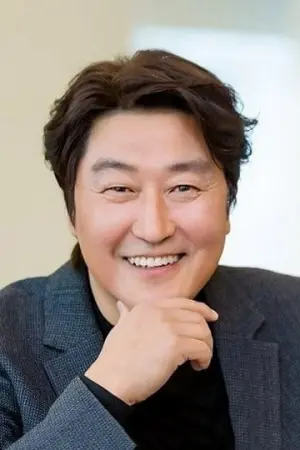
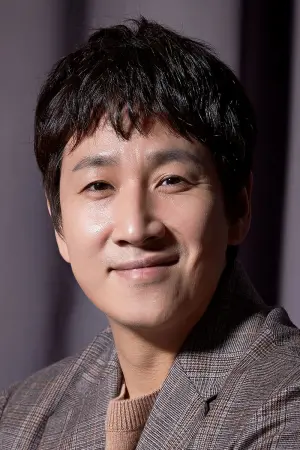



























Cho Jae-myung
Character Pizza Man

Jeong Ik-han
Character Neighbor

Kim Kyu-baek
Character Drunk 1
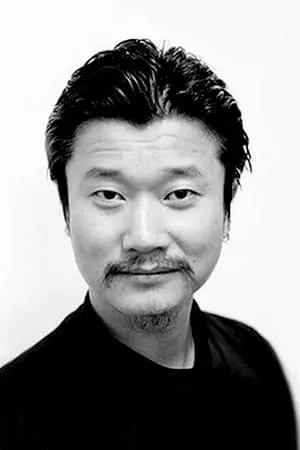

Ahn Seong-bong
Character Street Man
Yoon Young-woo
Character Benz Dealer
Park Jae-wook
Character VR Specialist

Jeon Eun-mi
Character Mart Cashier

Kim Geon
Character Party Man

Lee Joo-hyung
Character Party Man

Kim Yeong-jo
Character Party Man

Kim Jung-woo
Character Party Man

Baek Seung-hwan
Character Party Man




Je Seung-hyun
Character Party Woman

Park Hye-sook
Character Party Woman
Choi Ji-won
Character Party Woman

Lee Sang-kyung
Character Party Woman


Lee Ji-hye
Character A Singer

Kim Bo-ryeong
Character Cellist
Riccardo Ferraresso
Character Italy Chef
Ko Kwan-jae
Character Doctor

Lee Si-hoon
Character Detective

Seo Bok-hyeon
Character JTBC Reporter

Shim Soo-mi
Character JTBC Reporter

Yoon Hye-ree
Character JTBC Reporter
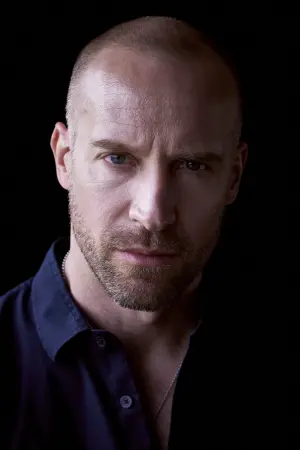
Andreas Fronk
Character German Father

Anna Elisabeth Rihlmann
Character German Mother
Rosie Peralta
Character Southeast Asian Housekeeper
Shin Seung-min
Character Namgung Hyun-ja





Kwak Sin-ae
Character Judge (voice)

Choi Jeong-hyun
Character Assistant Chef

Lee Eun-hee
Character Real Estate Woman

Hwang In-gyeong
Character PC Room Staff

Lee Si-hoo
Character Golf Player


Jeong Il-Hwa
Character Party Woman
What's left behind the scenes
- The film's shooting period was from May 18 to September 19, 2018.
- The stone that Min-hyeok’s (Park So-joon) family possesses and cherishes is called a ‘susok’. In Korea, there is a long-standing tradition of collecting stones of various sizes and interesting shapes. This hobby is usually pursued by wealthy individuals.
- Ki-jung (Park So-dam) forges university documents for her brother, related to ‘Inse’ University – one of the three most prestigious universities in South Korea. The film’s director, Bong Joon-ho, is an alumnus of this university.
- Before its premiere in South Korea, the rights to show the film were sold to 192 countries, setting a record for a South Korean film.
- For her role in the film, actress Jang Hye-jin gained 15 kg.
- Director Bong Joon-ho instructed actor Choi Woo-shik to lose some weight for the role, so his character, Ki-woo, would appear younger and more vulnerable.
- To help the young actors Choi Woo-shik and Park So-dam better get into their roles, Song Kang-ho allowed them to call him 'Dad' throughout the filming process, even though such familiarity towards a senior colleague is considered unacceptable in Korean society.
- Following its premiere at the Cannes Film Festival, the film received a 15-minute standing ovation.
- The first South Korean film to win the top prize at the Cannes Film Festival. This occurred in the year marking the 100th anniversary of Korean cinema.
- The film became the highest-grossing South Korean film in Russian box office history, the highest-grossing foreign film in North American theaters in 2019, and the highest-grossing South Korean film worldwide, breaking the record previously held by 'Extreme Job'.
- The first South Korean film to be nominated for and win a Golden Globe Award for Best Foreign Language Film; the first foreign film to win a Screen Actors Guild Award for Outstanding Performance by a Cast in a Motion Picture; the first South Korean film to be nominated for an Academy Award for Best Picture, and the first non-English language film to win it; the first film to win both the Best Picture and Best International Feature Film awards, and the first South Korean film to win an Oscar.
- The third film to win top honors at the Cannes Film Festival (the Palme d'Or) and an Academy Award (Best Picture). The first – Billy Wilder's "The Lost Weekend" (1945) – received the Grand Prix (at the time, the highest award) in Cannes, as the Palme d'Or was first awarded in 1955. The second – Delbert Mann's "Marty" (1955).
- While working on the script, director and screenwriter Bong Joon-ho chose tutoring as a job for the character Choi Woo-shik because, according to him, it is the only situation in which people from such different strata of modern South Korean society can intersect.
- An official black and white version of the film exists.
- The song used by Ki-jung (Park So-dam) to repeat the Jessica legend is called "Our Island Dokdo." It is a patriotic song about the disputed Liancourt Rocks (Kor. Dokdo) in the Sea of Japan between Japan and South Korea, known by every South Korean since childhood.
- American film critic Darcy Paquet, living in South Korea, worked on the English subtitles for the film and consulted with the director during the process. To better understand the film for Western audiences, he replaced Seoul National University with Oxford University and the popular Korean messenger KakaoTalk with WhatsApp.
- When the Park family returns home, Ki-taek (Song Kang-ho) asks Chung-sook (Jang Hye-jin) to make a noodle dish called Jjapaguri – a mix of two instant noodle dishes, Chapagetti and Neoguri. It became known as 'ramdon' (ramyeon + udon) in English.
- In the semi-basement where the Kim family lives, production designer Lee Ha-jun recreated the smell of decay and mold for greater authenticity.
- The Park house was built in Jeonju (the capital of North Jeolla Province) specifically for filming. Before work began, designer Lee Ha-jun studied the interiors and exteriors of similar designer buildings. The area of the house with the garden is approximately 1,980 square meters, and the cost of its construction was about $2 million. The street in front of the house and other buildings on it are computer graphics. After filming, the house was demolished.
- After watching the film at Cannes, Alejandro González Iñárritu asked Bong Joon-ho where he found a house that suited his vision so perfectly, and was very surprised to learn that the house had been built specifically for the shoot.
- To make the water brown for filming the flood scene in the basement, it was contaminated with cosmetic clay.
- During the scene of a conversation between father and son in the gym, the actor playing Ki-woo (Choi Woo-shik) cried, even though it wasn't scripted.
- In an interview, the director confessed that the main sources of inspiration for the film were Kim Ki-young's "The Housemaid" (1960) and the case of the Papin sisters.
- The characters' names contain hints about the plot development: - the names of the head of the Kim family and his children begin with the first syllable of the film's title (transcribed into Cyrillic as 'kisenchhun') – Ki-taek (Song Kang-ho), Ki-woo (Choi Woo-shik), Ki-jung (Park So-dam) - the name Ki-woo can be translated as "excitement" or "anxiety" - the name Ki-jung can be translated as "predestined fate" - the name Moon-gwang (Lee Jung-eun) can be interpreted as "madness associated with the door".
- Upon learning that Bong Joon-ho was writing a screenplay with a role for him, actor Song Kang-ho imagined his character as wealthy and attractive.
- Ki-jung (Park So-dam) forges university documents for her brother at Yonsei University – one of the three most prestigious universities in South Korea. The film’s director, Bong Joon-ho, also graduated from this university.
- The film became the highest-grossing South Korean film in the history of Russian distribution, the highest-grossing foreign film in North American distribution in 2019, and the highest-grossing South Korean film in worldwide box office history, breaking the record previously held by "Extreme Job".
- The first South Korean film nominated for and winning a Golden Globe Award for Best Foreign Language Film; the first foreign film to win a Screen Actors Guild Award for Outstanding Performance by a Cast in a Motion Picture; the first South Korean film nominated for an Academy Award for Best Picture, and the first non-English language film to win it; the first film to win both Best Picture and Best International Feature Film, and the first South Korean film to win an Oscar.
- The third film to win both the top awards at the Cannes Film Festival (the Palme d'Or) and the Academy Award for Best Picture. The first – Billy Wilder’s 'The Lost Weekend' (1945) – received the Grand Prix (the highest award at the time) at Cannes, as the Palme d'Or was first awarded in 1955. The second – Delbert Mann's 'Marty' (1955).
- The song Ki-jung (Park So-dam) uses to repeat the legend of Jessica is called 'Our Island Tokto.' It is a patriotic song about the disputed Liancourt Rocks (Kor. Tokdo) in the Sea of Japan between Japan and South Korea, known by every South Korean from childhood.
- When the Park family returns home, Yeon-gyo (Cho Yeo-jeong) asks Chung-sook (Jang Hye-jin) to make a noodle dish called Jjapaguri (or Chapaguri) – a mix of two instant noodle dishes, Chapagetti and Neoguri. It has become known as ramdon (ramyeon + udon) in English.
- The Park family’s house was built in Jeonju (the capital of North Jeolla Province) specifically for filming. Before work began, art director Lee Ha-joon studied the interiors and exteriors of similar designer buildings. The house, including the garden, covers approximately 1,980 square meters, and its construction cost around $2 million. The street in front of the house and other buildings on it are computer-generated imagery. After filming was completed, the house was demolished.
- In an interview, the director admitted that the main sources of inspiration for the film were Kim Ki-young’s “The Housemaid” (1960) and the Papin sisters case.
- The characters' names contain hints about the plot development: - the names of the head of the Kim family and his children begin with the first syllable of the film's title (transcribed in Cyrillic as kisenchun) – Ki-taek (Song Kang-ho), Ki-woo (Choi Woo-shik), Ki-jung (Park So-dam) - the name Ki-woo can be translated as "excitement" or "anxiety" - the name Ki-jung can be translated as "predestined fate" - the name Moon-gwang (Lee Jung-eun) can be interpreted as "madness associated with the door."
Did you like the film?
 Auditions in India
 Casting calls in USA
 Castingi w Polsce
 Кастинги в Україні
