Psycho - videos, teasers and stills from filming
All videos, teasers and footage from the filming of the film "Psycho"
Psycho (1960)
Timing:
1:49 (109 min)

8.433/10
9543
9543

0/10
17
17

7.2/10
16
16
![Watch film Psycho | PSYCHO Original Theatrical Trailer - Alfred Hitchcock Movie [1960]](/amdb/images/posters/4/h/psycho-1960-c7yWF.webp)
![Watch film Psycho | LGBTQ Themes in Psycho and The Children's Hour [*Contains Movie Spoilers]](/amdb/images/posters/t/x/psycho-1960-ZbLba.jpg)
What's left behind the scenes
- The film is based on Robert Bloch's novel "Psycho" (1959).
- The role of Marion could have gone to Eva Marie Saint, Piper Laurie, Martha Hyer, Hope Lange, Shirley Jones, or Lana Turner.
- Alfred Hitchcock anonymously purchased the rights to Robert Bloch's novel for $9,000. Hitchcock also tried to buy up as many copies of the book as possible, so that as few people as possible knew the ending of the story.
- The film was made in black and white because Hitchcock believed it would be too brutal if filmed in color. However, the main reason was the director's desire to make the film with as small a budget as possible (expenses should not exceed $1 million). In addition, at that time, many low-budget black and white "B" movies were being released, and such films were making good money, so Hitchcock was interested in what the box office would be for a low-budget, black and white "A" movie.
- During filming, the project was known as "Production 9401" or "Wimpy." The latter name came from Rex Wimpy, a camera assistant.
- It was intended that the film would begin with a panoramic shot taken from a helicopter, slowly transitioning to a wide shot. Had it been filmed, this scene would have been reminiscent of the opening of Orson Welles's 'Touch of Evil' (1958).
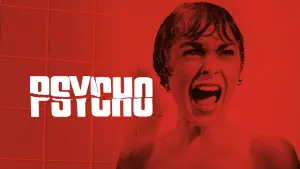
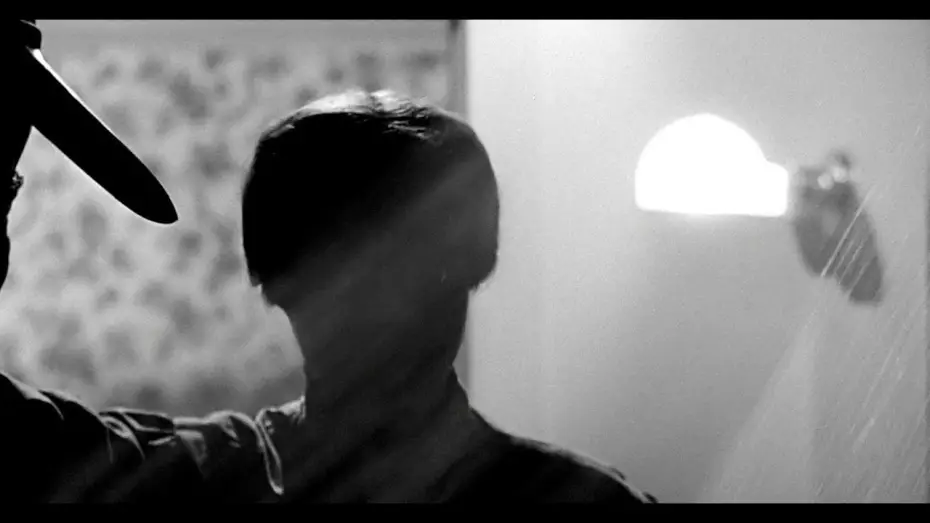
- The shower scene used over 90 cuts. This scene was filmed from December 17th to 23rd, 1959. Anthony Perkins was not present during its filming.
- Initially, Alfred Hitchcock intended to make the shower scene completely silent. However, Bernard Herrmann still wrote a musical theme. When Hitchcock heard it, he changed his mind.
- Chocolate syrup 'Bosco' was used as blood in the film.
- Norman's middle name is Francis. This is also the name of the patron saint of birds.
- Marion's first car's license plate number is ANL-709, the second is NFB-418.
- The letters NFB appear in Marion's car's license plate number. These same letters form the initials of Norman Bates – Norman Francis Bates.
- Norman's hobby is taxidermy.
- The main character is called Marion. In 'The Birds' (1963), the main character is called Melanie. The title of Hitchcock's next film – 'Marnie' (1964) – is a combination of the letters from these two names.
- The film's budget was only $800,000, while its box office revenue was $40,000,000. Alfred Hitchcock used the crew from his own television series 'Alfred Hitchcock Presents' (1955) to save time and money.
- In 1962, Alfred Hitchcock exchanged his rights to this film and his television series ("Alfred Hitchcock Presents" (1955)) for a substantial stake in MCA. Hitchcock became the company's third-largest shareholder.
- The first version of the script contained the following dialogue: Marion: "I intend to spend the weekend in bed." Tom Cassidy: "In bed? It's the only place to rest that's better than Las Vegas." This scene was filmed by Gus Van Sant for "Psycho" (1998), but was not included in the final cut.
- The painting Norman removes from the wall to observe Marion undressing is a classic depiction of rape.
- It is believed that "Psycho" was the first film to show a toilet flushing.
- Rumor has it that the film almost wasn't released because censors claimed that Janet Leigh's breasts were visible during the shower scene. The editors had to review the scene frame by frame to confirm that the censors' claims were unfounded. Hitchcock made no changes (and none were needed).
- After the film's release, Alfred Hitchcock received an angry letter from the father of a girl who refused to take a bath after watching 'Diabolique' (1954), and after 'Psycho' – refused to take a shower. Hitchcock's reply was: 'Take her to the dry cleaner.'
- Alfred Hitchcock filmed this movie after a project with Audrey Hepburn, 'No Bail for the Judge,' fell through.
- Alfred Hitchcock can be spotted in the film at the seven-minute mark – a man in a cowboy hat outside Marion's office.
- According to Steven Rebello, author of 'Alfred Hitchcock and the Making of Psycho,' Hitchcock was so dissatisfied with John Gavin's lackluster performance as Sam Loomis that the director called him wooden on set.
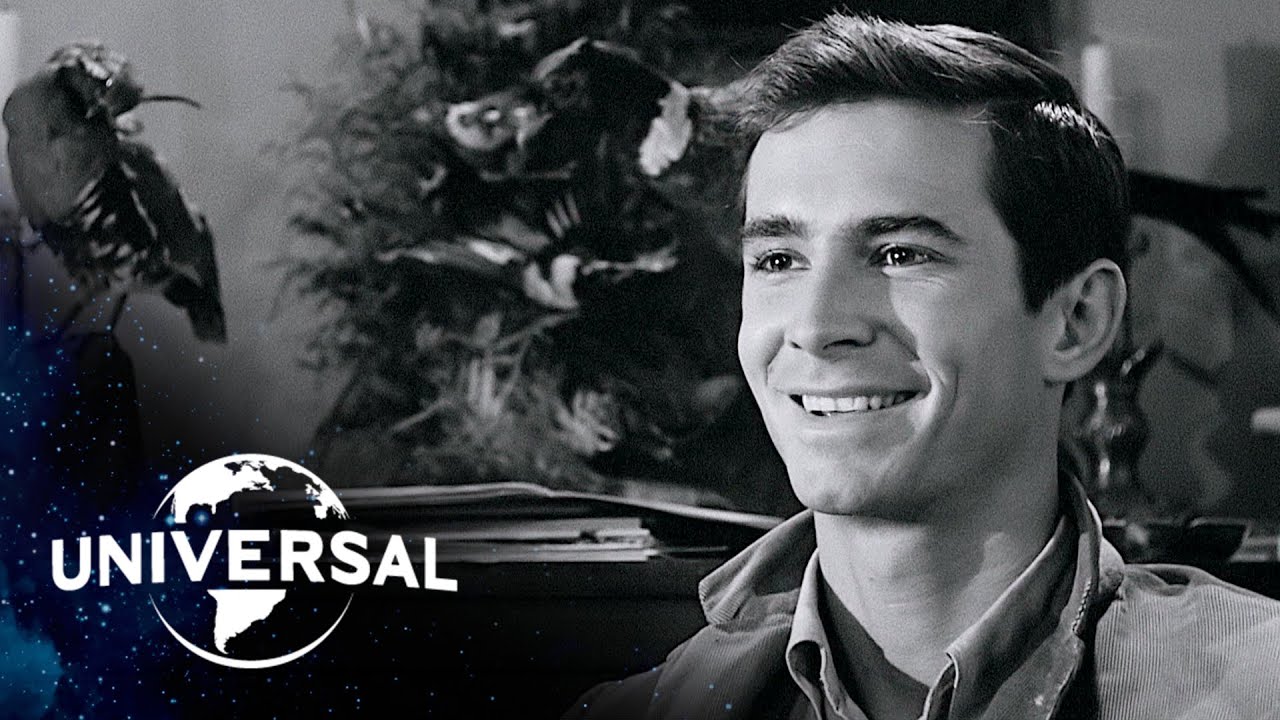
- In Robert Bloch's novel, Norman Bates is a short, stout, and elderly man, while in the film he is young, handsome, and charming. The idea to change the character's appearance belonged to Alfred Hitchcock.
- James P. Cavanaugh was the first screenwriter tasked with adapting Robert Bloch's novel. However, the filmmakers preferred Joseph Stefano's script. Cavanaugh also wrote at least five episodes for the series "Alfred Hitchcock Presents" (1955), two of which were directed by Hitchcock.
- Initially, Alfred Hitchcock and Joseph Stefano intended to use jazz music as the film's score.
- Robert Bloch's novel was based on real facts about Ed Gein, a serial killer. The image of this maniac also partially inspired the following films: "Deranged" (1974), "The Texas Chain Saw Massacre" (1974), and "The Silence of the Lambs" (1990).
- During his illness, Alfred Hitchcock was unable to be present on set. While he was absent, the crew filmed a scene in which Arbogast climbs the stairs. When Hitchcock saw the footage, he thanked the crew but added that the scene would still have to be reshot. The reason was that the crew's version could give viewers the impression that Arbogast was climbing the stairs to commit a murder.
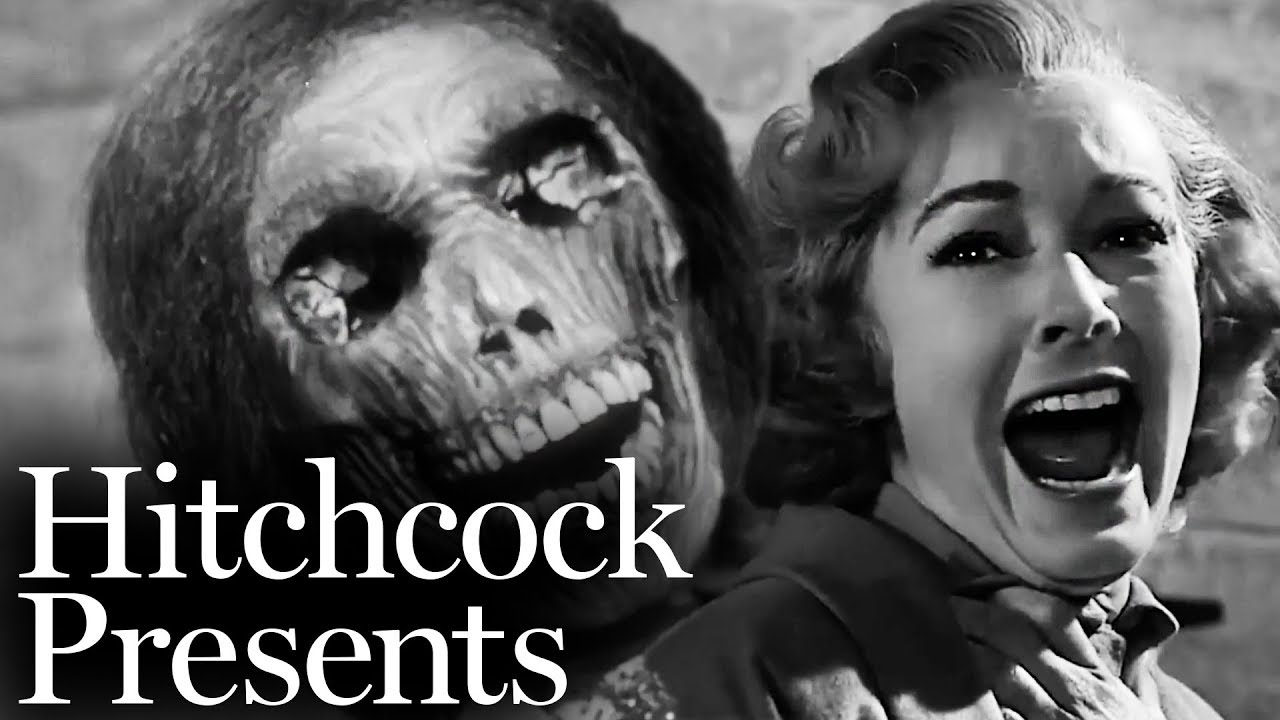
- Promotional material for the film included a trailer in which Alfred Hitchcock, acting as a guide, conducted a tour of the motel and house for viewers. At the end of the video, Hitchcock enters the bathroom, pulls back the shower curtain, and we see a close-up of a woman screaming in horror. However, the actress in the bathroom is not Janet Leigh, but Vera Miles.
- During filming, Vera Miles wore a wig, as she had shaved her head for her role in "5 Clues" (1960).
- In the collector's edition of the film released on DVD, Janet Leigh confirms that a special doll was used in some moments of the shower scene.
- One of the reasons Alfred Hitchcock decided to film a low-budget black and white film was that the director was tired of making high-budget films with superstars and wanted to make, to some extent, an experimental film using techniques characteristic of television.
- According to Entertainment Weekly, "Psycho" ranked eleventh on the list of "Greatest Movies of All Time," and it also took first place among horror films ever made.
- Filming the scenes with Janet Leigh took three weeks, one of which was dedicated to filming the shower scene.
- The house's set decoration cost only $15,000, but it nevertheless became the most expensive set decoration created for the film.
- In the first version of the script, the character played by Janet Leigh was named Mary Crane.
- The lingerie worn by Marion Crane (Janet Leigh) was purchased at a regular store.
- On the first day of filming, the entire crew promised the director that they would not reveal any information about the film's plot. Hitchcock also removed the last pages from the script copies given to the actors so that no one would know the film's ending.
- Psycho is the last film shot by Hitchcock for Paramount Pictures. Afterwards, Hitchcock made films at Universal Studios.
- Alfred Hitchcock was so impressed with Bernard Herrmann's music that he doubled the composer's fee (Herrmann's fee was $34,501). Later, Hitchcock would say that 33% of the effect achieved while watching the film belonged to the music.
- The film contains numerous references to birds. Here are just a few: — the film begins with a panoramic shot from a bird's-eye view; — the main character's surname is Crane (which translates from English as "crane"); — various stuffed birds can be seen in the motel; — paintings depicting birds can be noticed in Marion's room at the motel; — Norman accidentally knocks a painting of a bird off the wall; — Norman tells Marion: "You eat like a bird."
- Filming of the picture took 36 days from December 1959 to January 1960.
- Norman Bates ranks second in the American Film Institute's ranking of villains among the 100 Greatest Heroes and Villains, after Hannibal Lecter and ahead of Darth Vader. His phrase "A boy's best friend is his mother" also made it to 56th place on the institute's list of the greatest movie quotes. In 2008, Empire magazine placed him on the "100 Greatest Movie Characters" list. Norman Bates also took 4th place on Premiere magazine’s list of "The Greatest Movie Characters of All Time." IGN ranked Norman Bates 22nd on its list of "25 Best Horror Villains."
- At various times, persistent rumors circulated that during the filming of the shower scene, at the director's insistence, the hot water was abruptly switched to cold at the moment the murder began (Janet Leigh, of course, knew nothing about this). In reality, nothing of the sort happened.
- To record the sound of a knife penetrating human flesh, the sound of a knife piercing a kassaba (winter melon) was used.
- In the opening scene of the film, Marion Crane wears a white bra because Alfred Hitchcock wanted to portray her as “angelic.” However, after she steals the money, there is a scene where Marion is wearing a black bra, as she has committed a crime. Similarly, before she steals the money, she carries a white handbag; and after the theft – a black one.
- Each time we see a character's reflection in a mirror, that character is doing something wrong. For example, when Marion counts the stolen money, we see her reflection in the mirror. When Sam and Lila register under false names, we also see their reflection in the mirror. Thus, the director wanted to show the two sides of the human personality.
- Despite the fact that the entire film is in black and white, several viewers have claimed that the blood in the shower scene was red. Obviously, this claim cannot be true, because firstly, the film is black and white; and secondly, chocolate syrup was used as blood.
- The shower murder scene lasts only 45 seconds, but about 70 different camera shots were used to film it.
- Anthony Perkins' fee was $40,000. In the film, Marion steals exactly the same amount.
- After Marion's death in the film, her open eyes with constricted pupils are shown in close-up. Ophthalmologists flooded Hitchcock with letters pointing out this error – as a person's pupils dilate after death. Doctors strongly advised putting belladonna in the eyes of the 'deceased' actress to simulate the effect of dead eyes. In subsequent films, Hitchcock consistently followed this advice.
- At the very beginning of the film (the scene in the city hotel), Sam's shirt changes position, although he didn't touch it.
- When Norman Bates is cleaning the shower, the position of the clothespins on the rod above the bathtub changes repeatedly.
- At the end of the film, when the psychiatrist appears, a white piece of paper suddenly appears above the calendar when the angle changes, even though it wasn't there before.
- When Sam and Lila arrive at the motel, a shadow of a large tree is visible on the side wall, but the shadow disappears when Norman approaches them.
- When Norman rushes into the bathroom, he knocks over a bird frame. The frame falls face up. Later, when Norman begins to clean up, the frame is found overturned.
- Norman Bates runs from the house to the office in heavy rain, but his jacket remains dry. Moisture will appear later when he briefly steps out to retrieve Marion's luggage.
- The shower curtain Norman wraps Marion's body in is completely dry, even though the girl had just taken a shower.
- Initially, Alfred Hitchcock intended to make the shower scene completely silent. However, Bernard Herrmann still wrote a musical theme. When Hitchcock heard it, he changed his mind.
- Alfred Hitchcock was so impressed with Bernard Herrmann's music that he doubled the composer's fee (Herrmann's fee was $34,501). Later, Hitchcock said that 33% of the effect achieved when watching the film belonged to the music.
Did you like the film?
 Auditions in India
 Casting calls in USA
 Castingi w Polsce
 Кастинги в Україні
