The Great Escape - videos, teasers and stills from filming
All videos, teasers and footage from the filming of the film "The Great Escape"
The Great Escape (1963)
Timing:
2:53 (173 min)

7.929/10
2811
2811

7.311/10
7592
7592

8.2/10
276000
276000
![Watch film The Great Escape | The Great Escape (1963) ORIGINAL TRAILER [HD 1080p]](https://i.ytimg.com/vi/I9jSKTSY5Bs/sddefault.jpg)
What's left behind the scenes
- The film is based on Paul Brickhill's book, The Great Escape, which in turn is based on the real-life mass escape from Stalag Luft III prisoner-of-war camp.
- Based on the film, identically titled computer games were released in 1986 and 2003.
- Steve McQueen, James Coburn, and Charles Bronson had previously starred together in «The Magnificent Seven» (also directed by John Sturges).
- Former prisoners of war asked the filmmakers to omit details about the assistance they received from their home countries, such as maps, documents, and tools hidden in gift packages. This request was made to avoid revealing all the secrets of the escape. The filmmakers agreed.
- Steve McQueen’s character was based on several real-life prototypes, including Major Dave Jones, who was a pilot during the Doolittle Raid. The role was also based on Colonel Jerry Sage, a US Office of Strategic Services agent in the North African desert, where he was captured. Colonel Sage managed to put on a pilot's uniform, otherwise he would have been executed as a spy. Eric Foster, who escaped from German camps seven times, was another inspiration for the role.
- Richard Attenborough played Major Roger Bartlett (Big X), a character based on Roger Bushell – a British prisoner of war born in South Africa and the secret leader of the actual Great Escape. Attenborough, like his character, was a pilot in the Royal Air Force during World War II.
- Captain Colin Blythe, based on Tim Wallen, was played by Donald Pleasence. Pleasence himself served in the Royal Air Force during World War II. He was wounded and spent a year in the German prisoner-of-war camp Luft I. The filmmakers initially didn’t know that Pleasence had been in the camp. So, when the actor gave advice to the director, he was asked to keep his opinion to himself, but, after learning about his past, the director sought his advice. Pleasence’s character was also partially based on John Cordwell, born in London, who later became a Chicago architect and owner of the ‘Red Lion Pub’.
- James Garner fought in the Korean War and was wounded twice. At the time, he was a ‘supply officer’, just like his character Captain Hendley. Hannes Messemer played the commander of the Luft III prisoner-of-war camp, Colonel von Luge of the Luftwaffe – a character based on Colonel Friedrich Wilhelm von Lindeiner-Wildau. Messemer himself was a prisoner of war during the war, but in a Soviet camp. Two other German actors, Til Kiwe and Hans Reiser, were American prisoners of war.
- Flight Lieutenant Archibald Ives (Mole), played by Angus Lennie, was based on Jimmy Kiddell, who was shot while attempting to climb over a fence.
- Dutch pilot Bram van der Stok was cut from the film, although he was originally one of the three most successful escapees. He was replaced by Sedgwick, played by James Coburn.
- Charles Bronson, like his character Danny Velinski, suffered from claustrophobia – he developed this ailment as a result of his work in coal mines. The character of Gordon Jackson’s MacDonald is based on George Harsh, a very good friend of Wally Floody (the real 'Tunnel King', who was a consultant to John Sturges on set for almost a year).
- The film was shot entirely in Europe. A highly accurate replica of Stalag Luft III was built near Munich specifically for the filming. Scenes taking place outside the camp were filmed on the Rhine River and the North Sea coast.
- All interior scenes of the film were shot at Bavaria Film Studios in Munich. The Bavarian studio's facilities did not allow for filming the shootout in the forest: the studio’s outdoor area was too small. Therefore, the film crew received permission from the German government to shoot in a national forest adjacent to the studio. After filming in the forest was completed, the filmmakers planted around 2000 small pine trees to replace those damaged during the shooting.
- Most of the aircraft on the airfield are actually American North American T-6 Texan planes, which have been painted with fascist symbols. But the one that is being flown directly is a genuine German Bucker Bu 181 Bestmann.
- The film was regularly shown on British television, especially during Christmas. In 2006, a vote was held in the UK to determine which film viewers most wanted to see at Christmas. 'The Great Escape' came in third place, and topped the list among male viewers.
- In 2009, seven former prisoners of war arrived at the Luft III camp to celebrate the 65th anniversary of the escape and watched the film. According to the veterans, life in the camp as depicted in the film is authentic; for example, the scene in which a prisoner attempting to climb over the fence is killed, as well as the scenes in which prisoners dig tunnels – all of this, according to the veterans, almost completely corresponds to real events. However, one veteran criticized McQueen for 'glamorizing' it.
- In 2002, Quentin Tarantino listed his 12 favorite films. 'The Great Escape' was included on that list.
- The screenwriters increased the importance of the roles of American prisoners of war, as their roles were actually minor, and the escape was largely organized by the British. In fact, the Americans helped build the tunnels and worked on early escape plans, but were separated from the Europeans before the tunnels were completed.
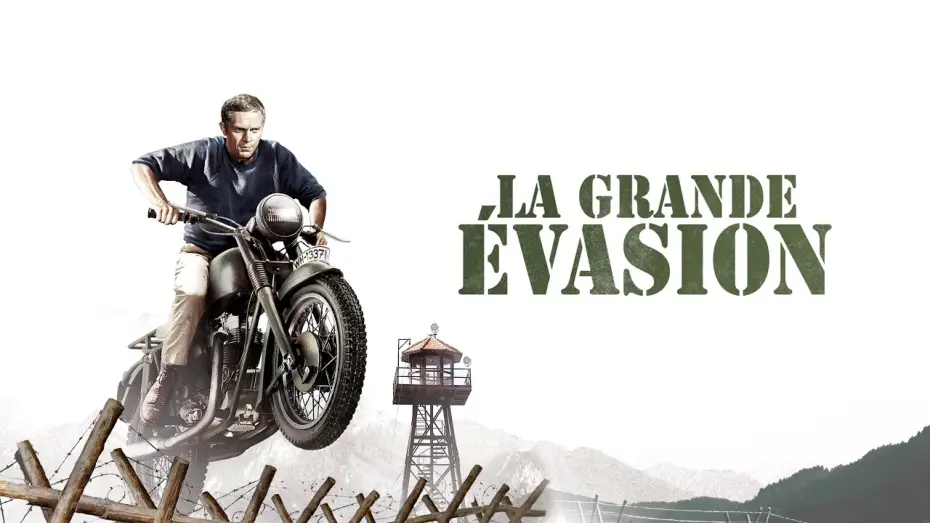
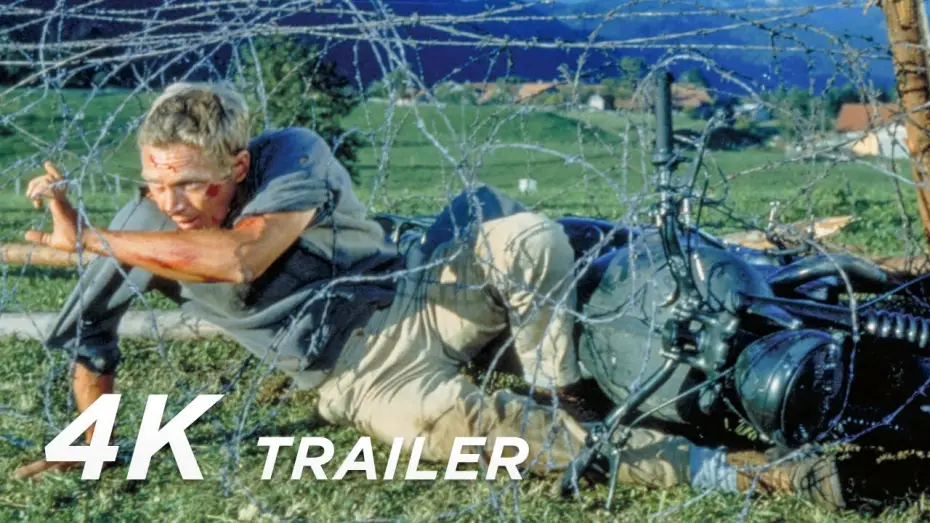
- Some fictional scenes were filmed to add drama and dynamism, such as the motorcycle scenes included in the film at McQueen’s suggestion, who personally performed all the stunts except for the last, most difficult jump.
- In reality, preparations for the escape involved 600 people at once (not 250 as depicted in the film), who worked for over a year. Furthermore, the actual escape took place on the night of March 24, 1944, and the ground was covered in snow. And the nearest German town to the camp, named Neustadt in the film, was actually the Polish town of Żagań.
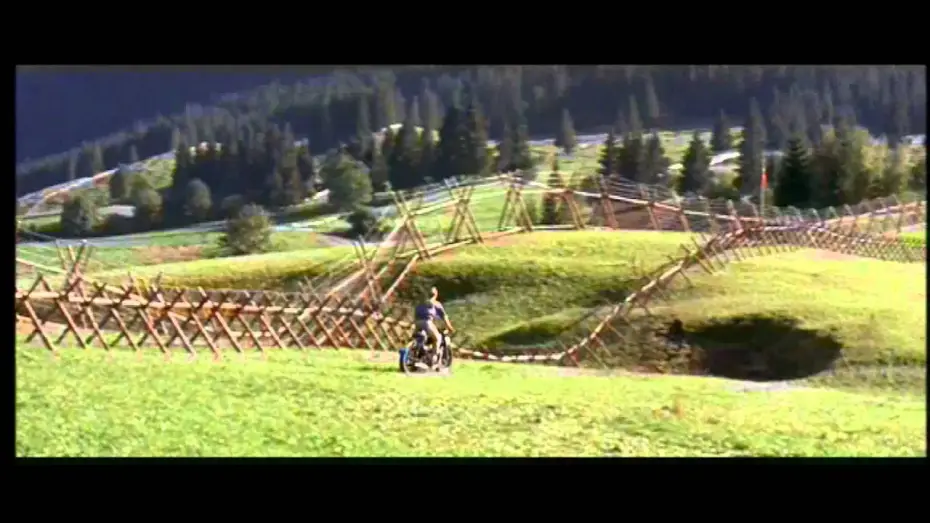
- The episode where Hilts jumps the fence on a motorcycle was filmed in meadows near Füssen in Bavaria (on the Austrian border) and in the Alps. The barbed wire that Hilts crashes into was actually just rubber. The fake barbed wire was made as follows: almost all the crew members took thin strips of rubber and tied them in knots around other longer pieces of rubber, and then stretched them across the set. McQueen himself performed the motorcycle stunts, except for one: the jump on a motorcycle over a fence more than two meters high was performed by McQueen’s friend, Bud Ekins. The motorcycle was a cosmetically modified ‘Triumph TR6 Trophy’—these British motorcycles did not exist during World War II.
- In the film, the entrance to the 'Tom' tunnel is under the stove, and the entrance to the 'Harry' tunnel is in the washroom’s water collection tank. In reality, the entrance to the 'Dick' tunnel was in the water collection tank, 'Harry' was under the stove, and 'Tom' was in a darkened corner near the stove’s chimney.
- Steve McQueen, James Coburn, and Charles Bronson had previously starred together in "The Magnificent Seven" (directed by John Sturges).
- Captain Colin Blythe, based on Tim Wallen, was played by Donald Pleasence. Pleasence himself served in the Royal Air Force during World War II. He was wounded and spent a year in the German prisoner-of-war camp Luft I. The creators initially did not know that Pleasence had been in the camp. Therefore, when the actor gave advice to the director, he was asked to keep his opinion to himself, but, learning later about his past, the director himself asked for advice. Also, Pleasence's character was partly based on John Cordwell, born in London, who later became a Chicago architect and owner of the “Red Lion Pub”.
- James Garner fought in the Korean War and was wounded twice. At that time, he was a “supply officer,” just like his character Captain Hendley. Hannes Messemer played the commander of the Luft III prisoner-of-war camp, Colonel von Luge of the Luftwaffe—a character based on Colonel Friedrich Wilhelm von Lindeiner-Wildau. Messemer himself was also a prisoner of war during the war, but in a Soviet camp. Two other German actors, Til Kiwe and Hans Reiser, were prisoners of the Americans.
- Charles Bronson, like his character Danny Velinski, suffered from claustrophobia—an ailment that developed as a result of his work in coal mines. The character of Gordon Jackson's Macdonald is based on George Harsh, a very good friend of Wally Floody (the real “Tunnel King,” who was a consultant to John Sturges on set for almost a year).
- In 2009, seven former prisoners of war came to the Luft III camp to celebrate the 65th anniversary of the escape and watched the film. According to the veterans, life in the camp as depicted in the film is authentic; for example, the scene in which a prisoner attempting to climb over the fence is killed, as well as the scenes in which prisoners dig tunnels—all of this, according to the veterans, almost completely corresponds to real events. However, one veteran criticized McQueen for “glamorizing”.
- In 2002, Quentin Tarantino listed his 12 favorite films. 'The Great Escape' was included in this list.
- The episode where Hilts jumps the fence on a motorcycle was filmed in the meadows near Füssen in Bavaria (on the Austrian border) and in the Alps. The barbed wire that Hilts crashes into was actually just rubber. The fake barbed wire was made as follows: almost all of the film crew took thin strips of rubber and tied them in knots around other, longer pieces of rubber, then stretched it across the set. McQueen performed the motorcycle stunts himself, except for one: the jump over the fence, which was over two meters high, was performed by McQueen's friend, Bud Ekins. The motorcycle was a cosmetically modified ‘Triumph TR6 Trophy’ – these British motorcycles did not exist during World War II.
Did you like the film?
 Auditions in India
 Casting calls in USA
 Castingi w Polsce
 Кастинги в Україні
