2001: A Space Odyssey - videos, teasers and stills from filming
All videos, teasers and footage from the filming of the film "2001: A Space Odyssey"
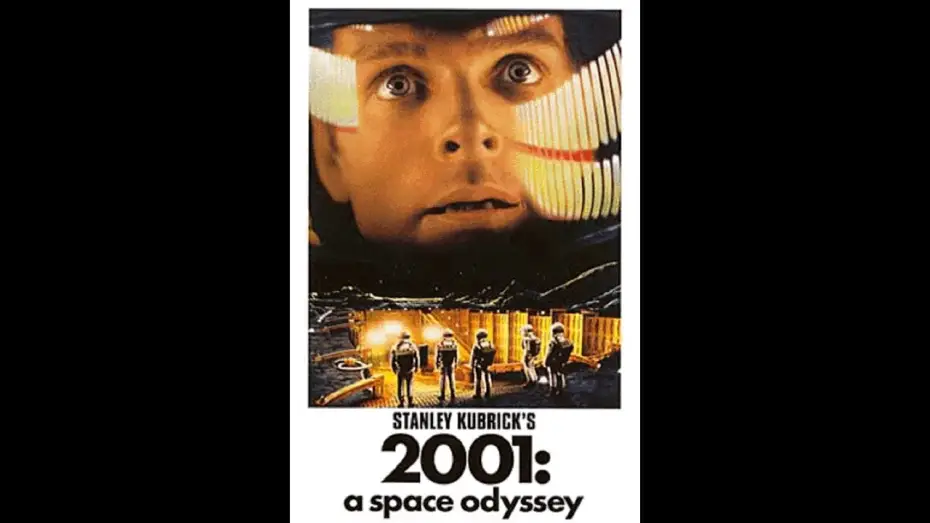
2001: A Space Odyssey (1968)
Timing:
2:29 (149 min)

8.049/10
12578
12578

7.892/10
127985
127985

8.3/10
779000
779000
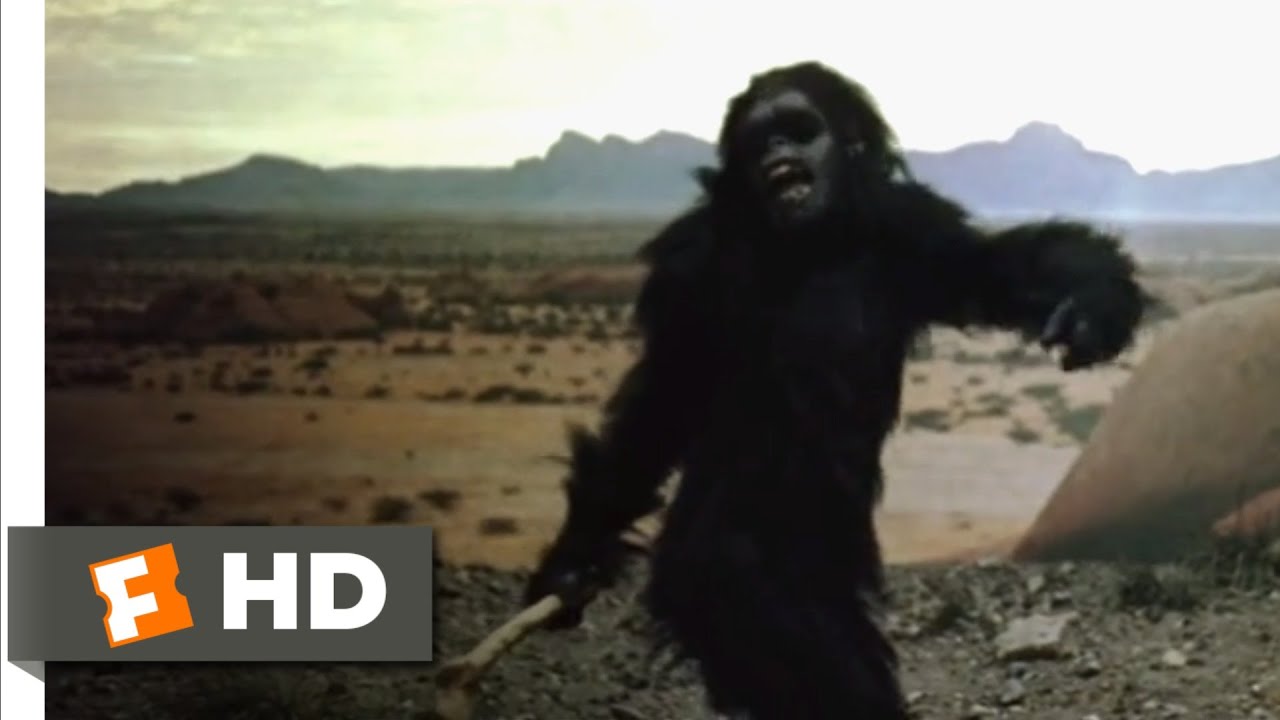
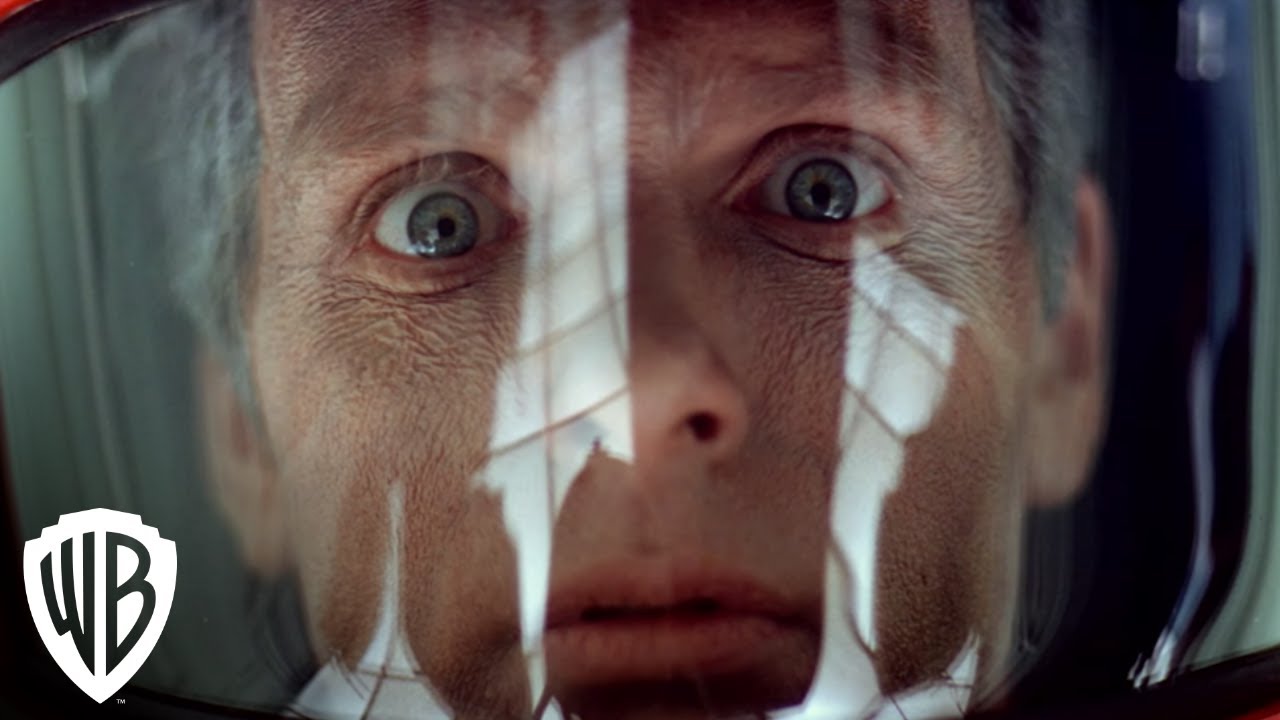
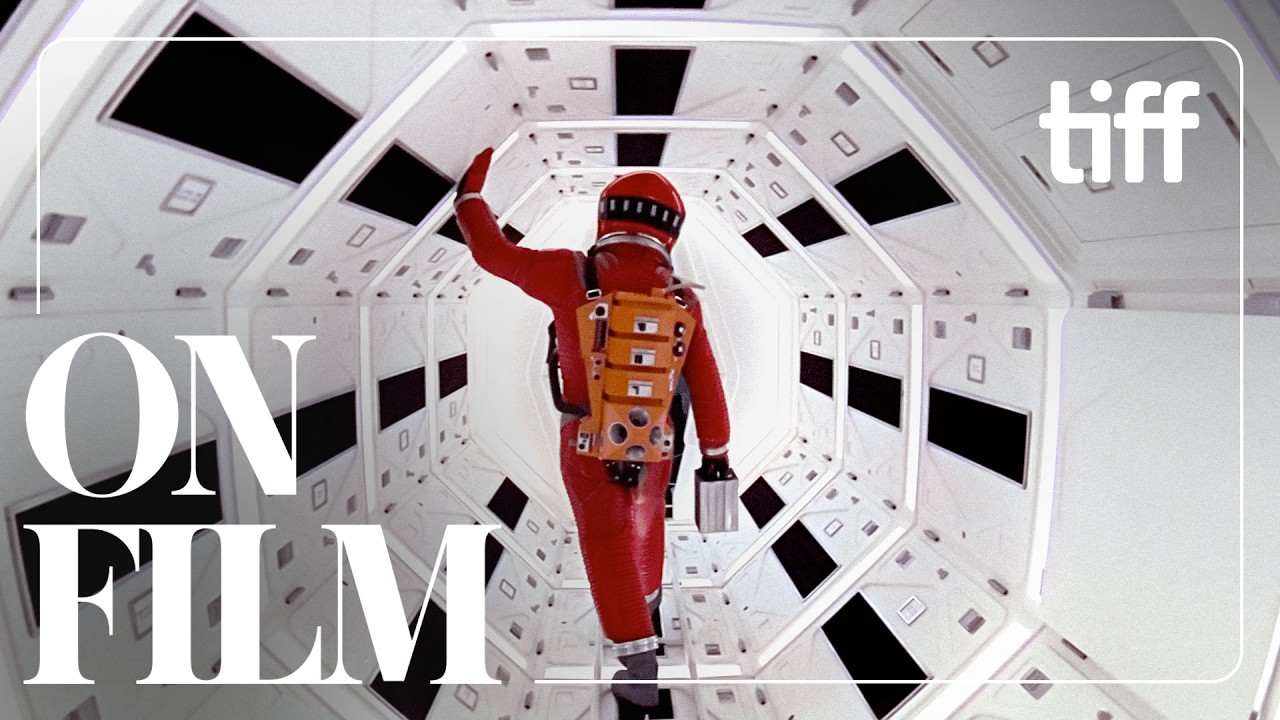
![Watch film 2001: A Space Odyssey | 2001: A Space Odyssey - Trailer [1968] HD](/amdb/images/posters/7/v/2001-a-space-odyssey-1968-0c3pD.webp)
What's left behind the scenes
- The film is based on the short story "The Sentinel" by Arthur C. Clarke, which was published in 1951. Clarke developed the screenplay with Stanley Kubrick before writing the novel "2001: A Space Odyssey," which was released immediately after the film.
- It is known that during the filming, Kubrick consulted with NASA specialists. Later, NASA named one of its space probes "2001 Mars Odyssey" in honor of the film.
- To simulate the lunar surface, Kubrick imported, washed, and repainted several tons of sand.
- According to Isaac Asimov, Kubrick wanted to take out insurance in case an extraterrestrial civilization was discovered before the film's premiere. However, the major London insurance company Lloyd's refused him.
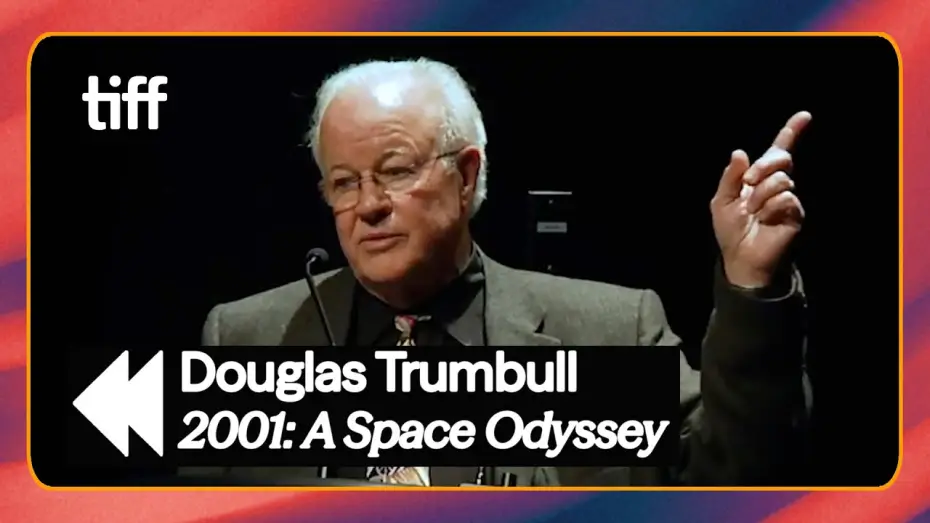
- According to Douglas Trumbull, the footage shot for the film was nearly 200 times longer than the final cut.
- One of the film's scientific consultants, Marvin Minsky, nearly died on set after a wrench fell from the set and hit him.
- Arthur C. Clarke said after the premiere: “If you manage to fully understand '2001: A Space Odyssey,' then for us it’s a failure, because we were trying to give far more questions than answers.”
- Initially, it was planned to voice "HAL 9000" with a female voice.
- In some computer messages, you can notice sections of program code written in Fortran.
- In the scene of the spacewalk, original recordings of the breathing of cosmonaut Alexei Leonov, who was the first in history to perform a spacewalk in 1965, were used as the soundtrack.
- Frank Miller, who voices flight control, was a member of the US Air Force in real life and controlled actual missions. He was approved for the role because his voice was the most authentic that filmmakers could find. Inexperienced and nervous, he couldn't help but tap his foot during the recording session, so Stanley Kubrick, who repeatedly came to the audio recording sessions, folded a towel, put it under Miller's feet, and told him he could tap as much as he liked.
- The rotating space station was proposed by NASA specialist Wernher von Braun.
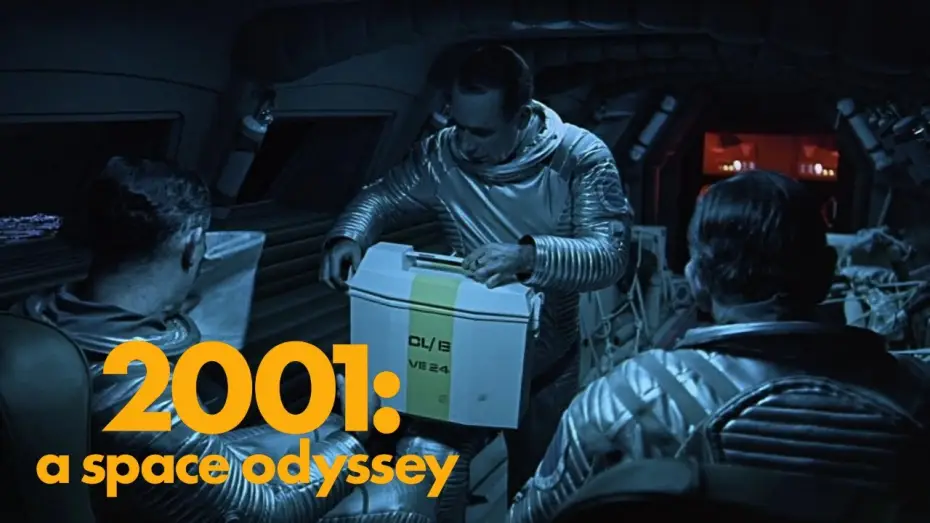
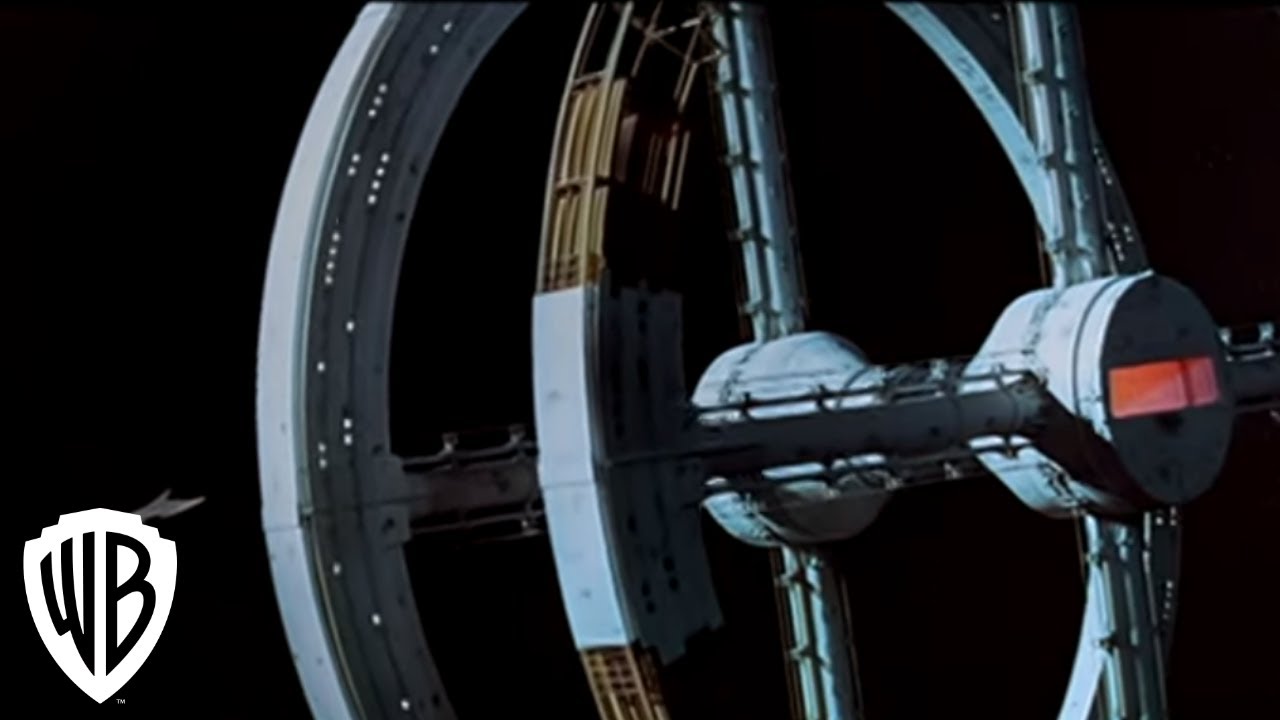
- The model of the space station, 2.4 meters in diameter, was packed with miniature incandescent light bulbs – fiber optics or LEDs didn't exist at that time. Filming often had to be stopped because the bulbs emitted so much heat they threatened to melt the plastic structure.
- The Orion landing module was almost a meter in diameter and had retractable legs for filming the landing. To create it, they specifically went to the Grumman plant to see how the lunar module's leg was positioned, as well as the nozzles that blew dust away during landing. A total of 103 designers worked on the film, who were actually specialists of various professions: among them were architects, lithographers, sculptors, artists, welders, and even bone carvers.
- In his research, Kubrick came across the Orion project, conducted by Freeman Dyson of the Princeton Institute for Advanced Study. These works proposed the concept of a nuclear-powered spacecraft. These studies were later shut down, but Kubrick was then captivated by the idea that bombs could propel us into space. He started changing the Discovery's design again. But then common sense prevailed: firstly, mentioning nuclear bombs would refer the viewer to Kubrick's film 'Dr. Strangelove or: How I Learned to Stop Worrying and Love the Bomb' (1963), and secondly, a ship that moved jerkily with the help of explosions would look comical. Therefore, the redesign of the ship was cancelled. But the name 'Orion' remained in the film – that’s what the landing module is called.
- Motion control systems hadn't been invented yet at that time, so Kubrick had to invent a prototype and use multiple exposure technology.
- To show the spacecraft against the backdrop of the Moon with some movement in its window, a photograph of the spacecraft was glued to glass and placed in front of the camera, filmed against a well-lit white background. Thus, the photograph of the spacecraft created a mask for subsequent printing into a frame of two different images (the mask can always be inverted, creating a black background in place of white). The image in the ship’s control room was printed using rear projection.
- The star field seen through the windows of the Orion spacecraft traveling from Earth to the orbital station and the Aries spacecraft traveling from the station to the Moon was created using a sheet of metal painted black, with holes manually drilled to represent the stars when lit from behind. By moving the metal sheet, Kubrick simulated the movement of these spacecraft. However, there was a problem: all these pinpricks, which looked wonderful on 35mm film, turned out to be too bright for 70mm. And if they looked great on a 70mm frame, they almost disappeared on 35mm. Ultimately, the star field was filmed on 65mm film using animation techniques. Jupiter, Earth, the Moon, and all the necessary masks for the film were also photographed there, on an animation easel. The views of the Moon are real photographs of it. During the making of the film, three attempts were made to create models of the Moon, and all of them were unsuccessful.
- In 2011, during a lawsuit between Apple and Samsung, Samsung argued that the prototype of the iPad could be seen in this film.
- If you replace each letter in HAL with the next one in the English alphabet, you get IBM.
- After the film's release in 1968, it was discovered that the works of Hungarian composer György Ligeti had been used by the director without permission, which led to a lengthy legal dispute between the composer, Stanley Kubrick, and Metro-Goldwyn-Mayer.
- In 1991, the film was included in the U.S. National Film Registry.
- Shortly after completing filming of "Dr. Strangelove or: How I Learned to Stop Worrying and Love the Bomb" (1963), Kubrick became interested in the question of life beyond Earth and decided to make a "good, notorious science fiction film," beginning a search for a suitable co-author from the science fiction community. Roger Caras of Columbia Pictures recommended Arthur C. Clarke as a partner. And although Kubrick was convinced that Clarke was a "recluse, eccentric living in a tree," he still sent the writer a telegram, to which Clarke responded with his agreement and "terrible enthusiasm" (as he himself put it), and also wondered why "Kubrick thinks I'm a recluse?" The first meeting between Kubrick and Clarke took place on April 22, 1964, in New York.
- Kubrick invited Osamu Tezuka for the position of production designer, impressed by his Astro Boy series, but received a refusal.
- When Stanley Kubrick first met with Arthur C. Clarke, he wanted to make a film about the relationship between man and the Universe, and Clarke (as he himself put it) intended to "create a work of art that would evoke wonder, awe… and even, if appropriate, horror." Clarke offered Kubrick six of his stories, and in May, Kubrick chose one of them – "The Sentinel" – as the basis for the future film. To gather more material and expand the plot, he spent the remainder of 1964 reading scientific papers on anthropology, watching science fiction films, and brainstorming sessions. Clarke and Kubrick spent two years transforming "The Sentinel" into a novel, and then into a screenplay for the film.
- Astronomer Carl Sagan writes in his book that Stanley Kubrick consulted him about extraterrestrial life. Kubrick wanted to involve actors to portray alien humanoids, but Sagan was convinced that extraterrestrial lifeforms were unlikely to resemble earthly life, and such a depiction would add an element of falseness to the film. Sagan suggested only indicating the existence of extraterrestrial intelligence, but not depicting it. He attended the premiere and was pleased that he had been able to provide some assistance. Kubrick hinted at the existence of an invisible alien race in the film, suggesting in a 1968 interview that, after millions of years of evolution, these alien humanoids had become immortal machines, and then beings of "pure energy and spirit."
- Stanley Kubrick was very attentive to detail: instructions were made for the use of various units of spacecraft for filming.
- In a release published on February 23, 1965, Kubrick named the future film Journey Beyond the Stars. Clarke recalled: “It was no later than eleven months after we began—April 1965—that Stanley came up with the title ‘2001: A Space Odyssey.’ As far as I remember, it was entirely his idea.” Kubrick was inspired for the title by Homer’s epic, The Odyssey: “It occurred to us… what for the Greeks were the boundless seas, for our generation is that same mystery, the Cosmos.”
- Principal photography began on December 29, 1965, at Shepperton Studios (Shepperton, England). The studio was chosen because it could accommodate a pit measuring 18×36×18 meters for filming the excavation scene in the Tycho crater. In January 1966, production moved to the British MGM studio, where location shooting took place, as well as the creation of special effects.
- Filming with actors was completed in September 1967, and from June 1966 to March 1968, Kubrick was mainly occupied with developing 205 special effects for the film. The film’s editing was completed by Kubrick in March 1968, shortly before its release.
- According to Jan Harlan, during the work on the film, Kubrick listened to Anton Bruckner, Jean Sibelius, and Gustav Holst.
- Initially, Kubrick turned to composer Alex North to write the music for the film, as he had done for “Spartacus.” But ultimately, the director decided to abandon this soundtrack in favor of classical music, which North learned only after the premiere and was upset about.
- Cut scenes from "2001: A Space Odyssey" are usually divided into two categories: scenes that were removed during editing, and scenes that Kubrick removed after the premiere.
- Scenes cut during editing: A scene showing children of colonists living on the Moon (the scene featured a classroom where an art lesson was taking place; Kubrick's two daughters were involved in the child extras); Heywood Floyd buys a galago pup for his daughter via videophone in a department store; A 10-minute black-and-white reel filmed as an interview with real scientists (including theoretical physicist Freeman Dyson), where they discussed extraterrestrial life. Kubrick removed this scene even after the very first test screening arranged for the «MGM» management.
- There is a significant difference between Kubrick's film and Arthur C. Clarke's novel "2001: A Space Odyssey": in the book, the third "monolith" is not in orbit around Jupiter, but on the surface of Japetus, a moon of Saturn, where the "Discovery" expedition is headed. The difference was explained at the time by the fact that Kubrick could not find a way to realistically capture Saturn's rings in the film using the technology available at the time, so the setting of the plot was decided to be moved to Jupiter.
- The first word is spoken only 25 minutes into the film.
- The chess game in which the astronaut loses to the computer recreates the game between A. Resch and V. Schlage, played at a tournament in Hamburg in 1910 (it was initially believed that S. Kubrick created it himself, having played chess for stakes in his youth).
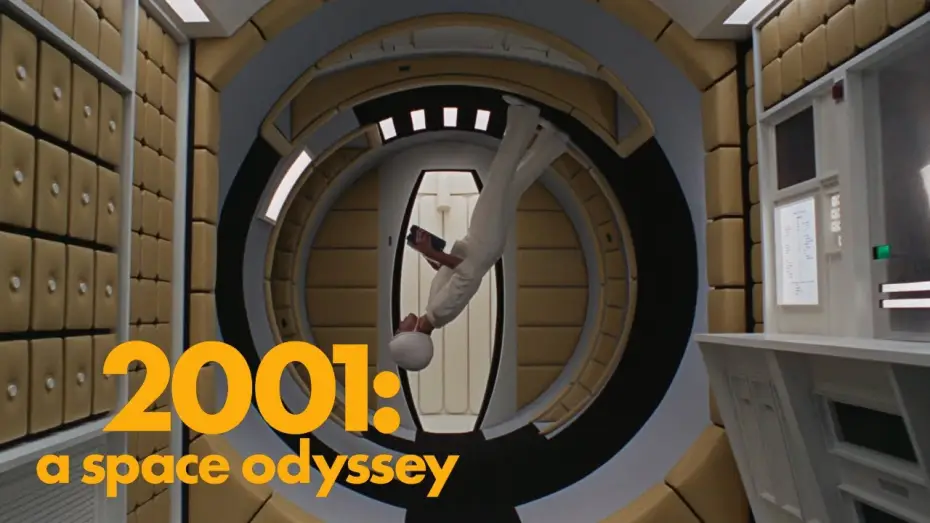
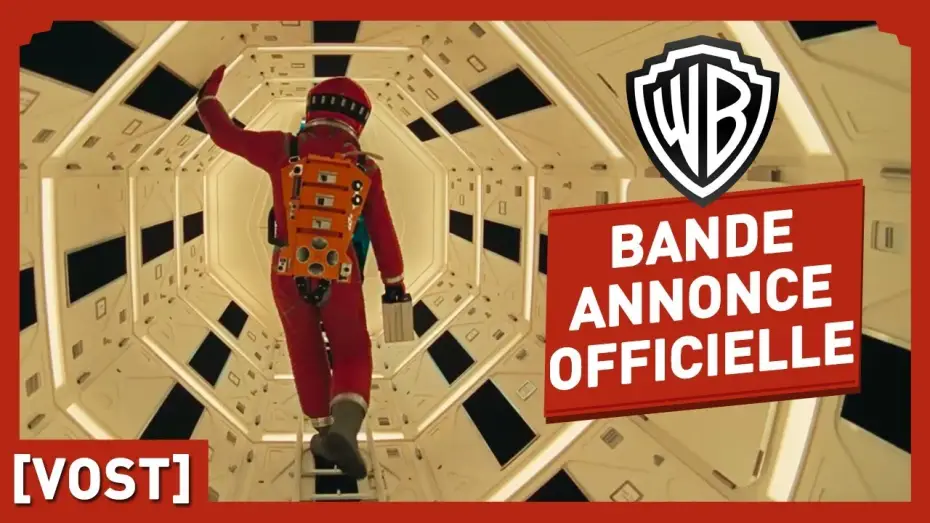
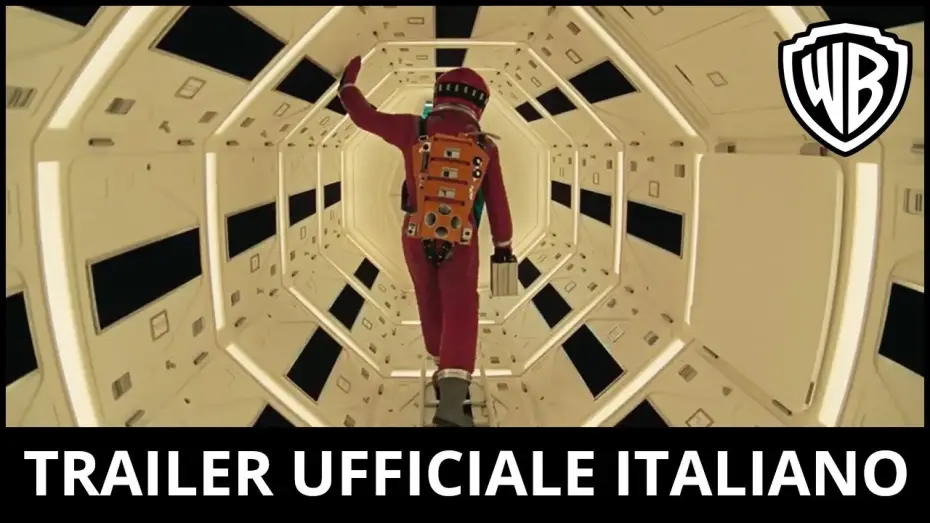
- Scenes cut after the premiere: Several additional shots were present in the prologue "The Dawn of Man" that further revealed the changes in the behavior of the apes after being affected by the Monolith; Brief shots showing everyday life on the "Discovery" (most of which should have been placed at the very beginning of the "Jupiter Mission" scene, when the audience was first shown Bowman and Poole); Bowman retrieves a spare antenna part from a special niche in the octagonal corridor; The flight of Bowman to the antenna from the shuttle; Poole prepares to enter the shuttle and fly into space (the scene visually mirrored a similar scene with Bowman and was the longest scene removed in this edit. Kubrick cut it because one critic after the premiere said that Frank Poole's death after this scene looked disgusting); HAL disconnects radio communication with Poole's shuttle before killing him; While wandering in an alien room in a spacesuit, Bowman finds slippers and a dark robe, which he later puts on (due to this cut, a continuity error is noticeable: Bowman walks deeper into the room on the opposite side from the bathroom entrance, and in the next shot enters the bathroom itself; when he enters, a slipper can be seen on a bench near the bed, and a robe on the bed itself, although they were not there in the previous shots); In most release prints of this edit, the musical compositions in the introduction, intermission, and end credits were shortened, but in most DVD releases, these fragments were restored.
Did you like the film?
 Auditions in India
 Casting calls in USA
 Castingi w Polsce
 Кастинги в Україні
