Goldfinger - videos, teasers and stills from filming
All videos, teasers and footage from the filming of the film "Goldfinger"
Goldfinger (1964)
Timing:
1:50 (110 min)

7.355/10
3935
3935

7.637/10
28352
28352

7.7/10
216000
216000
What's left behind the scenes
- During the filming of the fight scene between Bond and Oddjob at Fort Knox, Sean Connery injured his back, which temporarily delayed production. Rumor has it that this injury allowed Connery to negotiate more money from the producers for the next installment.
- Nadia Rejean, who played a dancer in the nightclub, had previously appeared in another James Bond film – “From Russia with Love” (1963).
- In one episode, future renowned director Garry Marshall (“Pretty Woman”) played one of the American gangsters.
- Actress Honor Blackman specifically left the television series “The Avengers,” where she played Cathy Gale, to appear in “Goldfinger.” In one episode of “The Avengers” from 1965, its creators jokingly alluded to this circumstance: John Steed receives a postcard from Cathy Gale, sent from Fort Knox.
- Actor Gert Fröbe did not speak English well, so he was dubbed by Michael Collins.
- The sign at Fort Knox reads "General Rasion." Charles Rasion was the film's technical consultant.
- The idea of the "golden girl" was based on a real event. A Swedish model painted herself with gold paint and ultimately died of asphyxiation.
- In the original script, the first dialogue between Bond and Pussy Galore was as follows: "Hello. I'm Pussy Galore." - "That much is obvious. What's your name?" (Pussy Galore can be translated from English as 'Kitty-for-All').
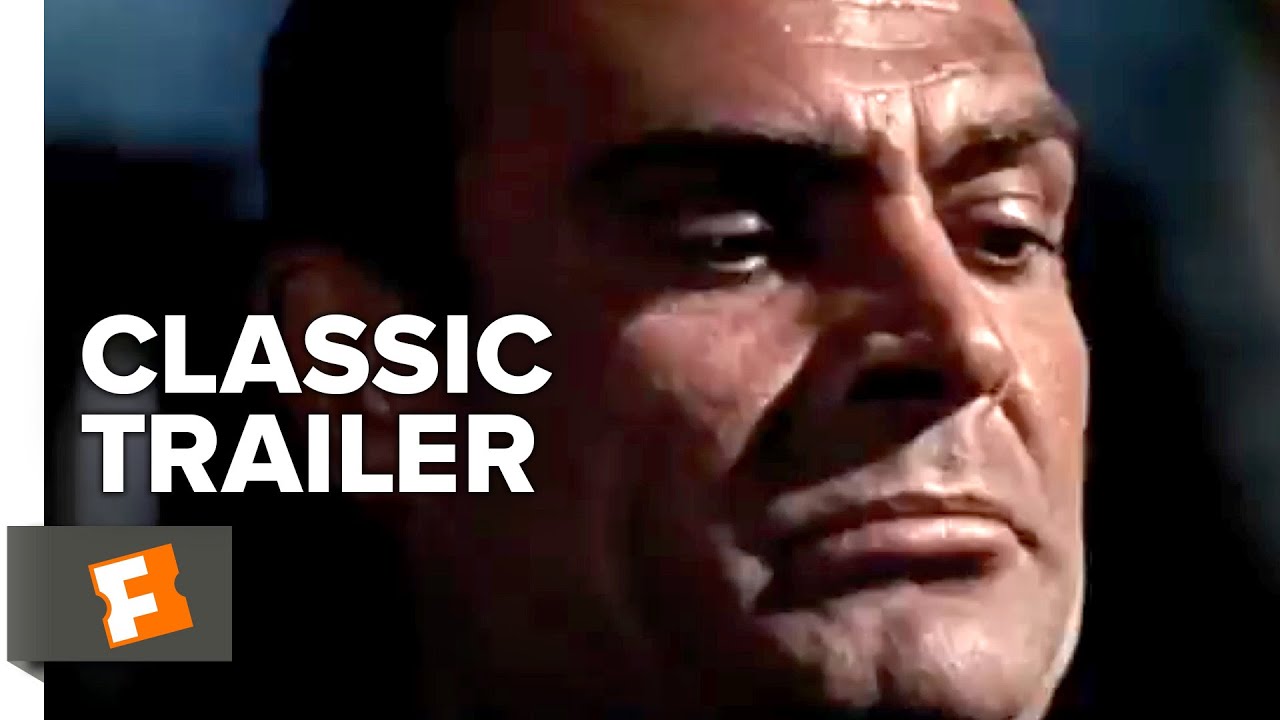
- While filming scenes in cars, Sean Connery often took off his trousers, leaving only the upper part of his suit: it always got hot in the confined space, and sweat would appear on his face despite the makeup artists' efforts.
- All scenes with James Bond in America were filmed in London – in the Pinewood Studios pavilions.
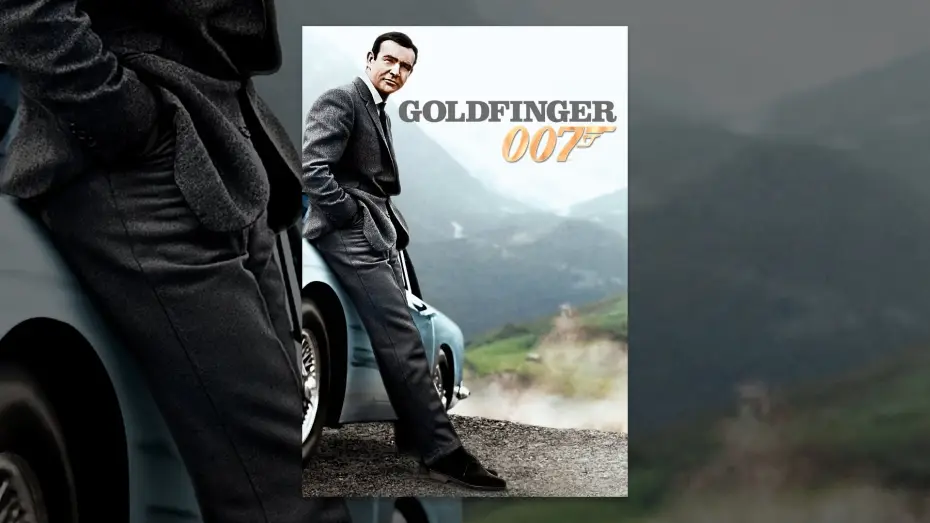
- The first Bond film to feature the legendary Aston Martin DB5, which would appear in at least four more Bond films. Specifically, in Casino Royale, Bond refers to the car as an "Aston Martin from 1964," referencing the release year of Goldfinger, even though the model was produced starting in 1963.
- The gold in Fort Knox is stacked too high in the film – in reality, the lower rows would be crushed by the weight above.
- Initially, Aston Martin (a British manufacturer of luxury cars) was reluctant to lend their cars to filmmakers, and the film’s producers (Albert R. Broccoli, Harry Saltzman, Stanley Sopel, Terence Young) had to pay for them. The film proved so successful at the box office that subsequently, the producers of the Bond films received the cars used in filming exclusively for free.
- Sean Connery, who played agent 007, didn’t even have to travel to the United States for filming. All the scenes in which his character is supposedly in the US were filmed at Pinewood Studios near London. This explains why, when switching on the light, Bond flips the light switch down instead of up (this refers to the scene where Bond, regaining consciousness, returns to the bedroom and discovers the body of Jill, played by Shirley Eaton, whose entire body was painted gold, which led to her death). According to director Guy Hamilton, only Seka Linder (who played Felix Leiter) was filmed directly in Miami from the main cast. All other actors involved in scenes set at the Miami resort were filmed in the UK. This includes Connery, Gert Fröbe (who played the main antagonist, Auric Goldfinger), Eaton (who played Jill, Goldfinger’s girlfriend), Margaret Nolan (who played the masseuse, Dink), and Austin Willis (Simmons, whom Goldfinger defeats at cards). Rear projection was used when filming these scenes (a combined filming technique based on the projection of actors and set elements against an arbitrary background), and when Fröbe and Simmons were in focus, long shots used stunt doubles.
- The replica of the US gold reserve vault at Fort Knox, constructed at Pinewood Studios, was surprisingly accurate, especially considering that no filmmakers were allowed access to the real vault for security reasons. The replica looked so convincing that security had to be stationed around it to prevent anyone from attempting to steal the prop gold bars in the dark. After the film's release, production designer Ken Adam received a letter from Fort Knox personnel congratulating him and the entire team on the accuracy of the vault's reproduction. A three-dimensional model of the Fort Knox surroundings, which Goldfinger showed to the heads of criminal organizations, is now on display for visitors at the actual Fort Knox.
- Gert Fröbe had certain reservations about Goldfinger's use of a nerve gas in the Fort Knox robbery scene. Fröbe feared that this nuance would inevitably lead viewers to contemplate concentration camps – especially considering that he himself was German. In reality, 'Goldfinger' was banned in Israel for many years after Fröbe admitted that he had once been a member of the NSDAP (National Socialist German Workers' Party). The ban was lifted after a Jewish family came forward, claiming that Fröbe had saved them from execution during World War II.
- Harold Sakata (who played Goldfinger’s bodyguard) suffered a serious burn to his hand while filming the scene of his character’s death, but he remained in character and continued acting until director Guy Hamilton shouted: “Cut!”
- Bond tells Goldfinger that, considering the weight of the gold, it would be simply impossible to remove it from Fort Knox, so Goldfinger will simply subject it to radioactive contamination, which will multiply the value of his personal gold reserves many times over. In the 1969 novel, Goldfinger planned to remove the gold, which, as critics rightly pointed out shortly after the book's release, was impossible. In Hamilton's film adaptation, Goldfinger's plan was accordingly changed, incorporating the critics' objections to the novel into Bond's reasoning.
- Ian Fleming borrowed the idea of a person dying after being covered in gold paint from the horror film 'Bedlam' (1946) by Mark Robson. In reality, however, death from so-called 'cutaneous asphyxiation' as a result of covering the skin over the entire body with paint is a work of fiction. This assumption is based on the incorrect premise that a person breathes – even partially – through their skin, a premise that has been disproven since the Renaissance. The myth of 'cutaneous asphyxiation' still persists, although it is occasionally debunked. It exists, in particular, due to an 'urban legend' claiming that Shirley Eaton (who played Jill Masterson) died of asphyxiation on the set. In fact, nothing like that happened; precautions were taken during filming, a doctor was constantly present, and the actress's stomach was not painted precisely to eliminate even the slightest possibility that the 'cutaneous asphyxiation' thesis could be true. Although 'cutaneous asphyxiation' as such is simply impossible, a person can die from overheating if the pores of the skin over the entire body are blocked for a long time, as this will prevent sweating, which is an essential element of body temperature regulation.
- Sean Connery, the actor playing Agent 007, didn't even have to travel to the United States for filming. All the scenes in which his character is supposedly in the US were filmed in the Pinewood Studios pavilions near London. This explains why, when switching on the light, Bond flips the light switch down instead of up (this refers to the scene where Bond, regaining consciousness, returns to the bedroom and discovers Jill, played by Shirley Eaton, whose entire body was painted gold, which caused her death). According to director Guy Hamilton, only Seka Linder (who played Felix Leiter) filmed directly in Miami from the main cast. All other actors involved in scenes set at the Miami resort filmed in the UK. This includes Connery, Gert Fröbe (who played the main antagonist, Auric Goldfinger), Eaton (who played Jill, Goldfinger's girlfriend), Margaret Nolan (who played the masseuse, Dink), and Austin Willis (Simmons, whom Goldfinger played cards against). Rear projection was used for filming these scenes (a combined filming technique based on projecting actors and elements of the scenery onto an arbitrary background), and when Fröbe and Simmons were in focus, long shots were used with stand-ins.
- Gert Fröbe had certain doubts regarding Goldfinger's use of nerve gas in the Fort Knox robbery scene. Fröbe feared that this nuance would inevitably lead viewers to contemplate concentration camps, especially considering he himself was German. In reality, 'Goldfinger' was banned in Israel for many years after Fröbe admitted he had once been a member of the NSDAP (National Socialist German Workers' Party). The ban was lifted after a Jewish family came forward, claiming that Fröbe had saved them from execution during World War II.
- Ian Fleming borrowed the idea of a person dying after being covered in gold paint from the horror film 'Bedlam' (1946) by Mark Robson. In reality, death from the so-called 'cutaneous asphyxiation' as a result of covering the skin with paint is a work of fiction. This assumption is based on the incorrect premise that a person breathes – even partially – through their skin, a fallacy disproven as early as the Renaissance. The myth of 'cutaneous asphyxiation' still persists, although it is occasionally debunked. It exists, in particular, thanks to an 'urban legend' claiming that Shirley Eaton (who played Jill Masterson) died of asphyxiation on the set. In fact, nothing like that happened; precautions were taken during filming, a doctor was constantly present, and the actress's stomach was not painted to avoid even the slightest possibility of the 'cutaneous asphyxiation' theory being true. Although 'cutaneous asphyxiation' as such is simply impossible, a person can die from overheating if the pores of the entire skin are blocked for a long time, as this will prevent sweating, which is an essential element of body temperature regulation.
Did you like the film?
 Auditions in India
 Casting calls in USA
 Castingi w Polsce
 Кастинги в Україні
