Blade Runner
Man has made his match...now it's his problem.
Blade Runner (1982)
Timing:
1:58 (118 min)

7.9/10
14969
14969

7.747/10
220774
220774

8.1/10
878000
878000
Country
Production
Genre
Science Fiction, Drama, Thriller
Budget
$28 000 000
Revenue
$41 722 424
Director
Actors
Scenario
Producer
Michael Deeley, Run Run Shaw
Operator
Composer
Artist
Stephen Dane
Audition
Jane Feinberg, Mike Fenton
Editing
Marsha Nakashima
All team (126)
All team (126)
Short description
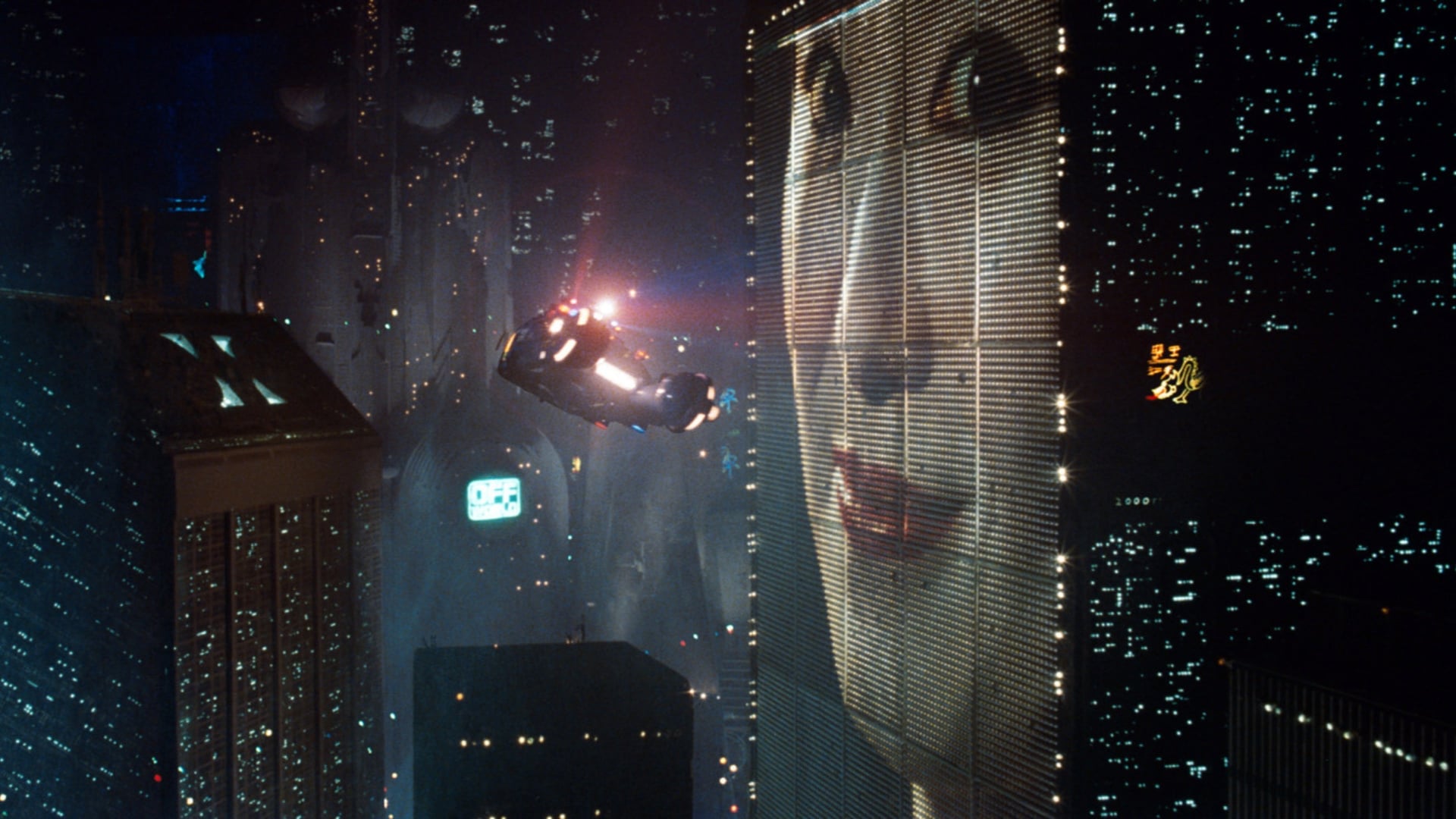
In the smog-choked dystopian Los Angeles of 2019, blade runner Rick Deckard is called out of retirement to terminate a quartet of replicants who have escaped to Earth seeking their creator for a way to extend their short life spans.
What's left behind the scenes
- The film is based on Philip K. Dick's novel 'Do Androids Dream of Electric Sheep?' (1968).
- The pupils of replicants sometimes glow, but, as the director assured, this was done only for the audience to distinguish them from humans.
- According to the plot of this film, a rather successful video game was released in the USA in 1997. In addition to the video game, director Barry Green filmed a seven-minute documentary, 'The Making of Blade Runner' (1997).
- Dustin Hoffman was initially chosen for the role of Deckard.
- The overall atmosphere of the film is in the spirit of the painting 'Nighthawks' by artist Edward Hopper, a photograph of which he always kept with him and often showed to the film crew as a reminder.
- The film was shot primarily in Los Angeles, but some studio filming also took place in Shepperton, England (Surrey county).
- Deborah Harry was the producers' initial choice for the role of Pris.
- The shooting was so grueling for the crew that the technical staff began wearing t-shirts with the inscription "Will Rogers never met Ridley Scott," which is a reference to the famous saying by Will Rogers that he never met a man he didn't like.
- The exhausted crew nicknamed the film "Blood Runner."
- When Philip K. Dick watched the film, he exclaimed that this is exactly how he had envisioned it when he wrote the book. Notably, Ridley Scott never read the book and created the film's visual style based on his own ideas of a bleak future.
- The building used for filming the final scene between Deckard and Roy also served as the location for an episode of "The Twilight Zone" (1963), "The Demon With a Glass Hand" (1964), starring Robert Calp.
- When the film was released, many claimed that the opening scene showed a chemical plant in Wilton, England. However, it was actually a model 5.5 meters wide and 3.9 meters high.
- In the scene where Deckard and Gaff fly up to the police building, a model of the Millennium Falcon – the spaceship from Harrison Ford’s "Star Wars" (1977) – can be seen in the lower left corner of the screen, “disguised” as a building.
- Philip K. Dick wanted Victoria Principal to play the role of Rachael.
- James Caan was also considered for the role of Deckard.
- The computer display in Gaff's spinner shows the same information as the monitors on the Nostromo in Alien (1979), directed by Ridley Scott.
- Upon release, the film received a lukewarm reception from critics. Many of them, including Ebert and Siskel, wrote negative reviews. However, ten years later, in 1992, the two prominent film critics revised their opinion of the film and gave it high marks.
- Pris's (Daryl Hannah) date of birth is February 14, 2016.
- When Gaff speaks with Deckard in the Japanese diner, he speaks partially in Hungarian. For example, he says: “Azonnal kövessen engem,” which means “Follow me immediately.” He also curses in Hungarian, using the word “Lófasz.” Gaff continues: “Nehogy mar, te vagy a Blade Runner,” – “Absolutely not, you are the Blade Runner.” After this, Gaff begins to speak in another language.
- The sets for Deckard's apartment were modeled by Charles Breen and built on a Warner Bros. studio soundstage. The sets are based on the design of the Ennis-Brown House in Los Angeles, created by Frank Lloyd Wright.
- This is one of the first films to be released in a director's cut several years after its original release. In doing so, the studio gave the director creative freedom to make changes to the film and recreate his vision.
- When Deckard (Harrison Ford) stops Rachel (Sean Young) as she leaves her apartment, he pushes her. The actress’s expression of pain and shock was genuine: according to Young, Ford pushed her so hard that she was incredibly angry with him.
- According to a 2004 study by the British newspaper The Guardian, 60 scientists chose this film as the "Best Science Fiction Film of All Time." In this survey, "Blade Runner" took first place, narrowly beating "2001: A Space Odyssey."
- For many years, rumors circulated that Harrison Ford deliberately tried to read the voiceover text as poorly as possible in order to get the studio to abandon its use. Ford steadfastly denied these rumors, stating that a total of six different versions of the voiceover monologue were recorded, however, according to him, none of these versions suited the film, as voiceover was not originally intended for the picture.
- Part of Roy Batty's final monologue is an improvisation by Rutger Hauer.
- Joanna Cassidy (Zora) was completely unfazed during the filming of scenes with a snake around her neck, as it was her own python.
- According to the terms of the agreement, Bud Yorkin and Jerry Perenchio would receive the rights to the film if the film's budget was exceeded.
- In 2000-2001, Ridley Scott edited another version of the film, which was never released because Bud Yorkin and Jerry Perenchio, who owned the rights to the film, did not consent to its release.
- Editor Terry Rawlings suggested removing the voice-over monologues from the film. Ridley Scott heeded his advice and did not include voice-over narration in the director's cut.
- Outside the artificial eye manufacturing laboratory, on the left side of the door, you can see a drawing with the inscription in Chinese characters: “Chinese are good, Americans are bad”.
- One of the first films released on DVD immediately after the format's emergence.
- They tried to involve the famous French artist Jean Giraud (Moebius) in the work, but he refused (which he later greatly regretted), so the conceptual graphics and design were done by the equally famous Syd Mead.
- Nina Axelrod and Barbara Hershey auditioned for the role of Rachel.
- Stacy Nelkin and Monique van de Ven auditioned for the role of Pris.
- In 1993, Ridley Scott released a director's cut of the film, removing some moments and adding new footage: for example, he cut the voiceover and added scenes of Deckard's dreams. As a result, the question of Deckard's nature – whether he is a replicant or a human – became central.
- In the scene where Pris attacks Deckard after several somersaults, the director decided to use a professional gymnast. But he rehearsed this scene so many times that the gymnast reached complete exhaustion. As a result, the scene was filmed with the gymnast during a lunch break.
- The end credits contain unused footage from Stanley Kubrick's 'The Shining'.
- In some versions of the film, characters mention another replicant who dies before the final duel between Deckard and Batty. In the first conversation between Deckard and Bryant, the latter initially says there are four replicants remaining, but later adds that six replicants escaped, and one of them was killed during the escape. Thus, five fugitives remain. The fact is that the original screenplay featured another replicant – Mari. However, due to time and budget constraints, the filmmakers decided not to include this character in the film. According to M. Emmet Walsh, who played Bryant, the dialogue between Deckard and Bryant was specifically reshot to match the changes in the script, but Scott for some reason decided to include only part of the new dialogue in the final edit, resulting in this plot inconsistency.
- There are at least three draft versions of the film's screenplay. Although the general plot development is the same in all of them, the differences in detail are significant: 1) The first version of the script, dated July 24, 1980, was written by Hampton Fancher. In this version, the replicants are called androids. Deckard is undoubtedly human. On average, five to six questions were required to determine a replicant in the Voight-Kampff test (as opposed to thirty in later script versions). It took 13 questions to determine if Rachel was a replicant. The role of the fifth android, Mari, is noticeably expanded. Batty kills Tyrell not in his company's building, but in his mansion. He also kills Tyrell's bodyguard, his maid, and his entire family. Sebastian also dies at the hands of Batty. Deckard kills Mari, Pris, and Batty. After escaping the city with Rachel, Deckard later kills her because he understands that sooner or later another Blade Runner will do the same. 2) The second version of the script is dated December 22, 1980. In addition to Hampton Fancher, the name David Webb Peoples is listed as the author. This version lacks the chess game, but it is the most cohesive, with almost no plot holes, and contains details absent from the finished film. The replicants are called replicants here. The plot includes a sixth replicant, Hodge, who attacks Batty and Gaff in Leon's apartment. Mari is also present in the plot. Deckard kills her in Sebastian’s apartment. The viewer was supposed to see Chu after he froze to death. ‘Tyrell Corporation’ is called ‘Nekko Corporation’. Instead of praising Deckard’s ability to identify replicants, Bryant criticizes him for killing a replicant (Zora) in public. Rachel kills Leon, thereby saving Deckard. In this version of the script, Tyrell turns out to be a replicant. After Roy kills him, he demands that Sebastian take him to the real Tyrell. Sebastian admits that Tyrell was found to have an unknown illness and is currently in cryogenic freeze, awaiting the invention of an antidote. Roy and Sebastian find the frozen Tyrell. Roy demands that Sebastian thaw Tyrell. Sebastian admits that Tyrell died a year ago, and a replicant is also in the cryogenic capsule. Roy then kills Sebastian. Bryant tells Deckard that Gaff is going to kill Rachel. Batty saves Deckard and dies because his lifespan has expired. After Deckard returns home, Bryant calls him to warn that Gaff is on his way to Deckard’s apartment. Deckard and Rachel escape the city. Rachel asks Deckard to kill her before another Blade Runner does. Deckard agrees. Although Deckard is likely human in this version of the script, he sympathizes with the replicants, comparing himself to them. 3) The third version of the script is dated February 23, 1981. It is closest to the finished film. This version includes voice-over narration, as well as plot inconsistencies regarding the number of replicants in the city. In the finale, Deckard and Rachel fly out of the city, but Gaff's spinner is visible behind them.
- In July 2000, Ridley Scott stated that Deckard is a replicant. Shortly after, Harrison Ford commented on this statement: “We came to an agreement [during filming – ed.], that Deckard is definitely not a replicant.”
- In the scene where Rachel plays the piano, the sheet music in front of her is written for a different melody, and the score is actually intended for guitar.
- The plot of this film revolves around a fairly successful video game released in the US in 1997. In addition to the video game, director Barry Green shot a seven-minute documentary, “Making ‘Blade Runner’ (1997).”
- The overall atmosphere of the film is in the spirit of Edward Hopper's painting “Nighthawks,” a photograph of which he always carried with him and often showed to the crew as a reminder.
- The filming was so exhausting for the crew that the technical staff began wearing t-shirts with the inscription “Will Rogers never met Ridley Scott,” which is a reference to Will Rogers’ famous saying that he never met a man he didn’t like.
- In the scene where Deckard and Gaff fly up to the police building, a Millennium Falcon model – the spaceship of Harrison Ford’s character in “Star Wars” (1977) – can be seen in the lower left corner of the screen, “disguised” as a building.
- When Gaff speaks to Deckard in the Japanese restaurant, he partially speaks in Hungarian. For example, he says: “Azonnal kövessen engem,” which means “Follow me immediately.” He also swears in Hungarian, using the word “Lófasz.” Gaff continues: “Nehogy mar, te vagy a Blade Runner,” – “Don’t you dare, you are the Blade Runner.” After that, Gaff begins to speak in another language.
- According to a 2004 study by the British newspaper The Guardian, 60 scientists selected this film as "The Best Science Fiction Film of All Time." In this poll, "Blade Runner" took first place, narrowly beating "2001: A Space Odyssey."
- Outside the eye-manufacturing laboratory, on the left side of the door, you can see a drawing with the inscription in Chinese characters: "Chinese are good, Americans are bad."
Did you like the film?
 Auditions in India
 Casting calls in USA
 Castingi w Polsce
 Кастинги в Україні
