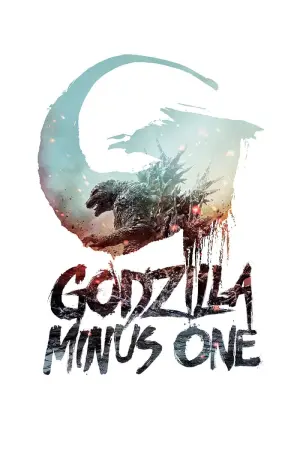
Godzilla Minus One
Postwar Japan. From zero to minus.
ゴジラ-1.0 (2023)
Timing:
2:5 (125 min)

7.573/10
3169
3169

6.885/10
25171
25171

7.6/10
201000
201000
![Watch film Godzilla Minus One | Official Trailer 2 [Subtitled]](https://i.ytimg.com/vi/VvSrHIX5a-0/maxresdefault.jpg)
Country
Production
Genre
Action, Drama, Science Fiction, Horror
Budget
$15 000 000
Revenue
$113 676 322
Website
Director
Actors
Ryunosuke Kamiki, Minami Hamabe, Yuki Yamada, Munetaka Aoki, Hidetaka Yoshioka, Sakura Ando, Kuranosuke Sasaki, Saki Nakatani, Mio Tanaka, Miou Tanaka
All actors and roles (10)
All actors and roles (10)
Scenario
Producer
Minami Ichikawa, Keiichiro Moriya, Kenji Yamada, Kazuaki Kishida, Go Abe, Keichiiro Moriya, Shuji Abe, Minami Ichikawa, Hisashi Usui
Operator
Composer
Artist
Audition
Tsuyoshi Sugino
Editing
Short description
In postwar Japan, a new terror rises. Will the devastated people be able to survive... let alone fight back?
What's left behind the scenes
- Instead of creating the monster's roar from scratch, the film's creative team simply played the original Godzilla roar through speakers and recorded the resulting sound.
- Gareth Edwards, director of the 2014 "Godzilla" film, attended a preview screening of the film. According to his own words, watching this film, he experienced feelings of envy and jealousy. Edwards stated that this is exactly what a Godzilla film should be like.
- Godzilla owes its appearance to computer technology.
- "Minus One" in the film's title refers to the fact that Japan had already suffered in World War II, i.e. was reduced to zero, and with the appearance of Godzilla it went even further into the negative, as reflected in the Japanese slogan of the film: "Post-war Japan. From zero to minus."
- In reality, Japanese fighters in World War II did not have an ejection system to save the pilot, as shown in the film. Considering that the propeller of the fighter was located at the rear, it first had to be shot off with directed explosions, and only then could the pilot jump with a parachute. Such systems were not in use in Japanese aviation until the end of the war.
- In one episode, the heroes measure the radiation level of a child's tricycle. It looks exactly like the bicycle of a boy named Shin, which is on display at the Hiroshima Peace Memorial Museum. Shin died in the atomic bomb explosion.
- The people of Tokyo are going to oppose Godzilla, but there is no army in the country to come to their aid. After the end of World War II, the victorious powers forced Japan to disarm and forbade it from having an army.
- "Yukikaze" and "Hibiki" are real destroyers that survived World War II. After the war, in 1947, the first was transferred to the Republic of China (present-day Taiwan), and the second to the USSR (present-day Russian Federation) as compensation.
- During the attack on the fictional Odo Island, Godzilla kills people but does not devour them. The filmmakers follow a rule established by Toho, the film company that made the earliest films in the franchise – not to show Godzilla devouring people.
- Japan suffered in World War II, that is, it was reduced to zero. 'Minus One' in the title means that with the appearance of Godzilla, the country went into the negative, which is reflected in the Japanese slogan of the film: 'Post-war Japan. From zero to minus.'
- In the opening scene, when Godzilla attacks Odo Island, he kills people but does not devour them. The filmmakers follow the rule of the first films in the franchise.
- After watching the film, Gareth Edwards, director of 'Godzilla,' admitted that he felt envy, as this is exactly what a Godzilla film should be like.
- Yukikaze and Hibiki are destroyers that survived World War II. At the end of the war, the first was transferred to the Republic of China as a military trophy, and the second – to the USSR.
- On the 63rd minute, they measure the radiation level of a child's tricycle. This is a reference to the bicycle of a child named Shin, which is displayed in the Hiroshima Peace Memorial Museum.
- Japanese fighters in World War II did not have an ejection system as depicted in the film. Considering the fighter's propeller was located in the rear, it would have needed to be jettisoned first.
- On the 41st minute, when the heroes on a boat are escaping Godzilla, they drop a mine. The water from the explosion saturates them from head to toe, but in the next shot, everyone is already dry.
- Japan suffered in World War II, that is, it was reduced to zero. "Minus One" in the title means that with the appearance of Godzilla, the country went into the negative, which is reflected in the Japanese slogan of the film: "Post-war Japan. From zero to minus."
- After viewing the painting, Gareth Edwards, director of "Godzilla," admitted he felt envious, as this is exactly what a Godzilla film should be.
- Yukikaze and Hibiki are destroyers that survived World War II. At the end of the war, the first was transferred to the Republic of China as a war trophy, and the second to the USSR.
Did you like the film?
 Auditions in India
 Casting calls in USA
 Castingi w Polsce
 Кастинги в Україні
