Cabiria - actors, characters and roles
All actors and their roles in the film "Cabiria"
Cabiria (1914)
Timing:
2:28 (148 min)

7.155/10
142
142

7.218/10
1274
1274

7.1/10
4300
4300
Actors and characters
Carolina Catena
Character Cabiria (Chlld)

Gina Marangoni
Character Croessa
Dante Testa
Character Karthalo
Umberto Mozzato
Character Fulvio Axilla


Raffaele di Napoli
Character Bodastoret - the Innkeeper
Emilio Vardannes
Character Hannibal
Edoardo Davesnes
Character Hasdrubal
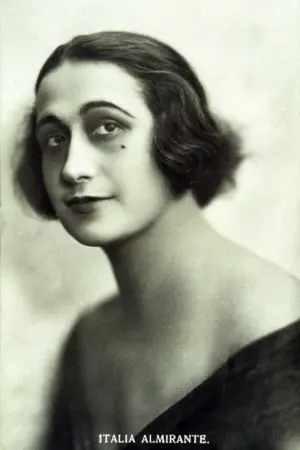
Italia Almirante-Manzini
Character Sophonisba - Hasdrubal's Daughter

Alex Bernard
Character Siface "Syphax" - King of Cirta
Luigi Chellini
Character Scipione "Scipio" - the Consul
Vitale Di Stefano
Character Massinissa - the Numidian King
Enrico Gemelli
Character Archimede
Ignazio Lupi
Character Arbace
What's left behind the scenes
- Pilot Giovanni Vidner flew four circles over Rome, showering it with leaflets announcing the film's premiere.
- Preparing for the filming of the movie, Giovanni Pastrone patented a trolley, "travelling" (Italian: carello), in Italy on August 5, 1912. Simultaneously with the use of the trolley, Giovanni Pastrone first introduced several technical techniques: straight or zigzag movement, movement parallel to the scenery, and approaching and withdrawing the camera.
- During the filming of the movie, Giovanni Pastrone used 12 arc reflectors of 100 amps each, the brightness of which he enhanced with reflecting screens covered in sheets of tin foil.
- Bartolomeo Pagano was not a professional actor, but a stevedore at the port of Genoa.
- The film, and especially one of its characters—the giant Maciste (in the old Russian pronunciation, Matsist)—played by Bartolomeo Pagano, was so popular that it is mentioned in Ilf and Petrov’s novel "The Twelve Chairs": "Hippolyt Matveyevich was nicknamed Matsist in the institution for his great height, and especially for his mustache, although the real Maciste had no mustache at all."
- Giovanni Pastrone placed glass over painted floors to simulate polished marble.
- To make Enrico Gemelli appear natural with a false beard, Giovanni Pastrone ordered him to grow his own.
- According to Jerzy Tęplica, the screenplay was written by Giovanni Pastrone, who signed it under the pseudonym Piero Fosco. Gabriele D'Annunzio merely allowed his name to appear in the credits.
- Preparing for filming, Giovanni Pastrone patented a trolley, the "travelling" (Italian: carello), in Italy on August 5, 1912. Simultaneously with the use of the trolley, Giovanni Pastrone first introduced several technical techniques: straight or zigzag movement, movement parallel to the scenery, and approaching and receding the camera.
- The film, and especially one of its characters—the giant Machiste (in the old Russian pronunciation, Matsist) played by Bartolomeo Pagano—was so popular that it is mentioned in Ilf and Petrov’s novel "The Twelve Chairs": "Ippolit Matveyevich was nicknamed Matsist in the office for his height, and especially for his mustache, although the real Matsist had no mustache at all."
- According to Jerzy Těplice, the screenplay was written by Giovanni Pastrone, signing it under the pseudonym Piero Fosco. Gabriele D'Annunzio merely placed his name in the credits.
Did you like the film?
 Auditions in India
 Casting calls in USA
 Castingi w Polsce
 Кастинги в Україні
